TIFR To Pay Half Of Net February Salary Due To Fund Crunch
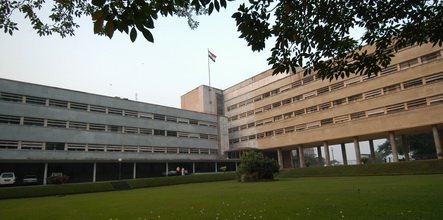
The government-run Tata Institute of Fundamental Research will pay only half of the net salary to its staff for February due to fund crunch.
"Due to insufficient funds, all staff members and students/post-doctoral fellows of TIFR, its centres and field stations will be paid 50 percent of the net salary for the month of February immediately," TIFR registrar Wing Commander (retd) George Antony said in a letter to the staff.
"Remaining part of the salary will be paid when sufficient funds are available," he said in the letter. Antony declined to comment when contacted by PTI.
Despite getting just 50 percent of the salary, the staff and fellows will have to bear deductions as per their full salary. "All deductions will be calculated on full salary and will be deposited to respective authorities as per rules," the communication from the registrar said.
A former staffer said the pay cut decision will impact the around 3,000 employees, students and post-doctoral fellows of TIFR in Mumbai and other centres.
Noted historian Ramachandra Guha said TIFR is in a perilous state.
The perilous financial state of one of India's finest scientific research institutes https://t.co/Zr4HYBzycC
March 7, 2019Another twitter user said the government should explain why this (salary cut) has happened. "If this is the condition of TIFR, then what will be the future of education in our country?" he said. A tweet appeared to question the motive for shortage of funds to TIFR. "There goes another piece of prime real estate. I suspect thats the real game going on - just like the cantonments. TIFR will be asked to move out. Magically, funds will reappear. In a more remote location." it said.
TIFR is a national centre of the Government of India under the umbrella of the Department of Atomic Energy, as well as a deemed university awarding degrees for master's and doctoral programmes.
The institute was founded in 1945 with support from the Sir Dorabji Tata Trust under the vision of Dr. Homi Bhabha.
TIFR carries out basic research in physics, chemistry, biology, mathematics, computer science and science education. The main campus is located in Mumbai, with centres at Pune, Bengaluru and Hyderabad.

-
Ten Things I Learnt This Samvat

Patience can be a trap. Cheap stocks can stay cheap. Leverage can wipe you out. What did Samvat 2082 teach us? Niraj Shah writes on 10 lessons from the year gone by.
-
Talking Points This Week: Tech Nerves, FII Buying, And A Faraway Banking Shock
The global markets are not shining this Diwali. The exception in the large markets is, India.
-
Midterm Rally Lasted A Day. The Hard Reality Of A Divided US May Last Two Years | Opinion
Between a contested AI boom, a debt ceiling that arrives in 2027 and a president with every incentive to act alone, the next two years may prove more volatile than the first day's rally suggests.
-
Blue Wave Will Derail the AI Trade but Won't Dismantle the AI Era | Unhedged Position
The Democrats' sweep of the US Congress will see politics collide with economic forces both over the long and short term.
-
It's Time To Take The GST Council's Bet On Trust Global
Payment records can prove India's services exports, and clear, proportionate rules can bring foreign digital sellers into the tax net.
-
Opinion | India at 38: From Innovation Overperformer to Innovation Powerhouse
India now has 453 VC-backed deep science startups, 18 of them late-stage, after 117 percent growth since 2020. Laurus Labs, at USD 9.3 billion, is the most valuable deep science company in any middle-income economy outside China.
-
Navigating Energy Crossroads: S Jaishankar's Call For Diversified Supply Chains At G20 Ministerial Meeting
As geopolitical fault lines continue to test maritime trade routes and commodity flows, Jaishankar's message remains pertinent: true economic resilience requires open markets, protected transit lines, and a genuine commitment to multilateral cooperation rather than coercion.
-
Indians Are Travelling, But Not Every Journey Is A Holiday | The Week In Whys
Pilgrims, patients and working women are the real travellers, and the system hasn't quite caught up with them.
-
Getting To Work Costs Women More | The Reason Why
It is not just about women paying more than men. It is about women paying much more in cities than in villages.









