This May Soon Be India’s Seventh Largest Bank By Value. Here’s Why
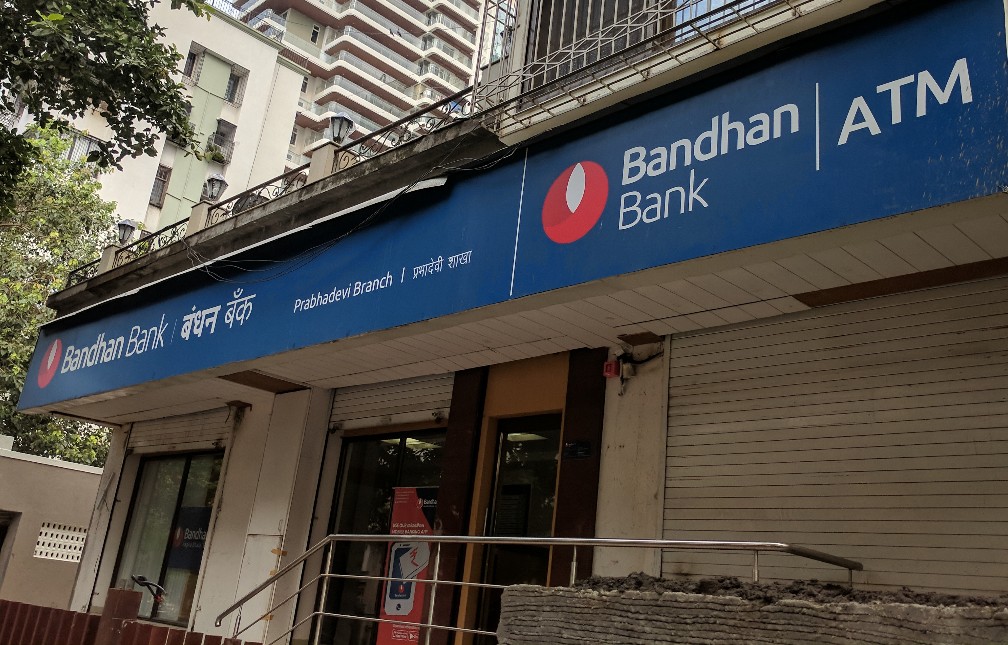
Bandhan Bank Ltd. is close to overtaking Yes Bank Ltd. as India's seventh most valuable lender in just over four months of making its market debut.
Shares of the microlender-turned-universal bank have surged 88 percent since its March 27 listing on exchanges, as financial-inclusion-focused lenders have grabbed investor attention. In fact, Bandhan Bank briefly surpassed the market cap of Yes Bank last Thursday but failed to close above it. The stock is the best performing banking stock of the year, with a market capitalisation of over Rs 83,000 crore.
But what's driving the surge?
In the early years of growth for India's private sector banks, it was thought that a pan-India presence was essential for success. That may no longer be the only way to make a mark. The other strategy to succeed, as a Bernstein report points out, is to deepen the market.
Increasing reach in geographies where a lender enjoys a cultural and linguistic advantage—and which is usually untapped by top private banks—is a strategy successfully exploited by regional lenders like Bandhan Bank, AU Small Finance Bank and Equitas Small Finance Bank.
Financial-inclusion focused banks can drive growth by deepening their home markets, and the headroom is very significant despite being leaders, Gautam Chhugani, analyst at Bernstein, wrote in a note. “We will see these emerge as regional powerhouses.”
Their branch network is significant compared to large private sector peers. For example, Bandhan Bank has more branches in West Bengal than any other private lender. AU Bank has fewer branches than ICICI Bank but more outlets than HDFC Bank Ltd., India's most valuable lender, in Rajasthan.

In West Bengal, Bandhan Bank has a 4.2 percent market share in the number of branches, 3.4 percent in loans and 1.9 percent in deposits. For financial year 2017-18 alone, it received 7.9 percent of the total deposits—four times its overall share. Similarly, it had a 7.6 percent share in loans during the period.
However, if you remove government owned banks, Bandhan had a 28.5 percent share of branches in the state among private sector banks. Its loan share stood at 13 percent and its deposit market share stood at 10 percent when compared to private banks, shows data collated by Bernstein.

AU Small Finance Bank has also been gaining loan market share in its home state of Rajasthan, from 1.0 percent in FY13 to 2.6 percent in FY18. Equitas' branch expansion helped it mobilise deposits, increasing its market share, according to Bernstein.
All this points to a trend of increasing value being attached to regional as opposed to a pan-national presence, Chhugani wrote. “Expanding pan India is a fallacy, if you are financial inclusion-focused.”
What Works For Bandhan Bank
Bandhan Bank still largely offers high-yielding micro-loans, which contribute 85 percent to its total advances. It offers low-cost deposits—with current and savings account deposits contributing 35 percent. Together, these helped it garner the highest margin among banking peers at around 9-10 percent in FY18, according to Bernstein. It also had the lowest cost-to-income ratio at 35 percent, thanks to its “hub and spoke” model of using direct sales correspondents and associated bank branches. That gave it superior return ratios.
Sustained higher margins at 9.5-10 percent and low cost-to-income ratio at 37-38 percent is expected to drive earnings growth at an annualised rate of 39.3 percent by FY20, Kajal Gandhi, analyst at ICICI Securities, wrote in her earnings update for the bank. The brokerage expects a return on assets and return on equity to sustain at 3.5-4 percent and 20 percent, respectively. The stock, it said, will continue to trade at a premium.

-
A New Samvat Wishlist: Inclusive Prosperity And Human Development

India has strengthened its economic foundations through infrastructure, digital access and enterprise. Its next growth chapter must deepen productivity, create better livelihoods and widen participation in prosperity.
-
Love, Sex Aur Dhokha: The Audacious Plot To Spy On Jensen Huang
A Taipei dinner, a Singapore chip buyer and a suspected Chinese asset: inside the alleged spy operation that got close to NVIDIA's Jensen Huang.
-
Ten Things I Learnt This Samvat
Patience can be a trap. Cheap stocks can stay cheap. Leverage can wipe you out. What did Samvat 2082 teach us? Niraj Shah writes on 10 lessons from the year gone by.
-
Talking Points This Week: Tech Nerves, FII Buying, And A Faraway Banking Shock
The global markets are not shining this Diwali. The exception in the large markets is, India.
-
Midterm Rally Lasted A Day. The Hard Reality Of A Divided US May Last Two Years | Opinion
Between a contested AI boom, a debt ceiling that arrives in 2027 and a president with every incentive to act alone, the next two years may prove more volatile than the first day's rally suggests.
-
Blue Wave Will Derail the AI Trade but Won't Dismantle the AI Era | Unhedged Position
The Democrats' sweep of the US Congress will see politics collide with economic forces both over the long and short term.
-
It's Time To Take The GST Council's Bet On Trust Global
Payment records can prove India's services exports, and clear, proportionate rules can bring foreign digital sellers into the tax net.
-
Opinion | India at 38: From Innovation Overperformer to Innovation Powerhouse
India now has 453 VC-backed deep science startups, 18 of them late-stage, after 117 percent growth since 2020. Laurus Labs, at USD 9.3 billion, is the most valuable deep science company in any middle-income economy outside China.
-
Navigating Energy Crossroads: S Jaishankar's Call For Diversified Supply Chains At G20 Ministerial Meeting
As geopolitical fault lines continue to test maritime trade routes and commodity flows, Jaishankar's message remains pertinent: true economic resilience requires open markets, protected transit lines, and a genuine commitment to multilateral cooperation rather than coercion.









