The Hurdles To Modi’s Ambitious Renewable Energy Target
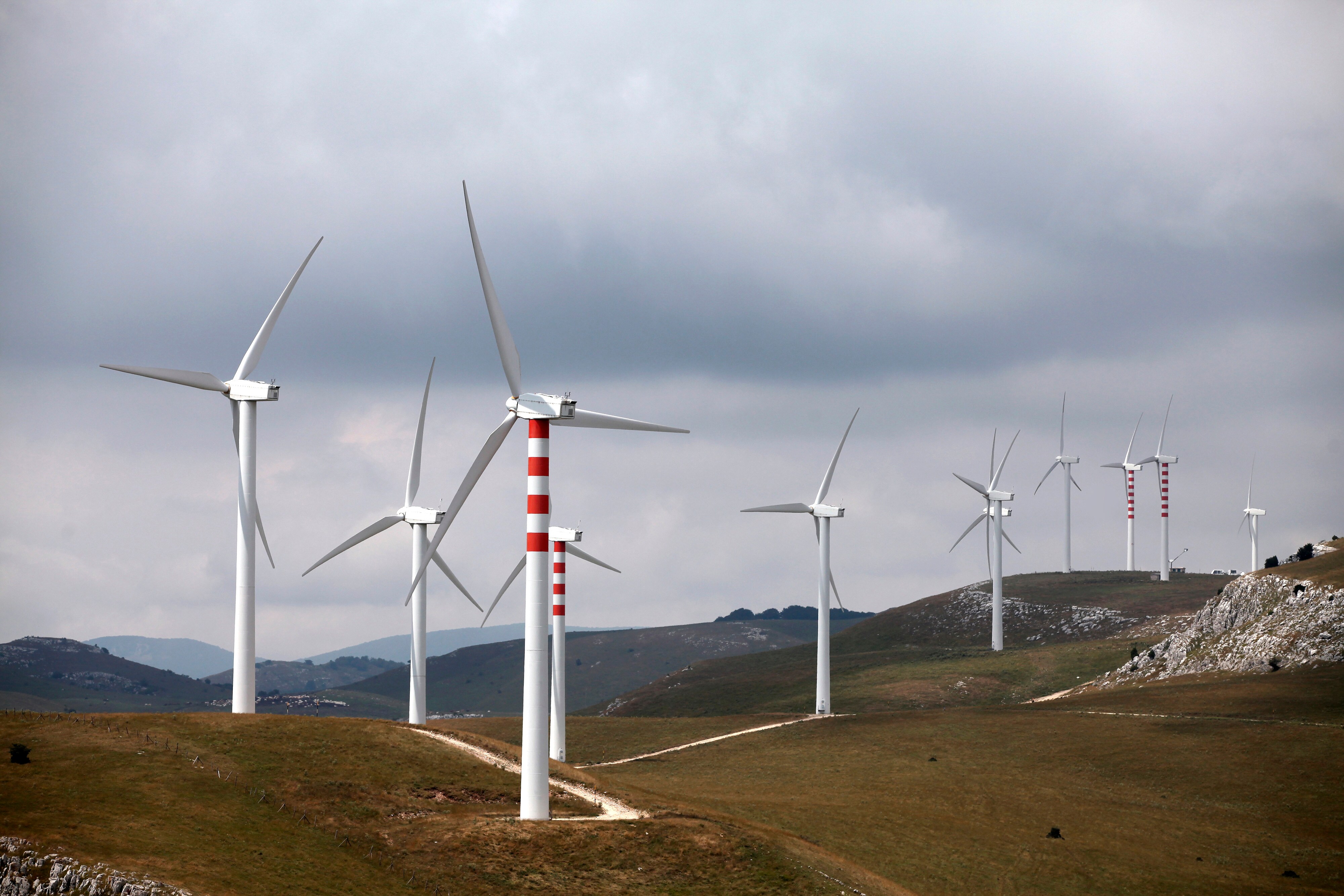
India is looking to resolve operational issues to meet its ambitious renewable energy capacity target of 175 gigawatt by 2022 as Asia's third-largest economy shifts from coal-fired energy.
“That will be the agenda for the next government,” Anand Kumar, secretary of Ministry of New and Renewable Energy, told BloombergQuint, referring to the newly-sworn in cabinet of the Bharatiya Janata Party-led National Democratic Alliance.
The target includes 100 GW from solar, 60 GW from wind, 10 GW from bio-power and 5 GW from small hydel power. That's spurred by Prime Minister Narendra Modi's push for cleaner energy as India is home to 14 cities with the most toxic air, according to World Health Organisation.
Nearly 8.53 GW of renewable energy capacity was added during FY19, according to data on Ministry of New and Renewable Energy's website, taking installed capacity to 78.31 GW as of March 31, 2019. Of this, 35.63 GW is from wind power, 28.18 GW from solar power, 9.91 GW from bio power and 4.59 GW from small hydro power.
Yet, the sector is beset by problems. Here's a look at the hurdles to the government's target:
Grid Implementation
The government plans to launch tenders to set up transmission lines worth $5 billion that can evacuate 66.5 GW of renewable energy, a senior official told BloombergQuint requesting anonymity. The approval, according to the official, has been granted to build lines for 20-GW capacity.
The government will accelerate pace of execution of the green energy corridor— an intra-state transmission system for evacuation of large-scale renewable energy—RK Singh told reporters while assuming charge as minister of state (independent charge) of Power, New and Renewable energy, Skill Development and Entrepreneurship.
The corridor—involving nearly 9,400 km of transmission lines with substations of nearly 19,000 of Mega Volt Ampere capacity—is being implemented by eight renewable-rich states of Tamil Nadu, Rajasthan, Karnataka, Andhra Pradesh, Maharashtra, Gujarat, Himachal Pradesh and Madhya Pradesh.
Easing Land Issues
Singh said Solar Energy Corporation of India plans to build a land pool to accommodate 50 GW of renewable plants that would solve the problem of land availability.
He said 79.3 GW renewable capacity has been added as on date, 23.95 GW is under installation and 42.87 GW has been tendered out. “We're confident of achieving 175 GW renewable energy target by 2022.”
Shashi Shekhar, vice chairman of Acme Solar, told BloombergQuint that the gestation period for solar parks is long. In May 2017, Acme Solar had emerged the lowest bidder at the auction for Bhadla Phase-III solar park in Rajasthan, among India's largest, in May 2017. Government should get large land parcels for leasing in renewable energy-rich states and hand them to developers, he said.
The government, according to a third official, is aware of the problem and is suggesting remedial measures to states. They include:
- Declare land for renewable projects as green projects.
- Not to opt for change in land use for renewable projects because it consumes time and solar parks need large tracts of land.
“The Ministry of New and Renewable Energy would have to coordinate with other ministries and state departments to ensure land acquisition hurdles are eased,” Shantanu Jaiswal, research head of Bloomberg New Energy Finance India, told BloombergQuint.
But capacity addition, according to Jaiswal, needs to rapidly keep pace with the target. “To achieve 120 GW of grid connected wind and solar capacity, we need to commission an average 19 GW projects each year till March 2022.”
Low Tariffs A Deterrent
Ceiling on tariffs by Solar Energy Corporation of India—aimed at making electricity affordable—has restricted industry participation.
Jaiswal said several auctions were cancelled last year as tariff caps were either too low for independent power producers leading to under-subscription, or prices discovered were too high for discoms. “Power off-takers need to accept that auction prices won't keep falling continuously and that they can increase with changes in macro environment.”
Sunil Jain, chief executive officer and executive director of Hero Future Energies, agreed. He said that the per unit ceiling tariffs for auctions—Rs 2.68 for solar, Rs 2.82 for wind and Rs 2.70 per unit for hybrid—are unviable for developers.
“Why will a developer bid too low?” he asked. “Interest rates have gone up, rupee has depreciated against the dollar, liquidity isn't available in the market and safeguard duty (on solar panels) was imposed.”
Extension Of Timelines
Girish Kadam, vice president, sector head (corporate ratings) at ICRA, told BloombergQuint over the phone that tight execution timelines, ensuring land acquisition and transmission connectivity approval remains critical for developers. “In some cases, developers have witnessed these challenges in few states, which may impact viability due to risk of cost overruns.”
“Securing timeline extension for commissioning date by the developers from respective nodal agencies is important,” he said. “Else there could be risk of liquidated damages in the form of performance bank guarantee invocation and subsequent tariff deduction as per power-purchase agreement norms.”
Dues From Utilities
The industry wants government to examine the issue of delayed payments by distribution companies, said Jain. “Outstanding dues by discoms in the renewable sector are over Rs 40,000 crore,” he said. “Many utilities have delayed payments by 7-8 months.”
Funding Challenges
Funding has emerged as a fresh challenge for renewable power projects. There aren't many financiers other than Power Finance Corporation Ltd., Rural Electrification Corporation Ltd. and Indian Renewable Energy Development Agency, said Shekhar of Acme Solar. Banks, he said, need to lend at least Rs 45,000 crore if India is to achieve 100 GW of solar capacity. “The ministries of finance and renewable energy must decide on that.”

-
High US Salaries, No Green Card Certainty: The Financial Calculation Facing Indian H-1B Families

The suspension of PERM processing at eight technology employers does not cancel existing H-1B visas. What it does is force a question many Indian families have been avoiding: is the US salary worth tying your career and family plans to one employer?
-
Unhedged Position: Can India See An Indonesia-Style Time Correction?
The Nifty is trading below levels it first clocked in 2024. Is there, then, as I have suggested in the headline, potential that the current time correction drags on painfully for the next three-five, even ten years?
-
Navigating Friction And Energy Realities: An Analysis Of Marco Rubio's October Visit To India
Occurring at a critical juncture marked by stalled trade negotiations and escalating geopolitical pressures over global energy supplies, the visit offers a profound window into modern US-India relations.
-
India Exports Capital. Why Not Export Trusteeship?
The big question, then, is whether India can build an institution that global borrowers, investors, banks, and lawyers can trust, even without an Indian connection.
-
France's Economy & Politics Are In Crisis | The Reason Why
Let's look at how the French economy and politics evolved under Nicolas Sarkozy, Franois Hollande and Emmanuel Macron.
-
You May Inherit The Business. You Must Earn Its Credibility.
Succession tests the founder's ability to share authority as much as it tests the next generation's readiness to assume it.
-
Signing Deals Is One Thing; Making Them Work Is Another | The Week In Whys
Sometimes, things don't turn out as planned. Indian companies have lost some bids to rivals, some projects won't produce until 2030.
-
FOMC Wall, PERM Suspension, Hospital Stocks | Talking Points This Week
A PERM suspension would directly affect green-card sponsorship rather than H-1B visas, so the near-term earnings impact could remain relatively limited. The key question is whether this marks a new phase in US scrutiny of Indian IT.
-
Everything, Everywhere, All At Once: Dalal Street's Week To Forget | Joining The Dots
Visa curbs, a Starlink spat and cancer drug caps: what connects this week's shocks for Indian markets
-
India Is Going Abroad For Critical Minerals. But It May Take Years To Pay Off | The Reason Why
Although India's steps are in the right direction, they remain modest compared with India's growing dependence.









