The Two Conflicting Sides Of India’s Reviving Consumer Demand
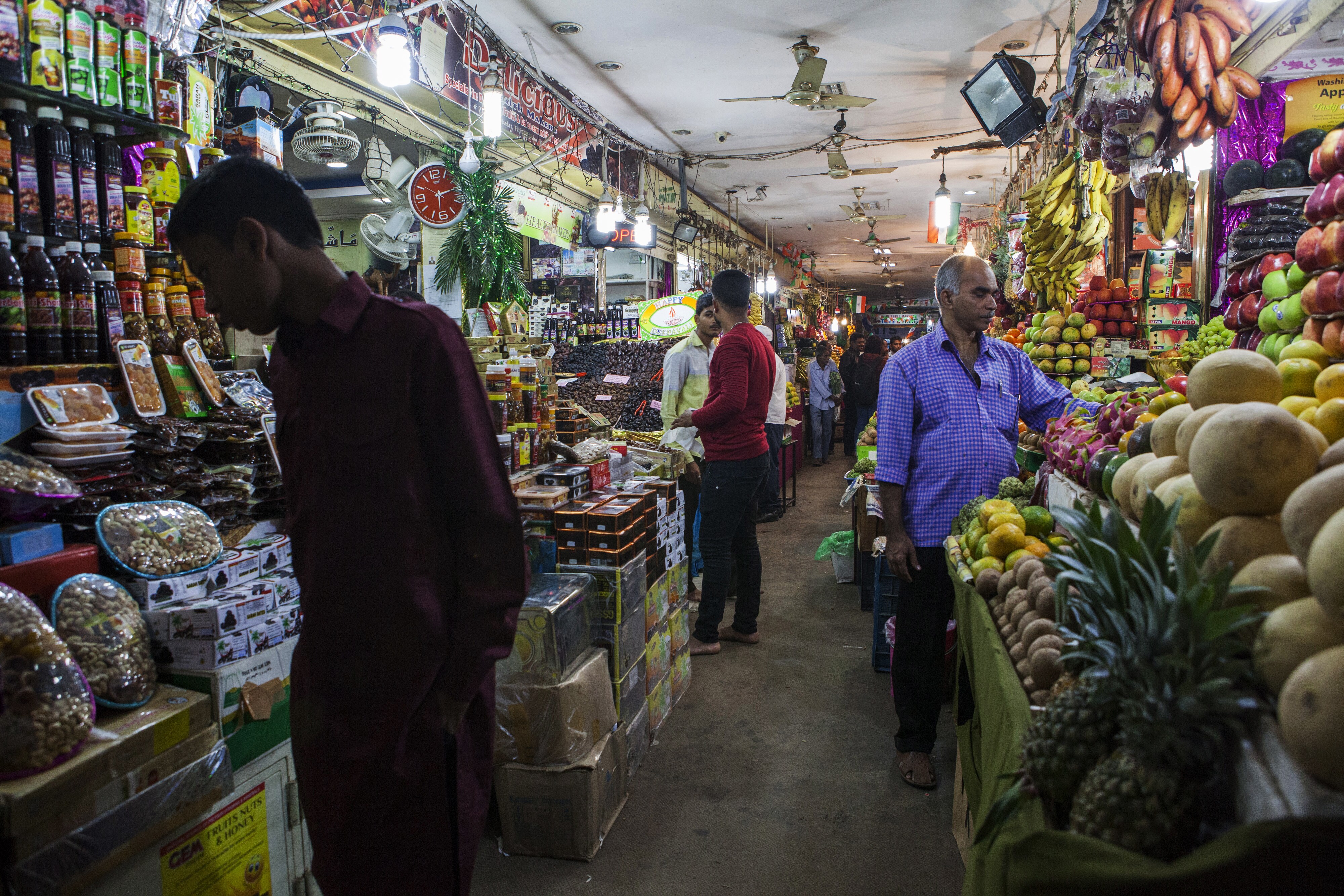
Consumer goods makers say demand for everything from chocolates and biscuits to shampoos and toothpastes has revived after the economy stumbled from a cash purge to a uniform sales tax. That's just half the story.
Demand has stayed stagnant since demonetisation and companies are pushing goods into the supply chain to meet their targets, Dhairyashil Patil, a Kolhapur stockist and president of All India Consumer Products Distributors' Federation, told BloombergQuint. “That's led to an inventory pile-up.”
One data point underscores the divergence: inventory days.
The number of days for which distributors hold stock has risen from 7-10 to 15 in the last one year, according to heads of distributors' associations in five states BloombergQuint spoke to. In smaller towns, said Patil, it has almost doubled to about a month.
Prime Minister Narendra Modi scrapped 86 percent of the currency in circulation in November 2016. The resultant cash crunch hurt demand for everything from household goods to real estate. As the economy was recovering from the impact, the government rolled out the Goods and Services Tax in July last year.
The only time inventories were thin, said stockists, was ahead of the GST implementation when distributors cut stock fearing losses due to a change in rates and tax refund rules. But consumer goods makers began forecasting an early revival.
Hindustan Unilever Ltd., India's largest consumer goods company, told investors that demand was stable as it reported higher volumes and revenues in the quarter ended September. Likewise, Godrej Consumer Products Ltd. in its analysts call said the demand had improved.
Even the manufacturing activity, as reflected by Nikkei India Manufacturing Purchasing Managers' Index, has improved since July, rising at its fastest pace in five months in December.
These numbers reflect primary sales from the companies to distributors. The picture isn't that rosy in terms of demand from consumers, said stockists for companies like Hindustan Unilever, Godrej Consumer, Wipro Consumer Care & Lightning, Mondelez India, Britannia Industries Ltd. and Dabur India Ltd.
“Companies keep pressuring us to take more stock,” said Amit Darji, the Ahmedabad-based head of Gujarat distributors' association. “They have asked us to increase the number of salesmen and also increase the capacity of our warehouses.”
Tulsi Das, his peer from Tamil Nadu, agreed. The distributor from Coimbatore said 70 percent consumer goods companies keep pushing their stocks down the chain to meet their sales targets.
Uttrakhand-based Nitin Sharma reiterated it. Demand hasn't improved in the last one year while companies continue to push their goods down, he said. And that's pushed up the days for which Shyam Prasad Menon from Kerala holds inventory to 15 compared to 7-10 earlier— at times it goes up to 30.
HUL refused to comment citing its silent period ahead of earnings, while BloomberQuint's emailed queries to Godrej Consumer, Mondelez and Britannia remained unanswered.
Dabur India Ltd., in an emailed reply, said the inventory of its distributors hasn't gone up. “In fact, it has reduced considerably... We have also seen demand coming back to normal.” Wipro Consumer said it follows “best-in-class trade practices” and has a “robust mechanism in place that enables distributors to share grievances, raise issues about wrong dispatches or return of stocks. These are addressed promptly and with alacrity”.
Shift To Modern Retail
Distributors typically sell stock to kirana stores that have seen demand fall after demonetisation encouraged the shift towards formalisation of retail. Supermarkets and hypermarkets also offers attractive schemes to the consumer, said Dhanraj Bhagat, consumer and retail partner at consultancy Grant Thornton India LLP. Kirana stores need to also offer schemes to lure customers, he said.
Menon said the consumption pattern has also changed. Instead of buying bigger packs, customers opt for smaller ones. The frequency of buying has increased but the overall demand hasn't gone up, he said. Impulse purchases like chocolates are among the worst hit.

-
Why Amazon And Flipkart Are Struggling To Beat Meesho In India's Smaller Cities

With 274 million users and lowest-cost logistics, Meesho is defending its value commerce crown against giants like Amazon and Flipkart.
-
High US Salaries, No Green Card Certainty: The Financial Calculation Facing Indian H-1B Families
The suspension of PERM processing at eight technology employers does not cancel existing H-1B visas. What it does is force a question many Indian families have been avoiding: is the US salary worth tying your career and family plans to one employer?
-
Swiggy vs Eternal: Food Delivery's Two Rivals Are No Longer In The Same Race
Eternal is building a private AI assistant, dark.ai. Swiggy is still working out how to make Instamart pay, with an operating loss of Rs 895 crore in the July-September quarter while Blinkit stayed profitable.
-
Where You Live Shapes How You Get To Work | The Reason Why
Two-wheelers are the most popular way to get to work in India, accounting for nearly 43% of workplace commutes.
-
Unhedged Position: Can India See An Indonesia-Style Time Correction?
The Nifty is trading below levels it first clocked in 2024. Is there, then, as I have suggested in the headline, potential that the current time correction drags on painfully for the next three-five, even ten years?
-
Navigating Friction And Energy Realities: An Analysis Of Marco Rubio's October Visit To India
Occurring at a critical juncture marked by stalled trade negotiations and escalating geopolitical pressures over global energy supplies, the visit offers a profound window into modern US-India relations.
-
India Exports Capital. Why Not Export Trusteeship?
The big question, then, is whether India can build an institution that global borrowers, investors, banks, and lawyers can trust, even without an Indian connection.
-
France's Economy & Politics Are In Crisis | The Reason Why
Let's look at how the French economy and politics evolved under Nicolas Sarkozy, Franois Hollande and Emmanuel Macron.
-
You May Inherit The Business. You Must Earn Its Credibility.
Succession tests the founder's ability to share authority as much as it tests the next generation's readiness to assume it.
-
Signing Deals Is One Thing; Making Them Work Is Another | The Week In Whys
Sometimes, things don't turn out as planned. Indian companies have lost some bids to rivals, some projects won't produce until 2030.










