The Tiny Gulf Country With A $335 Billion Global Empire
Qatar is regaining its appetite for deals. In the past two months alone, the world's richest country per capita invested in Turkey's biggest poultry producer, Russian oil giant Rosneft, and U.K. gas company National Grid.
The investments have been made through the Qatar Investment Authority, created in 2005 to handle the country's windfall from liquefied natural gas sales, of which it is the world's biggest exporter.
Since then, the country - with a population smaller than Houston - has amassed $335 billion in assets around the globe, making its sovereign wealth fund the 14th largest in the world, according to the Sovereign Wealth Fund Institute.
After a raft of high-profile deals that gave the fund, known as the QIA, and other Qatari investors, holdings in Hollywood, New York office space, London residential property, luxury Italian fashion and even a soccer team, transactions slowed in 2015 and 2016 as oil prices slumped.
With oil's recovery since early last year, Qatar is back in the deal-making business. Here are some of the country's biggest investments globally:
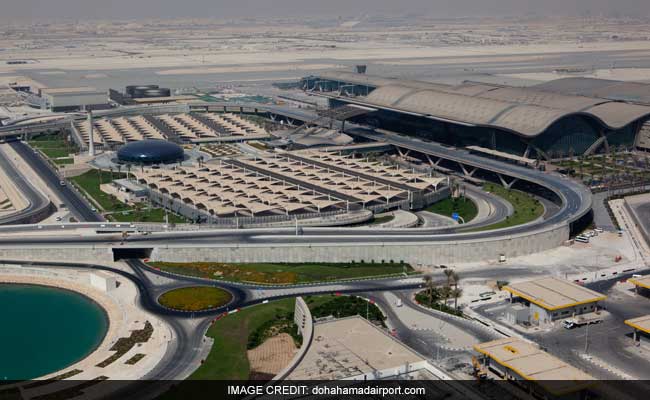
Qatar: A visit to the capital of this tiny state starts at the $17 billion Hamad International Airport. Qatar Airways, which is backed by the QIA, manages the airport, and that's just the start of the fund's extensive footprint in the country.
The QIA is the biggest investor in Qatar's stock market, with majority stakes in Qatar National Bank SAQ, the Gulf Cooperation Council's biggest lender, and telecom provider Ooredoo, which has operations in 12 countries and is chaired by Sheikh Abdulla Bin Mohammed Bin Saud Al Thani, who is also the QIA's chief executive officer.
Europe: Europe has long been a top destination for Qatari cash, with the country deploying billions in trophy investments such as German carmakers, Italian fashion designers and football clubs.
Qatar stepped in to invest billions in Barclays and Credit Suisse Group during the 2008 financial crisis. Qatar's former Prime Minister and royal family member Sheikh Hamad bin Jassim bin Jabr Al Thani injected 1.75 billion euros ($1.85 billion) into Deutsche Bank in 2014 as the German lender sold shares to shore up capital.
The QIA is the biggest shareholder in German carmaker Volkswagen and played a pivotal role in Glencore's $29 billion takeover of Xstrata in 2012 after demanding the Swiss commodities trader boost its offer for Xstrata, in which it had built a stake of more than 10 percent.
In other high-profile deals, Qatar Sports Investments bought Paris Saint-Germain Football Club in 2011 and went on to win four French soccer league titles with star players including David Beckham. Mayhoola for Investments SPC, a company backed by Qatari investors, bought Italian luxury brand Valentino Fashion Group from private-equity firm Permira Advisers in 2012 for about 700 million euros, while former prime minister Hamad bin Jassim bought a 10 percent stake in Spain's El Corte Ingles, western Europe's largest department store owner in 2015.
United Kingdom: Qatar's investments in the U.K. were valued at a minimum of $35 billion in 2014, according to local media reports. In the swankiest parts of London, it's possible to exclusively live, work, shop and stay in Qatari-owned properties. A Qatari-led group bought London's Canary Wharf in 2015, expanding Qatar's collection of London properties that includes stakes in London's Savoy Hotel, the Shard skyscraper, Harrods department store, the Olympic Village and HSBC tower. Qatari Diar, the QIA's real estate development unit, is converting the U.S. Embassy on London's Grosvenor Square into a luxury hotel, and is building homes at the former Chelsea Barracks.
Qatar's U.K. investments aren't just limited to real estate. With a 22 percent stake, the QIA is the largest shareholder in J Sainsbury. In 2012, the country's sovereign fund bought a 20 percent stake in London Heathrow airport and Qatar Airways raised its stake in British Airways owner IAG to 20 percent last year.
Russia: Qatar's Rosneft $11 billion deal with Glencore in December builds on the country's growing Russian portfolio. Qatar agreed to buy 24.9 percent of the St. Petersburg airport in July and committed $2 billion to the state-run Russian Direct Investment Fund in 2014.
United States: With much of its major investment confined so far to Europe, Qatar is now setting it sights on the U.S. The QIA opened an office in New York in 2015 and laid out plans to invest $35 billion in the country by 2020 to diversify its oil holdings.
Qatar-based broadcaster BeIN Media Group last year acquired Miramax, the California-based film company that owns Oscar-winning movies including "Pulp Fiction."
The QIA was the fourth-biggest investor in U.S. office space in 2016, mostly in New York and Los Angeles, according to Real Capital Analytics Inc. The fund acquired almost 10 percent of Empire State Building owner Empire State Realty Trust Inc. last year, and partnered with Brookfield Property Partners on an $8.6 billion mixed-use project on New York's far west side.
Asia: Switch on the lights in Hong Kong, Japan, South Korea and Taiwan, and there's a good chance the power was generated from imported Qatari gas. While these Asian markets, including China, bought half of Qatar's LNG exports in 2015, they have so far failed to attract much investment from the country. But this is starting to change.
The QIA is scouring the continent for possible investments. Fund executives said in 2014 they planned to place as much as $20 billion in Asia over six years, and expand its offices in Beijing and New Delhi.
In June, the QIA agreed to buy Singapore's Asia Square Tower 1 from BlackRock Inc. for $2.5 billion, the biggest office transaction in Singapore. The fund acquired a stake in department-store operator Lifestyle International Holdings in 2014 and holds 20 percent of Hong Kong billionaire Li Ka-shing's electric utility company. It is also planning to set up a $10 billion investment venture with China's Citic Group and is considering investing in a $100 billion global technology fund formed by SoftBank Group Corp. and Saudi Arabia, people familiar with the matter said in October.

-
Opinion | India at 38: From Innovation Overperformer to Innovation Powerhouse

India now has 453 VC-backed deep science startups, 18 of them late-stage, after 117 percent growth since 2020. Laurus Labs, at USD 9.3 billion, is the most valuable deep science company in any middle-income economy outside China.
-
Navigating Energy Crossroads: S Jaishankar's Call For Diversified Supply Chains At G20 Ministerial Meeting
As geopolitical fault lines continue to test maritime trade routes and commodity flows, Jaishankar's message remains pertinent: true economic resilience requires open markets, protected transit lines, and a genuine commitment to multilateral cooperation rather than coercion.
-
Indians Are Travelling, But Not Every Journey Is A Holiday | The Week In Whys
Pilgrims, patients and working women are the real travellers, and the system hasn't quite caught up with them.
-
Getting To Work Costs Women More | The Reason Why
It is not just about women paying more than men. It is about women paying much more in cities than in villages.
-
AI Bias In Investing Cannot Be Eliminated, But It Can Be Governed
Framing is a particularly important example as identical financial information presented in terms of gains rather than losses can lead an LLM to reach a different assessment.
-
Joining The Dots | Dark Skies, Steady Diya: Why Hope Holds This Diwali
With war, a weak rupee and foreign outflows weighing on sentiment, policymakers at the NDTV World Summit and market veterans at NDTV Profit Ignite: Diwali Edition offered the same advice: stay invested and filter out the noise.
-
The Curious Case of Equitas Small Finance Bank And A CEO Who Quit For Stock
PN Vasudevan believes persistent investor concerns over a perceived conflict of interest had become a governance overhang on Equitas Small Finance Bank's stock, even as the lender improved profitability and asset quality.
-
Talking Points This Week: AI Cash Burn, A Tiger Comeback And An India That Still Finds Its Own Path
India is not immune to higher oil or tighter global liquidity, yet its earnings base is broader, its domestic policy levers are still available.
-
Foreign Investors Own Half Of HDFC Bank and ICICI Bank. An LTCG Cut Could Matter Most Here
Foreign portfolio investors have US$115 billion parked in HDFC Bank, ICICI Bank. If the government cuts long-term capital gains tax, Jefferies says returning foreign money could land here first.










