The RBI’s Problem Of Plenty
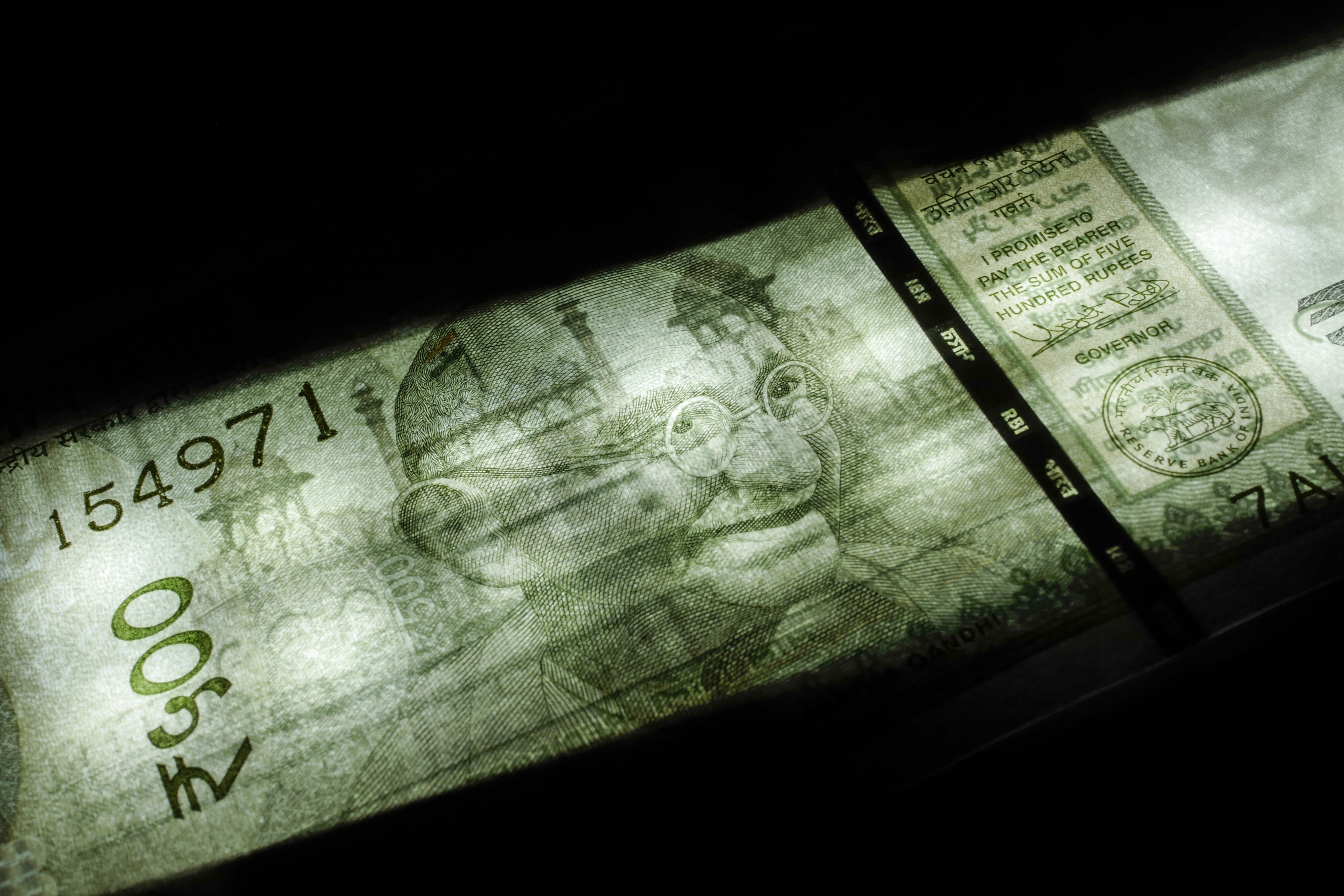
First came demonetisation, which led to a surge in deposits in the banking sector. Then a turn in the global mood, which brought a flood of dollars into the markets. Together, the two have meant that there is a lot of money sloshing around in the Indian economy, which, if left unbridled, could push up inflation.
That's the problem that the Reserve Bank of India (RBI) is likely to try and tackle at its April monetary policy review on Thursday. While analysts are expecting no change in rates, most expect some form of guidance on management of liquidity. Some even expect a new liquidity management tool called the Standing Deposit Facility (SDF) to be introduced.
Roughly Rs 4 lakh crore of liquidity is sloshing around in the market, noted Pranjul Bhandari, chief economist at HSBC India in a report dated April 3. It is estimated that the surplus would remain close to Rs 3 lakh crore even in the months ahead, Bhandari wrote.
The surplus liquidity conditions are running contrary to the RBI's monetary policy stance which was moved to neutral in the February policy, essentially suggesting that the central bank does not want to continue with ultra-easy monetary policy as it fears a pick-up in inflation. Such a stance would typically go together with liquidity which is in balance as opposed to being surplus.
To make its liquidity policy in line with its tighter rate policy, the RBI is likely to remove what itdeems as excess liquidity in the system. But first, it will have to take a call on how much of it isdurable, for the instruments will differ accordingly.Pranjul Bhandari, Chief Economist, HSBC India
In making that judgement, the RBI will need to make an assessment of what proportion of the deposits that flew into the banking sector in the weeks after demonetisation will stay with banks.
State Bank of India's (SBI) economic research unit estimates that Rs 1.7 lakh crore in permanent liquidity will be added to the banking sector post demonetisation. This works out to about 1.1 percent of GDP, said Soumya Kanti Ghosh, chief economist at SBI, in a report dated April 3. Overall, aggregate deposits in the banking sector have increased by Rs 4.27 lakh crore.
“Even after withdrawal limits have been removed, the average withdrawal has declined significantly in March from January levels,” wrote Ghosh.
In addition to the liquidity added due to demonetisation, the RBI would also need to account for fresh government spending that may kick in at the start of the new fiscal. They may also want to make room to curb the gains in the Indian rupee which appreciated by 4.5 percent in the January-March quarter. This will need to be done by buying excess dollars from the market, which in turn will add rupee liquidity.
Highlighting this in a report on Thursday, Abheek Barua, chief economist at HDFC Bank, said that it is important for the RBI to bring down the extent of surplus liquidity.
Leaving the surplus problem unattended could also lead to investments into riskier assets at unwarranted low yields. Hence, in the upcoming policy review, it is highly likely that the RBI will implement measures to soak up excess liquidity.Abheek Barua, Chief Economist, HDFC Bank
The RBI has a mix of tools available to manage liquidity including those used to curb temporary mismatches and those suited for a more permanent fix to the cash position in the economy.
Cash Management Bills (CMBs), bonds issued under the Market Stabilization Scheme (MSS) and the reverse repo window are all used to tackle temporary liquidity. Permanent liquidity is adjusted using open market operations (OMOs) and adjustments in the Cash Reserve Ratio.
Analysts now expect that a new facility called the Standing Deposit Facility (SDF) will be introduced which can absorb liquidity at rates lower than the existing policy rate. The RBI would also not need to offer banks government bonds in return for the money that they park with the central bank if this facility is introduced. Such a facility was first recommended by an Urjit Patel-led committee in 2014 as part of a review of the monetary policy framework.
The introduction of SDF, however, would need an amendment to the RBI Act and may not be operationalised immediately, said Barua.
Soumyajit Niyogi, associate director at India Ratings & Research, feels the best option at this stage would be to use CMBs to absorb temporary liquidity while awaiting a clearer picture of how much of this money will eventually remain in the system. He points out that surplus liquidity is not just a problem for banks but also mutual funds who are dumping this surplus liquidity in the overnight call money market. The RBI needs to use an instrument that can absorb liquidity from all financial market players and not just banks, said Niyogi.

-
Unhedged Position: Can India See An Indonesia-Style Time Correction?

The Nifty is trading below levels it first clocked in 2024. Is there, then, as I have suggested in the headline, potential that the current time correction drags on painfully for the next three-five, even ten years?
-
Navigating Friction And Energy Realities: An Analysis Of Marco Rubio's October Visit To India
Occurring at a critical juncture marked by stalled trade negotiations and escalating geopolitical pressures over global energy supplies, the visit offers a profound window into modern US-India relations.
-
India Exports Capital. Why Not Export Trusteeship?
The big question, then, is whether India can build an institution that global borrowers, investors, banks, and lawyers can trust, even without an Indian connection.
-
France's Economy & Politics Are In Crisis | The Reason Why
Let's look at how the French economy and politics evolved under Nicolas Sarkozy, Franois Hollande and Emmanuel Macron.
-
You May Inherit The Business. You Must Earn Its Credibility.
Succession tests the founder's ability to share authority as much as it tests the next generation's readiness to assume it.
-
Signing Deals Is One Thing; Making Them Work Is Another | The Week In Whys
Sometimes, things don't turn out as planned. Indian companies have lost some bids to rivals, some projects won't produce until 2030.
-
FOMC Wall, PERM Suspension, Hospital Stocks | Talking Points This Week
A PERM suspension would directly affect green-card sponsorship rather than H-1B visas, so the near-term earnings impact could remain relatively limited. The key question is whether this marks a new phase in US scrutiny of Indian IT.
-
Everything, Everywhere, All At Once: Dalal Street's Week To Forget | Joining The Dots
Visa curbs, a Starlink spat and cancer drug caps: what connects this week's shocks for Indian markets
-
India Is Going Abroad For Critical Minerals. But It May Take Years To Pay Off | The Reason Why
Although India's steps are in the right direction, they remain modest compared with India's growing dependence.
-
When Everyone Has AI, What Gives You An Edge?
India's young workforce is entering an uncertain world of work where powerful AI tools are becoming widely accessible. The advantage will belong to those who combine deep expertise with digital fluency, and the distinctly human capabilities that technology cannot manufacture.









