The Mistry Family Came On Board Tata Sons By Chance And May Exit By Force
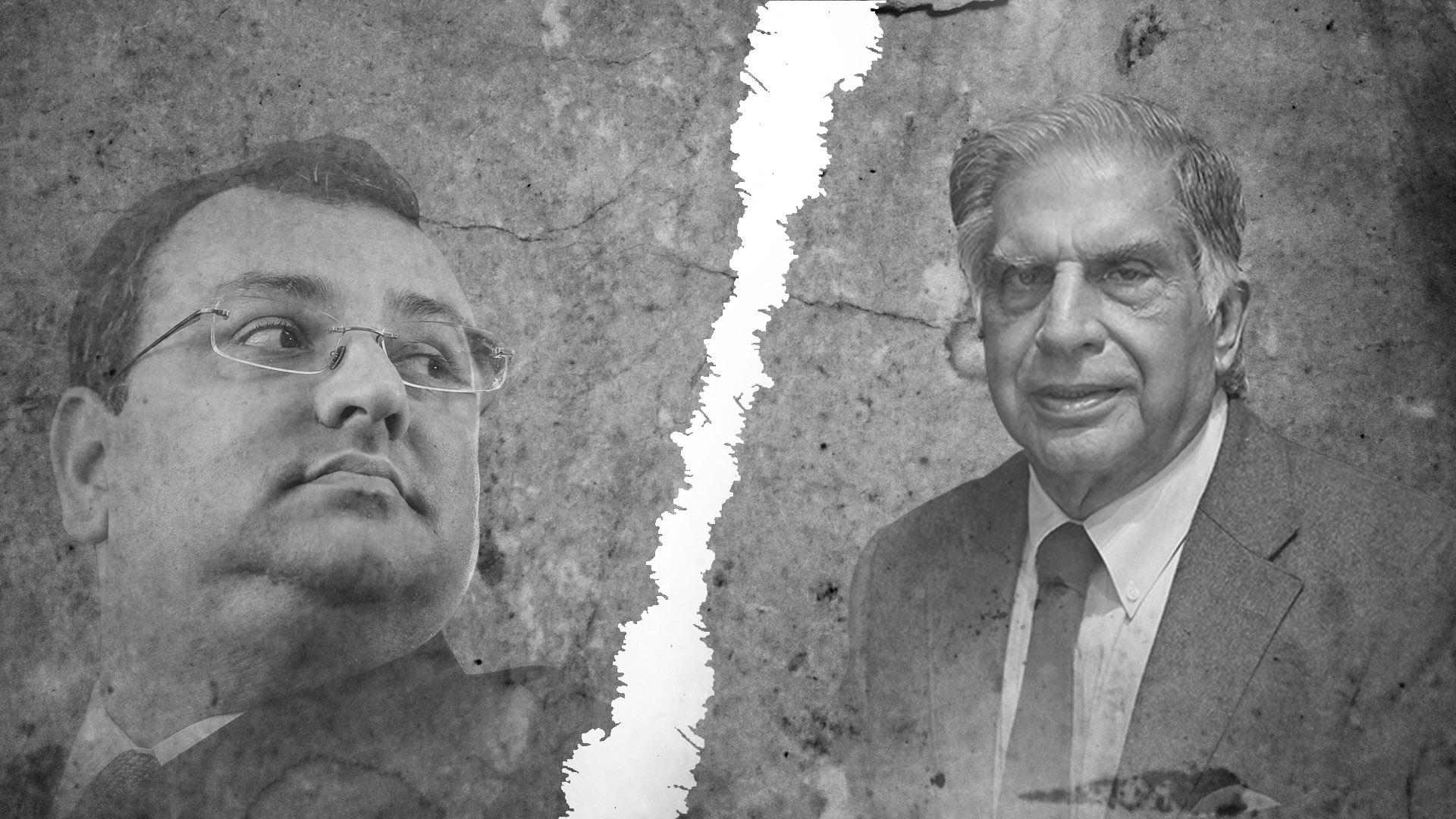
On October 24, the board of Tata Sons Ltd. sacked Cyrus Mistry as its chairman. Mistry, till then executive director, was subsequently re-classified as a non-executive director by the company, according to a Tata Sons filing Ministry of Company Affairs website.
But given the board's current state of antipathy towards him, it is not clear if Mistry will step down voluntarily or be forced out. The exit might be as sudden as his family's entry into Bombay House.
The Mistrys Come To Bombay House
There is no formal account of how the Mistry family came to be a shareholder in Tata Sons. According to a Tata Group insider, the story dates back to 1924. Sir Dorabji Tata, a descendant of Jamsetji Tata, and his cousin Ratanji Dadabhoy Tata were running what was then known as Tata & Sons. The business was facing financial difficulties and a friend came to the rescue.
Framroze Edulji Dinshaw, a landowner-lawyer-turned financier, loaned money to the Tatas, and in return the Tatas agreed to share with him 25 percent of the profits from Tata Steel and 12.5 percent of the profits from Tata Hydro-Electric Systems. Tata Steel and Tata Hydro were the two new businesses that the Tatas had entered then. Over time, the Tatas failed to repay Dinshaw and eventually in the early 1930s, the outstanding debt was converted into equity. Reports suggest that Dinshaw received a 12.5 percent stake in Tata & Sons.
Shapoorji Pallonji Mistry, the grandfather of Cyrus Mistry, was a close friend of Dinshaw. Shapoorji had become Bombay's leading realtor by the 1930s. In 1936 when Dinshaw died, his estate was divided between two entities. The land went to a private trust, FE Dinshaw Estate, which is now administered by Nusli Wadia, and Dinshaw's stake in Tata & Sons was acquired by Shapoorji. At that time Jehangir Ratanji Dadabhoy Tata, or JRD Tata as the world knows him, was just a director on the board of Tata & Sons and the chairman was Nowroji Saklatvala. Saklatvala was well acquainted with Shapoorji as the man who had constructed his home.
Meanwhile, RD Tata died in 1926 and left his entire estate, mostly the shareholding in Tata & Sons, to his eldest son JRD Tata. JRD shared his inheritance with his siblings - Sylla, Rodabeh, Darab and Jimmy. Soon after, Shapoorji managed to acquire additional shares in Tata & Sons from Sylla and Darab. The details of how, when and for how much are not clear but by the time in 1938 JRD was appointed the chairman of the then renamed Tata Sons, Shapoorji had acquired a close to 17.5 percent stake in the company. By March 2016, this had inched up to 18.38 percent.

Tata-Mistry Shareholder Agreement?
Currently the Tata Trusts own 66 percent of Tata Sons, the Shapoorji Pallonji Group owns 18.38 percent and the remaining is held by various Tata companies.
The Tata Trusts have the right to appoint one-third of the directors on the board of Tata Sons, as laid down in the company's articles of association. The Shapoorji Pallonji Group has no such right. Shapoorji was a board member till 1975, and after his death, Pallonji Mistry became a Tata Sons director. Cyrus Mistry took over from Pallonji after he retired in 2006.
The Tatas have never publicly discussed how Shapoorji managed to acquire stake in their holding company but media reports suggest that JRD considered the Mistry entry an intrusion into the Tata group. The terms of engagement, if any, between the two main shareholders of Tata Sons are not public either.
VR Mehta, trustee at Tata Trusts told BloombergQuint in a telephonic interview that there is no shareholder agreement with the Shapoorji Pallonji Group.
Tata Trusts is one of the shareholders in Tata Sons, there is no direct relationship... you see this is like two shareholders with the company, there is no relationship between them. And I am not aware if there is any agreement between them in Tata Sons.VR Mehta, Trustee, Tata Trusts
Tata Sons' articles of association make no mention of any shareholder agreement with the Shapoorji Pallonji Group. The Tata Sons spokesperson confirmed there is no such agreement.
There is no shareholder agreement between Tata Sons andShapoorji Pallonji Group.Tata Sons Spokesperson
The Shapoorji Pallonji group did not wish to comment on the story.
Though no shareholder agreement is in existence, the Tata Group insider claims that Shapoorji gave to JRD his word that his group will always vote along with the Tatas.
If that was ever true, it may not come to pass this time.
Will Tata Sons Remove Mistry As Director?
Having removed him as chairman of Tata Sons, will the company's board now move to remove Cyrus Mistry as director as well?
Rajat Sethi, corporate lawyer and partner at S&R Associates, points to Section 169 of the Companies Act, 2013 to explain the legal process of removal of a director.
The Act says,
a company may, by ordinary resolution, remove a director, not being a director appointed by the Tribunal under section 242, before the expiry of the period of his office after giving him a reasonable opportunity of being heard.
VR Mehta said the Tata Sons board is considering all options.
They will have to follow the procedure, they have taken the first step of removing him as the chairman and whatever is the next step they will certainly go after examining what steps need to be taken.VR Mehta, Trustee, Tata Trusts
Company law says an ordinary resolution needs the support of more than 50 percent of votes cast to succeed. So if the Tata Sons board decides to push Mistry out, will the 66 percent voting rights of Tata Trusts suffice?
The board won't be able to remove the director. The shareholders will have to remove the director, reiterates Sethi.
First a special notice has to be given to the director that it is proposed to remove him. Then he must be given the opportunity to be heard at the shareholders' meeting or make a representation to the shareholders.Rajat Sethi, Partner, S&R Associates
While the Tata Trusts may have the votes to oust Mistry via an ordinary resolution, that Mistry will have an opportunity to be heard by Tata Sons' shareholders will give him a chance to defend his over 4 year tenure. Except that the shareholders he'll be trying to convince are the ones who want him out.
Also Read
Mistry Said to Have Proposed Doubling Dividend to Tata's Owners
A Full Reproduction Of Cyrus Mistry's October 25 Letter To The Tata Sons Board
Did Cyrus Mistry Manage Tata Sons' Debt Better Than Ratan Tata?

-
Navigating Friction And Energy Realities: An Analysis Of Marco Rubio's October Visit To India
Occurring at a critical juncture marked by stalled trade negotiations and escalating geopolitical pressures over global energy supplies, the visit offers a profound window into modern US-India relations.
-
India Exports Capital. Why Not Export Trusteeship?
The big question, then, is whether India can build an institution that global borrowers, investors, banks, and lawyers can trust, even without an Indian connection.
-
France's Economy & Politics Are In Crisis | The Reason Why
Let's look at how the French economy and politics evolved under Nicolas Sarkozy, Franois Hollande and Emmanuel Macron.
-
You May Inherit The Business. You Must Earn Its Credibility.
Succession tests the founder's ability to share authority as much as it tests the next generation's readiness to assume it.
-
Signing Deals Is One Thing; Making Them Work Is Another | The Week In Whys
Sometimes, things don't turn out as planned. Indian companies have lost some bids to rivals, some projects won't produce until 2030.
-
FOMC Wall, PERM Suspension, Hospital Stocks | Talking Points This Week
A PERM suspension would directly affect green-card sponsorship rather than H-1B visas, so the near-term earnings impact could remain relatively limited. The key question is whether this marks a new phase in US scrutiny of Indian IT.
-
Everything, Everywhere, All At Once: Dalal Street's Week To Forget | Joining The Dots
Visa curbs, a Starlink spat and cancer drug caps: what connects this week's shocks for Indian markets
-
India Is Going Abroad For Critical Minerals. But It May Take Years To Pay Off | The Reason Why
Although India's steps are in the right direction, they remain modest compared with India's growing dependence.
-
When Everyone Has AI, What Gives You An Edge?
India's young workforce is entering an uncertain world of work where powerful AI tools are becoming widely accessible. The advantage will belong to those who combine deep expertise with digital fluency, and the distinctly human capabilities that technology cannot manufacture.
-
Wrong Labels, High Pesticide Residues Holding Back Agri Exports | The Reason Why
India needs stronger domestic food-safety and labelling standards, with best practices becoming part of everyday business for farmers, traders and food companies.










