The Likely Impact Of Notes Ban On Arun Jaitley's Fourth Budget
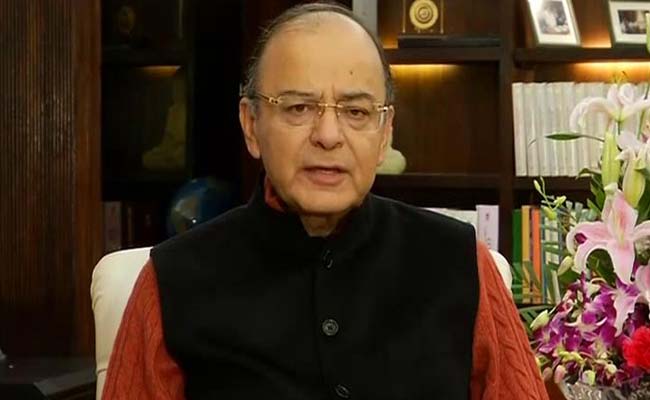
New Delhi: Finance Minister Arun Jaitley is likely to borrow more than originally planned when he presents the Budget on February 1, senior aides and officials said, despite counting on revenues from a national sales tax whose launch date is still unknown.
The minister is looking at how to fund giveaways to taxpayers and higher public investment to help nurse the economy back to health after the government's shock decision in November to abolish high-value banknotes. That is raising concern among some economists and investors that the government will take too many fiscal risks.
Yet, officials say that, given the choice, they would choose growth sustained by state investment over a fiscal straitjacket.
"Some degree of flexibility on fiscal discipline should not be seen as irresponsible fiscal management," one senior government official told Reuters, requesting anonymity due to the sensitivity of the matter.
A fiscal advisory panel, which includes Reserve Bank of India Governor Urjit Patel, has advocated widening the budget deficit to "slightly over" 3 per cent of gross domestic product to free up funds for road, railway and irrigation projects.
"It is not possible to keep up the pace of capital expenditure without increasing the fiscal deficit beyond 3 per cent of GDP," another official, briefed on the committee's findings, added.
India earlier aimed to cut the federal deficit to 3 per cent of GDP over the next two fiscal years, compared with 3.5 per cent in the year now drawing to a close.
Independent economists are also pencilling in a higher federal deficit in the coming fiscal year, at 3.3-3.4 per cent of GDP, creating room for the government to invest an extra $6 billion.
That has drawn a warning from ratings agency Standard & Poor's, which says that slowing the pace of fiscal consolidation could delay India's chances of an upgrade due to its high and rising debt levels.
Mr Jaitley's team forecasts a recovery in nominal GDP growth, the key driver of tax revenues, to around 12 per cent in 2017-18.
Yet that assumes oil prices of $55-60 per barrel and a long-delayed Goods and Services Tax (GST) being implemented in July.
And the economy is still getting over the shock of Prime Minister Narendra Modi's decision in November to scrap 86 percent of cash in circulation in a bid to purge the economy of black or untaxed money.
The International Monetary Fund has chopped a percentage point off India's forecast of real economic growth to 6.6 per cent in the current fiscal year to March, meaning China regains the crown as the world's fastest-growing large economy.
The Washington-based lender has also shaved 0.4 of a percentage point off its forecast for the coming fiscal year.
Finance Ministry officials remain tight-lipped about how quickly they expect growth to bounce back after it slowed following so-called demonetisation.
International prices for crude oil, India's most expensive import item, could meanwhile overshoot the Finance Ministry's expectations as exporting nations curb output, hurting the growth and revenue outlook.
"This Budget is presented in a very uncertain situation," said N R Bhanumurthy, an economist at the National Institute of Public Finance and Policy, a New Delhi think-tank that is partly funded by the government.
And even if the government does ramp up public investment in Mr Jaitley's fourth Budget, it has little room for manoeuvre - nearly nine in every 10 rupees it spends go on servicing debt or paying wages and subsidies.
"It will not be a populist, but a pragmatic Budget," said a senior Finance Ministry official with direct knowledge of budget planning.

-
High US Salaries, No Green Card Certainty: The Financial Calculation Facing Indian H-1B Families

The suspension of PERM processing at eight technology employers does not cancel existing H-1B visas. What it does is force a question many Indian families have been avoiding: is the US salary worth tying your career and family plans to one employer?
-
Unhedged Position: Can India See An Indonesia-Style Time Correction?
The Nifty is trading below levels it first clocked in 2024. Is there, then, as I have suggested in the headline, potential that the current time correction drags on painfully for the next three-five, even ten years?
-
Navigating Friction And Energy Realities: An Analysis Of Marco Rubio's October Visit To India
Occurring at a critical juncture marked by stalled trade negotiations and escalating geopolitical pressures over global energy supplies, the visit offers a profound window into modern US-India relations.
-
India Exports Capital. Why Not Export Trusteeship?
The big question, then, is whether India can build an institution that global borrowers, investors, banks, and lawyers can trust, even without an Indian connection.
-
France's Economy & Politics Are In Crisis | The Reason Why
Let's look at how the French economy and politics evolved under Nicolas Sarkozy, Franois Hollande and Emmanuel Macron.
-
You May Inherit The Business. You Must Earn Its Credibility.
Succession tests the founder's ability to share authority as much as it tests the next generation's readiness to assume it.
-
Signing Deals Is One Thing; Making Them Work Is Another | The Week In Whys
Sometimes, things don't turn out as planned. Indian companies have lost some bids to rivals, some projects won't produce until 2030.
-
FOMC Wall, PERM Suspension, Hospital Stocks | Talking Points This Week
A PERM suspension would directly affect green-card sponsorship rather than H-1B visas, so the near-term earnings impact could remain relatively limited. The key question is whether this marks a new phase in US scrutiny of Indian IT.
-
Everything, Everywhere, All At Once: Dalal Street's Week To Forget | Joining The Dots
Visa curbs, a Starlink spat and cancer drug caps: what connects this week's shocks for Indian markets
-
India Is Going Abroad For Critical Minerals. But It May Take Years To Pay Off | The Reason Why
Although India's steps are in the right direction, they remain modest compared with India's growing dependence.









