The Last Of The Originals: Uday Kotak's 20-Year Reign As A Bank CEO Ends
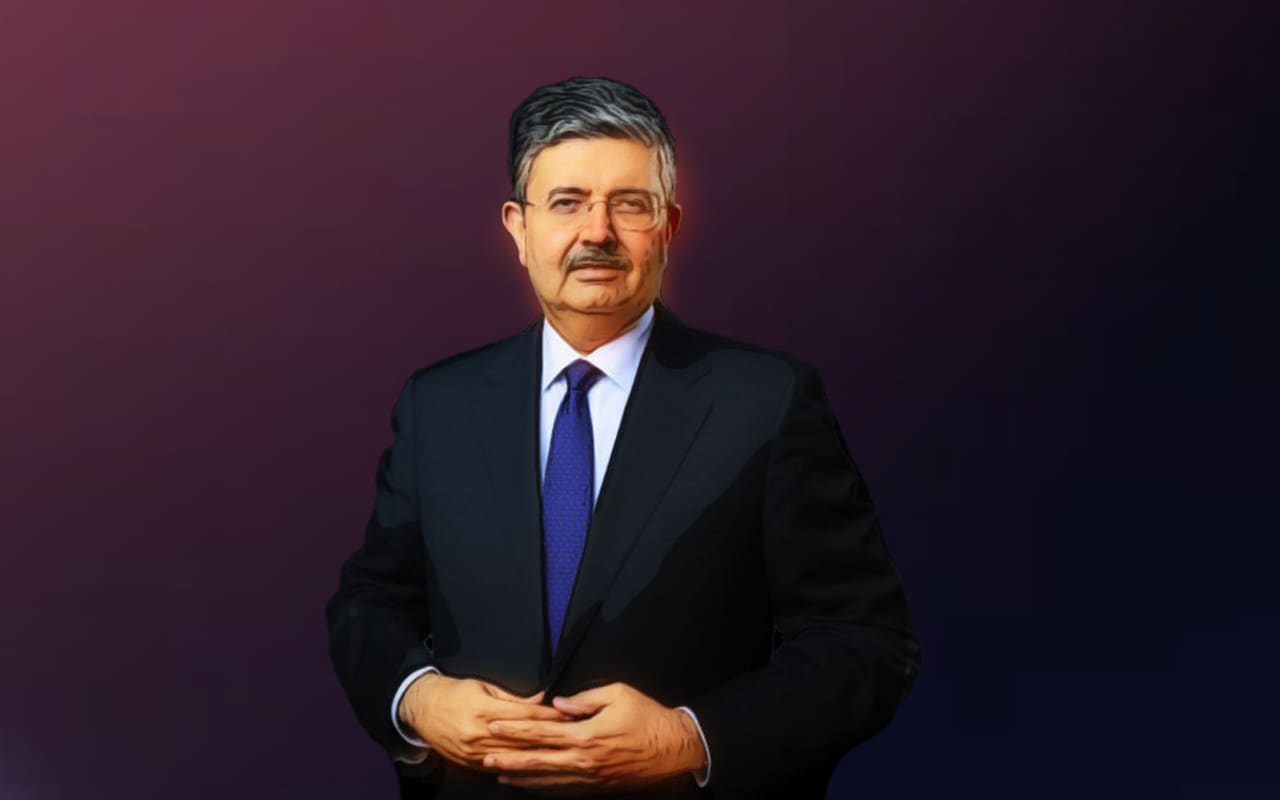
In the early '80s, Uday Kotak was an upper middle-class Gujarati youngster in Mumbai, armed with an MBA. After a serious sports injury wrecked his plan of being a cricketer, he had started working in the accounts department at his family's commodity business.
But he wanted to start something of his own. At work, he spent time with Sidney Pinto, one of India's most famous merchant bankers, who became somewhat of a mentor to him. Pinto advised Kotak to start a bill discounting business as there was limited competition and the duration of the exposure for such financing was short, the merchant banker wrote in a column in July 1997.
After a successful run at bill discounting, Kotak set his eyes on the broader non-bank finance market. In 1985, from a small office in the Navsari building in Mumbai's Fort area, Kotak and Pinto founded Kotak Capital Management Finance Ltd. Later, Anand Mahindra—the current chairman of Mahindra & Mahindra Ltd.—and his father Harish Mahindra picked 15% stake in the company and joined the board. In 1986, the firm's name was changed to Kotak Mahindra Finance Ltd.

Seventeen years later in 2003, Kotak Mahindra Finance Ltd. received the Reserve Bank of India's nod as the first finance company in India to become a bank. The new private lender started operations from 30 branches, covering over a dozen cities in India and eventually rose to be one of India's most-valued lenders. As of Friday, Kotak Mahindra Bank Ltd.'s market capitalisation was Rs 3.52 lakh crore.
Today, Kotak group—including the bank and other financial services businesses—has total assets worth over Rs 6.2 lakh crore, advances worth Rs 3.59 lakh crore, 4,417 branches, over 1 lakh employees and serves over 4 crore customers.

This is the legacy Kotak leaves behind as he hangs his boots after 38 years of leadership. With him ends the era of bankers who built their businesses from scratch at the dawn of private banking in India. Keki Mistry and Deepak Parekh, who were instrumental in the formation and growth of Housing Development Finance Corp., retired this year after its merger with HDFC Bank Ltd. Aditya Puri, who built HDFC Bank, retired in October 2020. Some other exits, like that of Yes Bank Ltd. founder Rana Kapoor, were not so amicable.
A Tough Dealmaker
Over the years, Kotak fashioned himself as a great dealmaker. In its 20-year history as a bank, Kotak Mahindra Bank has consistently maintained more than required capital, often evoking questions from reporters of whether any acquisitions were in the offing.
Kotak's first acquisition came in 1991 when he acquired the fixed deposit business from HL Financial Consultants and Managing Services Ltd., a leading merchant banking firm.
But one of the largest acquisitions Kotak led was that of ING Vysya in 2014. The Rs 15,000-crore deal, considered cheap at the time, cemented Kotak Mahindra Bank's position as India's fourth largest private lender. In an interview with The Economic Times in April 2015, Kotak agreed that he had been eyeing ING Vysya Bank's business since 2007, when he met Michel Tilmat—then chief executive of ING Netherlands—over dinner. While the deal did not move then, seven years later Kotak got what he wanted.
The acquisition did bring some pain in the form of one-time pension provisions and a 6% stressed asset portfolio, but Kotak Mahindra Bank managed to completely move past it.
In recent years, the bank purchased two microlenders in BSS Microfinance (2016) and Sonata Finance (2023), which helped it grow its lending business beyond large cities and the choicest of borrowers.
Kotak is widely considered as a price-sensitive rainmaker among market-watchers. Every deal discussion he enters often comes down to the right price. That was evident when Kotak Mahindra Bank entered a race with Axis Bank Ltd. to acquire Citi India's retail business last year.
Citi was looking to exit the consumer business in many geographies, including India. So, it was a buyer's deal to make. The race lasted a while, but eventually Kotak bowed out. On March 1, Axis Bank acquired the American bank's India retail business for Rs 11,603 crore, at a 57% discount to the actual receivables.
Government's Trusted Adviser
Over the last few years, Kotak also emerged as a key adviser for the government. In 2017, he headed a committee for the Securities and Exchange Board of India on corporate governance. The recommendations made by this committee ended up shaping corporate governance norms for India Inc. in the years that followed.
For his clean image and strong governance principles, Kotak was appointed chairman of the beleaguered Infrastructure Leasing and Financial Services Ltd. in October 2018. The complicated structure of IL&FS, owing to its myriad subsidiaries and cross-holdings, had made the resolution of one of India's largest infrastructure financiers difficult. Kotak was brought in, along with a team of eminent bureaucrats and business chiefs, to untangle the mess.
By 2021, IL&FS was on track to have resolved 60% of its dues worth over Rs 1 lakh crore. In April 2022, Kotak stepped down as chairman of IL&FS as his term had ended.
While the government trusted his counsel and abilities, he also had a run-in with the regulator. A tussle which broke out between the RBI and Kotak over the state of ownership of Kotak Mahindra Bank, leading to an unprecedented instance of a banker dragging a regulator to court.
In 2017, the regulator wrote to the bank seeking to bring down promoter ownership to 15% or less. The issue was brewing since 2008. Kotak Mahindra Bank proposed to issue perpetual non-convertible preference shares, which would have brought down the stake, but not the voting shares.
The RBI rejected this proposal as it would not reduce concentration of power at the bank. Kotak did not agree with the regulator as the guidelines were not clear on this issue. Eventually, Kotak Mahindra Bank filed a suit with the Bombay High Court, challenging the regulator's decision.
In January 2020, the RBI settled the issue with Kotak Mahindra Bank through an out-of-court agreement. This was widely considered as a major victory for Kotak.
Unfinished Business
In his hand-written resignation letter to the bank's Chairman Prakash Apte, Kotak said the bank had done all it needed to do as part of succession planning. In an interview with CNBC-TV18 after announcing his decision to quit, Kotak said that two names had been sent to the regulator and a decision was awaited.
It is not clear whether they are both internal candidates, or if any external candidates have been considered. On July 31, Bloomberg reported that Kotak was facing a push from the RBI to appoint an outsider as CEO. Kotak Mahindra Bank formally rejected the story, saying that the bank has not received any communication from the regulator, formal or informal, in this regard.
Whoever succeeds Kotak will receive the handover from interim MD and CEO Dipak Gupta, who has been with the institution since 1999. Could this transition have been timed better? Perhaps. But Kotak does not think so.
The tenures of both Apte and Gupta are also ending on Dec. 31. Since senior executives are scheduled to retire the same day, it was essential to stagger them. Moreover, Kotak also cited family commitments in his resignation as his elder son was getting married. Besides, he said, the senior management at the bank was capable of carrying forward the legacy.
For Kotak, that legacy is having built an institution that lasts. When asked recently what he wanted the bank to be after Kotak, the veteran banker invoked Alfred, Lord Tennyson to say: "For men may come and men may go, But I go on forever."

-
Navigating Energy Crossroads: S Jaishankar's Call For Diversified Supply Chains At G20 Ministerial Meeting

As geopolitical fault lines continue to test maritime trade routes and commodity flows, Jaishankar's message remains pertinent: true economic resilience requires open markets, protected transit lines, and a genuine commitment to multilateral cooperation rather than coercion.
-
Indians Are Travelling, But Not Every Journey Is A Holiday | The Week In Whys
Pilgrims, patients and working women are the real travellers, and the system hasn't quite caught up with them.
-
Getting To Work Costs Women More | The Reason Why
It is not just about women paying more than men. It is about women paying much more in cities than in villages.
-
AI Bias In Investing Cannot Be Eliminated, But It Can Be Governed
Framing is a particularly important example as identical financial information presented in terms of gains rather than losses can lead an LLM to reach a different assessment.
-
Joining The Dots | Dark Skies, Steady Diya: Why Hope Holds This Diwali
With war, a weak rupee and foreign outflows weighing on sentiment, policymakers at the NDTV World Summit and market veterans at NDTV Profit Ignite: Diwali Edition offered the same advice: stay invested and filter out the noise.
-
The Curious Case of Equitas Small Finance Bank And A CEO Who Quit For Stock
PN Vasudevan believes persistent investor concerns over a perceived conflict of interest had become a governance overhang on Equitas Small Finance Bank's stock, even as the lender improved profitability and asset quality.
-
Talking Points This Week: AI Cash Burn, A Tiger Comeback And An India That Still Finds Its Own Path
India is not immune to higher oil or tighter global liquidity, yet its earnings base is broader, its domestic policy levers are still available.
-
Foreign Investors Own Half Of HDFC Bank and ICICI Bank. An LTCG Cut Could Matter Most Here
Foreign portfolio investors have US$115 billion parked in HDFC Bank, ICICI Bank. If the government cuts long-term capital gains tax, Jefferies says returning foreign money could land here first.
-
'Never Seen This Level Of Negativity': Sandeep Tandon Says The Next Rally May Be Closer Than You Think
Veteran investor Sandeep Tandon says foreign selling is easing, large-caps are due a comeback and mid-caps are crowded, while he turns positive on gold, power and pharma this Diwali.
-
Indians Stay With Family, Not In Hotels | The Reason Why
India still lacks enough clean, reliable and affordable hotels for budget-conscious travellers.










