The Ides of Goldman Sachs and the Fate of David Solomon
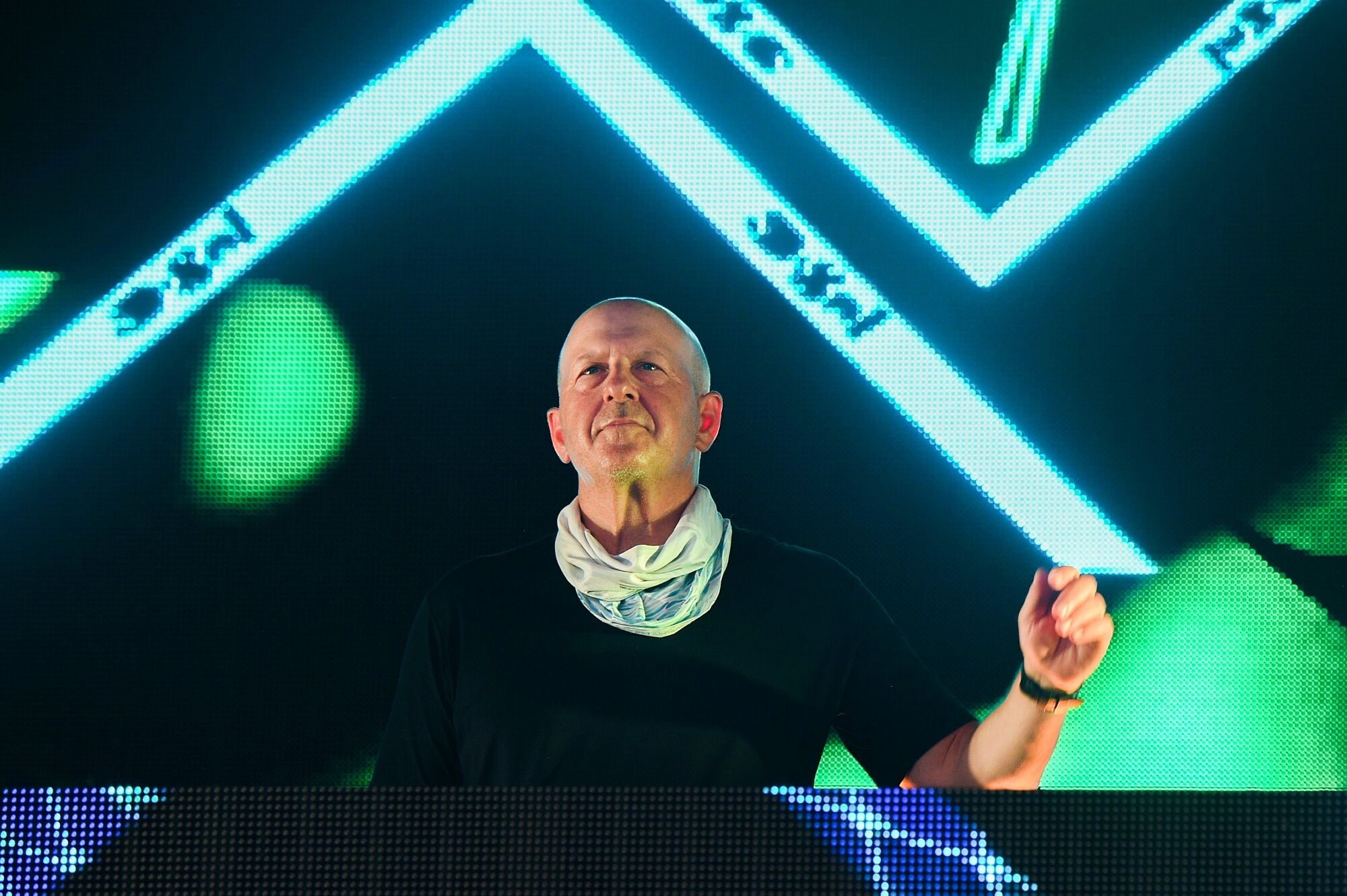
(Bloomberg Opinion) -- Other DJs have been raising the bass throughout the summer season, but David Solomon has been struggling with negative feedback. The New York Times, Wall Street Journal, New York Magazine and The Economist have all piled on, questioning Solomon's performance in his day job as chief executive officer of Goldman Sachs Group Inc.
The gist is that Goldman Sachs employees don't like Solomon very much and many are departing the storied firm. Solomon's waning popularity coincides with declining staff compensation — coupled with accumulated losses linked to his expansion into consumer banking. “You don't need to be popular to be the CEO of Goldman Sachs,” writes Jen Wieczner at New York magazine. “The only real non-negotiable is that you be skilled at making money.”
Solomon is only the 10th person since Marcus Goldman and his son-in-law Samuel Sachs to run the company, so he doesn't have a lot of history to draw on. But his predicament isn't unique. In such a high-profile job, it would be unusual to come under scrutiny. And he's hardly the first Goldman Sachs leader to confront internal dissent.
In 1970, Gus Levy was senior partner — this was long before there were public shareholders to worry about — when the firm became embroiled in a crisis following the bankruptcy of Penn Central, the country's sixth-largest company at the time. Goldman Sachs had reduced its own exposure to the railroad to zero even as it continued selling its short-term debt. When clients found out, they weren't pleased. The resulting lawsuits threatened to overwhelm the firm.
“Beyond the money, it could cost Levy in loss of authority and strength of leadership,” writes Charles D. Ellis in his 2008 book, . Levy's predecessor, Sidney Weinberg, harbored some misgivings about Levy, and although he was no longer alive to witness the events, partners close to him could have withdrawn or reduced their crucial support.
In an additional foreshadowing of Solomon's current situation, Levy's position wasn't helped by a sharp downturn in profits. The year 1972 was a record for the firm, much like 2021. The profits in 1972 “caused people to have a very positive feeling,” Robert Rubin, a future senior partner, told author William Cohan. “And then all of a sudden 1973 came and the market peak-to-trough was down 42%, and we really suffered.” “There was no money for bonuses in 1973,” another partner added.
In those days, the firm's partnership labored under a mantra: “loyalty up, loyalty down,” so it's difficult to discern how much the episode affected morale, at least publicly. “While strong feelings — including personal dislikes and flashes of anger — were evident to the partners the partnership, an impenetrable wall of silence kept almost all internal tensions invisible to outsiders,” writes Ellis.
The New York Times took Goldman Sachs to task, but the firm's first public-relations officer, Edward Novotny (a role filled today by former White House Deputy Press Secretary Tony Fratto), responded by arranging a flattering interview of Levy to appear in Institutional Investor magazine.
By the time Stephen Friedman took charge in the early 1990s, the loyalty mantra had begun to fray. Rising interest rates in 1994 took a dent out of profits, much as they did across the industry. That year, partners' incomes fell by a third and many decided to leave. According to Cohan, 40 partners left at the end of 1994, the first time so many had voted with their feet. “Almost everybody I know at Goldman is grumbling,” one executive told the New York Times.
Today's exodus is a little different. Partners are no longer on the hook for losses now that the firm is public. Many of the departures in 1994 were also prompted by Friedman himself announcing his retirement. But those who remained weren't kind to him, not least his predecessor, John Weinberg, who stayed on as senior chairman. “‘Yellow-bellied coward!' [was] toward the gentle end of the spectrum of hostility Weinberg poured out at every provocation,” writes Ellis.
Friedman's successor, Jon Corzine, didn't suffer the same slide in popularity currently facing Solomon. Corzine is described in an in-house history as a “tall, informal, outwardly easy-going bond trader with a common touch and a strong base of support throughout the firm.” He oversaw a rise in profitability, reporting profits of over $3 billion in 1997, equivalent to a return on equity of 50%, well in excess of the industry's 36% average. “Consensus jelled within the firm that he would be there for a long time,” records Ellis.
Yet Corzine lost the confidence of the six-member management committee, which engineered a coup that left Henry Paulson in charge. It used to be that an 80% vote of the full partnership was required to remove any one partner, but sometime in the 1990s that changed to allow 80% of the management committee to effect a termination. With one slot on the committee vacant, the other four conspired to get rid of Corzine. Cohan called it Shakespearean; Ellis, “like living the history of imperial Rome.”
The slot had been vacated by vice chairman Roy Zuckerberg. “Jon, we've been friends for a long time,” Ellis recounts him telling Corzine at the time. “Please take some advice from a friend: You need to put some of your own people on the executive committee—people you can work well with and who will work well with you.” “They could bury you,” he added. Corzine didn't heed the advice, but Solomon has. Earlier this summer, he added Tom Montag to the board of directors to bolster his support. (The 13-member body next meets in September ).
This time, however, the roles of employee and owner aren't as aligned as they were under the old partnership structure, and the board may take the view that as hostile as the staff is toward Solomon, owner-shareholders are no worse off. Since he took over in 2018, Goldman Sachs stock is up 45% — outperforming the sector but lagging Morgan Stanley. Solomon has already outlived three of his last five predecessors. Like Gus Levy, he may yet cling on.
More From Bloomberg Opinion:
- Goldman Sachs Bonuses Can Buy CEO Solomon Love: Paul J. Davies
- Larry Fink and the Legacy of Some Bad Trades: Marc Rubinstein
- Goldman Is Calling Out China at the Worst Time: Shuli Ren
This column does not necessarily reflect the opinion of the editorial board or Bloomberg LP and its owners.
Marc Rubinstein is a former hedge fund manager. He is author of the weekly finance newsletter Net Interest.
More stories like this are available on bloomberg.com/opinion
©2023 Bloomberg L.P.

-
Navigating Energy Crossroads: S Jaishankar's Call For Diversified Supply Chains At G20 Ministerial Meeting

As geopolitical fault lines continue to test maritime trade routes and commodity flows, Jaishankar's message remains pertinent: true economic resilience requires open markets, protected transit lines, and a genuine commitment to multilateral cooperation rather than coercion.
-
Indians Are Travelling, But Not Every Journey Is A Holiday | The Week In Whys
Pilgrims, patients and working women are the real travellers, and the system hasn't quite caught up with them.
-
Getting To Work Costs Women More | The Reason Why
It is not just about women paying more than men. It is about women paying much more in cities than in villages.
-
AI Bias In Investing Cannot Be Eliminated, But It Can Be Governed
Framing is a particularly important example as identical financial information presented in terms of gains rather than losses can lead an LLM to reach a different assessment.
-
Joining The Dots | Dark Skies, Steady Diya: Why Hope Holds This Diwali
With war, a weak rupee and foreign outflows weighing on sentiment, policymakers at the NDTV World Summit and market veterans at NDTV Profit Ignite: Diwali Edition offered the same advice: stay invested and filter out the noise.
-
The Curious Case of Equitas Small Finance Bank And A CEO Who Quit For Stock
PN Vasudevan believes persistent investor concerns over a perceived conflict of interest had become a governance overhang on Equitas Small Finance Bank's stock, even as the lender improved profitability and asset quality.
-
Talking Points This Week: AI Cash Burn, A Tiger Comeback And An India That Still Finds Its Own Path
India is not immune to higher oil or tighter global liquidity, yet its earnings base is broader, its domestic policy levers are still available.
-
Foreign Investors Own Half Of HDFC Bank and ICICI Bank. An LTCG Cut Could Matter Most Here
Foreign portfolio investors have US$115 billion parked in HDFC Bank, ICICI Bank. If the government cuts long-term capital gains tax, Jefferies says returning foreign money could land here first.
-
'Never Seen This Level Of Negativity': Sandeep Tandon Says The Next Rally May Be Closer Than You Think
Veteran investor Sandeep Tandon says foreign selling is easing, large-caps are due a comeback and mid-caps are crowded, while he turns positive on gold, power and pharma this Diwali.
-
Indians Stay With Family, Not In Hotels | The Reason Why
India still lacks enough clean, reliable and affordable hotels for budget-conscious travellers.










