The Economic Cost Of Bengaluru Floods — How Much Did Mobility Drop?
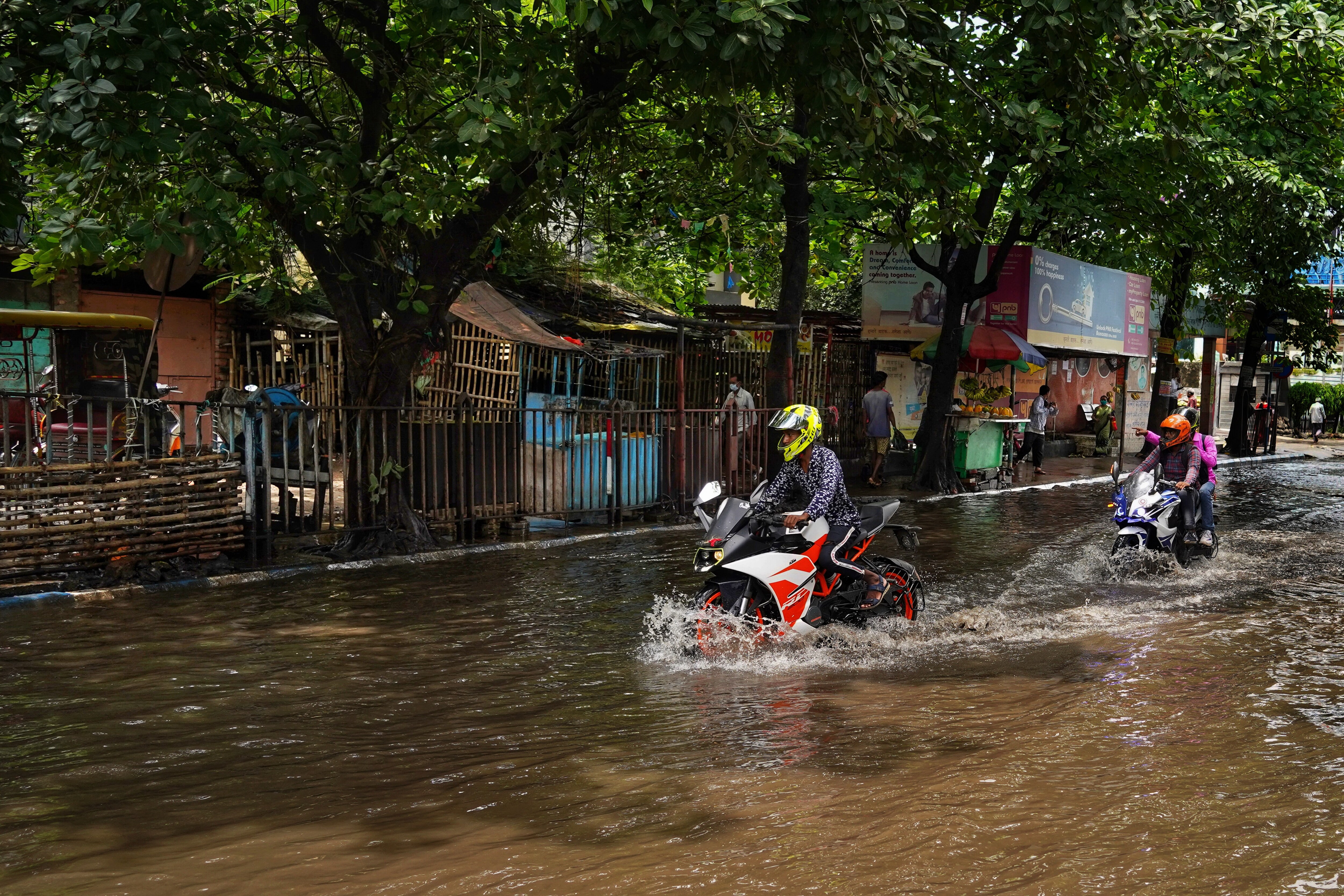
Mobility in Bengaluru was impaired as excessive rains flooded parts of the city in the last couple of weeks.
Bengaluru received the maximum rainfall between Aug. 25 and Sept. 7, 2022. Rainfall each day was 32.8 mm on an average during the two weeks and 460.2 mm in total, according to Skymet. Sept. 5 saw the highest rainfall in the year so far at 131.6 mm.
In comparison, rainfall each day was 1.9 mm in the preceding two weeks between Aug. 11 and 24, and 26.8 mm in sum total.
Google Mobility changes, that show the visits to places such as corner shops and work, saw a decline amid the water logging.
Visits to places of retail and recreation came at 12.2% below the baseline between Aug. 25 and Sept. 7, 2022, compared to 7.6% below the baseline in the preceding two weeks.
Visits to transit stations were 7.2% above the baseline between Aug. 25 and Sept. 7, 2022, compared to 12.4% above the baseline the preceding two weeks.
Visits to grocery and pharmacy stores did not see much change, at 24.1% above the baseline between Aug. 25 and Sept. 7, 2022, compared to 25.3% above the baseline in the preceding two weeks.
Visits to places of work were 13.6% below the baseline between Aug. 25 and Sept. 7, 2022, compared to 12.5% below the baseline the preceding two weeks.
A seven-day moving average also showed some easing across visits to places amid the heavy rainfall.
To be sure, as the pandemic struck, the correlation between mobility and economic output has weakened as more and more people, especially in services, have adapted to work-from-home.
Economic Cost
Disaster losses can't be estimated with certainty.
The Outer Ring Road Companies Associations submitted a letter to the Karnataka Chief Minister estimating a collective loss of Rs 225 crore of all the firms it represents due to the flooding of the Outer Ring Road in the city, after heavy rains on Aug. 30.
The Mumbai floods of 2005 had caused Rs 20,000 crore in losses according to some estimates, said Jaya Dhindaw, program director-integrated urban development, planning and resilience at WRI India. Average annual loss from climate related hazards was pegged at $87 billion in India, according to the State of Climate in Asia 2020 report by the World Meteorological Organisation.
Disasters like these have a disproportionate impact on informal workforce such vendors, house help, and other vulnerable communities, with more people slipping into poverty because of such events, she said. In May, Cyclone Amphan that hit the Sundarbans region between India and Bangladesh, displaced 2.4 million people in India, mostly in West Bengal and Odisha, the WMO report said.
On the other hand, people such as those working in high levels in startups or IT companies in the city can consider relocating, causing a brain drain. What's critical is not what happens during the event, but before and after it, Dhindaw said. Whether there is a major government shift or bandage solutions, she said.
Ahmedabad has developed a heat action plan that's highly community driven, while the Mumbai Action Plan envisions a climate resilient city with a focus on mitigation and adaptation strategies.
Bengaluru's local administrative body has so far began an anti encroachment drive removing illegal structures on storm water drains in the city.

-
Why Amazon And Flipkart Are Struggling To Beat Meesho In India's Smaller Cities

With 274 million users and lowest-cost logistics, Meesho is defending its value commerce crown against giants like Amazon and Flipkart.
-
High US Salaries, No Green Card Certainty: The Financial Calculation Facing Indian H-1B Families
The suspension of PERM processing at eight technology employers does not cancel existing H-1B visas. What it does is force a question many Indian families have been avoiding: is the US salary worth tying your career and family plans to one employer?
-
Swiggy vs Eternal: Food Delivery's Two Rivals Are No Longer In The Same Race
Eternal is building a private AI assistant, dark.ai. Swiggy is still working out how to make Instamart pay, with an operating loss of Rs 895 crore in the July-September quarter while Blinkit stayed profitable.
-
Where You Live Shapes How You Get To Work | The Reason Why
Two-wheelers are the most popular way to get to work in India, accounting for nearly 43% of workplace commutes.
-
Unhedged Position: Can India See An Indonesia-Style Time Correction?
The Nifty is trading below levels it first clocked in 2024. Is there, then, as I have suggested in the headline, potential that the current time correction drags on painfully for the next three-five, even ten years?
-
Navigating Friction And Energy Realities: An Analysis Of Marco Rubio's October Visit To India
Occurring at a critical juncture marked by stalled trade negotiations and escalating geopolitical pressures over global energy supplies, the visit offers a profound window into modern US-India relations.
-
India Exports Capital. Why Not Export Trusteeship?
The big question, then, is whether India can build an institution that global borrowers, investors, banks, and lawyers can trust, even without an Indian connection.
-
France's Economy & Politics Are In Crisis | The Reason Why
Let's look at how the French economy and politics evolved under Nicolas Sarkozy, Franois Hollande and Emmanuel Macron.
-
You May Inherit The Business. You Must Earn Its Credibility.
Succession tests the founder's ability to share authority as much as it tests the next generation's readiness to assume it.
-
Signing Deals Is One Thing; Making Them Work Is Another | The Week In Whys
Sometimes, things don't turn out as planned. Indian companies have lost some bids to rivals, some projects won't produce until 2030.










