The Demise Of First Class Air Travel Is Not Overrated
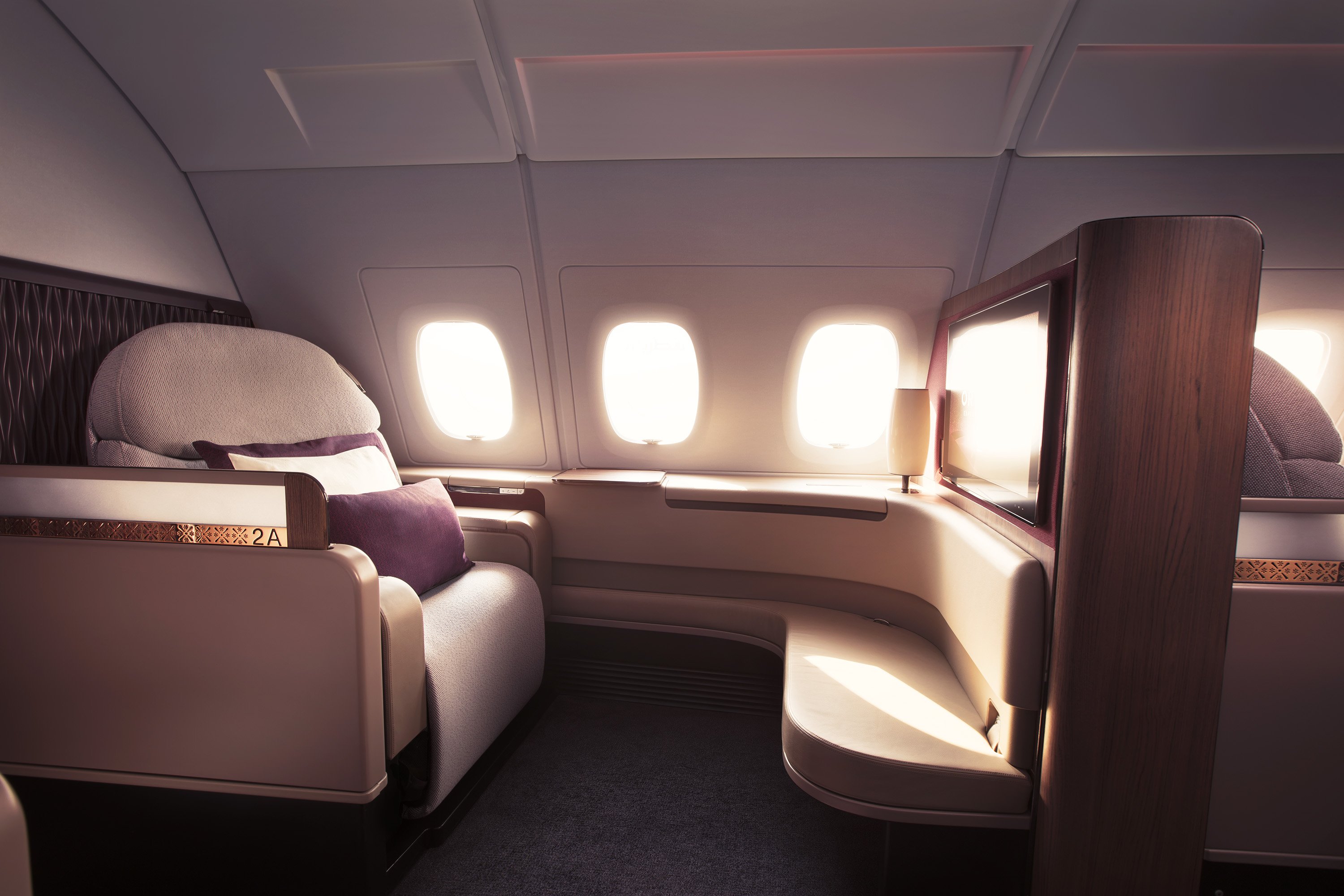
Flying from one place to another might have become commonplace, but it still is one of the marvels of technology I admire every time I am at 35,000 feet. What I also wonder about is the class divide on the plane. In the mid-1950s, Trans World Airlines became the first airline in the world to launch more than one cabin on their Super Constellation aircraft. The higher class of service was called First, and the name has stuck since.
With the arrival of the Boeing 747 in 1969, airlines got even more space to experiment with more cabin products. That led to the emergence of a mid-cabin class between First and Economy, commonly referred to as Business Class now. Qantas was the first airline to fly with this cabin in 1979.
Over time, we have seen many improvements in business and first-class, including the introduction of flat beds, private suites with onboard showers, and in an over-the-top move, The Residence by Etihad, which had a living area, a shower and private quarters on board an A380.
Over the past decades, first-class has been regarded as the epitome of luxury, with various airlines across the globe, especially in Asia, focusing on making it bigger and better.

Etihad's 'First Class Apartment' on the A380. (Promotional photograph: Etihad/Twitter)
The Economics Of First Class
However, a business that is as much about lifestyle and productivity is also about maximising revenue on the plane. The conventional approach to first-class pricing has usually factored in the opportunity cost. For instance, if a first-class seat takes up space equivalent to eight economy class seats on board, then the first-class fare needs to generate revenue for these eight seats at least. Per some rule of thumb calculations in the airline world, a first-class seat needs to generate at least thrice the profit of a business class seat to justify its space on a plane.
In a post-financial crisis world, it became uncool for corporate bigwigs to be seen flying first class, leading to empty cabins in front of the plane. Malaysia Airlines started selling their already-installed first-class seats as business suites at a significant markdown to attract passengers after corporate policies began prohibiting first-class travel.
Each of these seats costs hundreds of thousands of dollars to the airline, and they weigh 100 kilograms or more. For reference, a typical economy class seat is 9 kilograms.
Airlines were spending fuel and money flying these empty seats worldwide in a high-cost fuel environment.

The First Class cabin in a Emirates A380 aircraft. (Photograph: Emirates/Twitter)
Swift Shift After Two Triggers
Two changes hastened the death of first class. In 2017, Qatar Airways became the first to launch a business class seat that took the same amount of space on an aircraft as an earlier format business class seat and gave it doors. With privacy on board and aisle access for everyone, you won't have to jump atop your neighbour to use the lavatory in the middle of the night.
Since then, Etihad, British Airways, Delta and some other carriers have jumped on board the ‘business class with doors' team. These products check the boxes for corporate executives and affluent travellers looking for privacy, enhanced service and productivity on board while they travel.
The other change was the arrival of a new generation of aircraft, such as the Boeing 787. The 787 from Boeing had a particularly alluring business case with airlines, promising them that they could make money on long-haul flights with these new aircraft even on long and thin routes, the term used for routes where passenger volumes are less on intercontinental routes.

Singapore Airlines' First Class suites, on the A380. (Promotional photograph: Singapore Airlines)
The Allure Of Premium Economy
But as first-class continues to become a rare commodity, a new product in between economy and business lass is taking centre stage, called Premium Economy. Premium economy debuted in the early 1990s onboard Taiwanese carrier Eva Air. It rose to prominence as travel budgets across companies shrunk and became the poor man's business class.
Premium economy intends to provide added comfort compared to economy class without breaking the bank. Usually priced at 50-100% more than economy class on international routes, the experience includes a wider seat, more legroom, and a much better recline than economy class. Business class usually sells at 4-5 times the economy class prices, so for the cost-conscious traveller, this was a boon.
Most global carriers have a premium economy cabin, including the likes of Singapore Airlines, British Airways and Delta. Such has been the pull of the cabin that Emirates finally bit its lip and introduced premium cconomy on its new A380 aircraft in 2022 and intends to add it to the existing fleet over the years.
On their newest fleet member, the A350-1000 aircraft, British Airways has installed the same number of premium economy seats (56) as business class seats.

British Airways' 'World Traveller Plus' Premium Economy seats. (Photograph: British Airways)
That is a big bet and talks volumes about the conviction behind the emergence of Premium Economy as a solid option for long-haul travellers.
The logic of doing this is alluring. As first-class goes away, the affluent travellers will usually end up flying business class, and those who used to fly business class will have the opportunity to fly the newer business class products or save some money and fly in-between on premium economy. The economy class flyers also get a chance to think about spending a little bit more and getting to fly comfortably.
Eventually, a whole set of affluent travellers who have upgraded to a private jet flying in the pandemic world and are never returning to commercial air travel. Another set will get the comfort of first-class flying in their business-class seats with privacy. And those who would like to taste the high life without damaging their bank balance will fly premium economy. For the rest of us, there will always be economy.
Ajay Awtaney writes about aviation and passenger experience at LiveFromALounge.com and tweets at @LiveFromALounge.
The views expressed here are those of the author, and do not necessarily represent the views of BQ Prime or its editorial team.

-
A New Samvat Wishlist: Inclusive Prosperity And Human Development

India has strengthened its economic foundations through infrastructure, digital access and enterprise. Its next growth chapter must deepen productivity, create better livelihoods and widen participation in prosperity.
-
Love, Sex Aur Dhokha: The Audacious Plot To Spy On Jensen Huang
A Taipei dinner, a Singapore chip buyer and a suspected Chinese asset: inside the alleged spy operation that got close to NVIDIA's Jensen Huang.
-
Ten Things I Learnt This Samvat
Patience can be a trap. Cheap stocks can stay cheap. Leverage can wipe you out. What did Samvat 2082 teach us? Niraj Shah writes on 10 lessons from the year gone by.
-
Talking Points This Week: Tech Nerves, FII Buying, And A Faraway Banking Shock
The global markets are not shining this Diwali. The exception in the large markets is, India.
-
Midterm Rally Lasted A Day. The Hard Reality Of A Divided US May Last Two Years | Opinion
Between a contested AI boom, a debt ceiling that arrives in 2027 and a president with every incentive to act alone, the next two years may prove more volatile than the first day's rally suggests.
-
Blue Wave Will Derail the AI Trade but Won't Dismantle the AI Era | Unhedged Position
The Democrats' sweep of the US Congress will see politics collide with economic forces both over the long and short term.
-
It's Time To Take The GST Council's Bet On Trust Global
Payment records can prove India's services exports, and clear, proportionate rules can bring foreign digital sellers into the tax net.
-
Opinion | India at 38: From Innovation Overperformer to Innovation Powerhouse
India now has 453 VC-backed deep science startups, 18 of them late-stage, after 117 percent growth since 2020. Laurus Labs, at USD 9.3 billion, is the most valuable deep science company in any middle-income economy outside China.
-
Navigating Energy Crossroads: S Jaishankar's Call For Diversified Supply Chains At G20 Ministerial Meeting
As geopolitical fault lines continue to test maritime trade routes and commodity flows, Jaishankar's message remains pertinent: true economic resilience requires open markets, protected transit lines, and a genuine commitment to multilateral cooperation rather than coercion.









