The Curious Case Of ATMs Going Dry...Again.
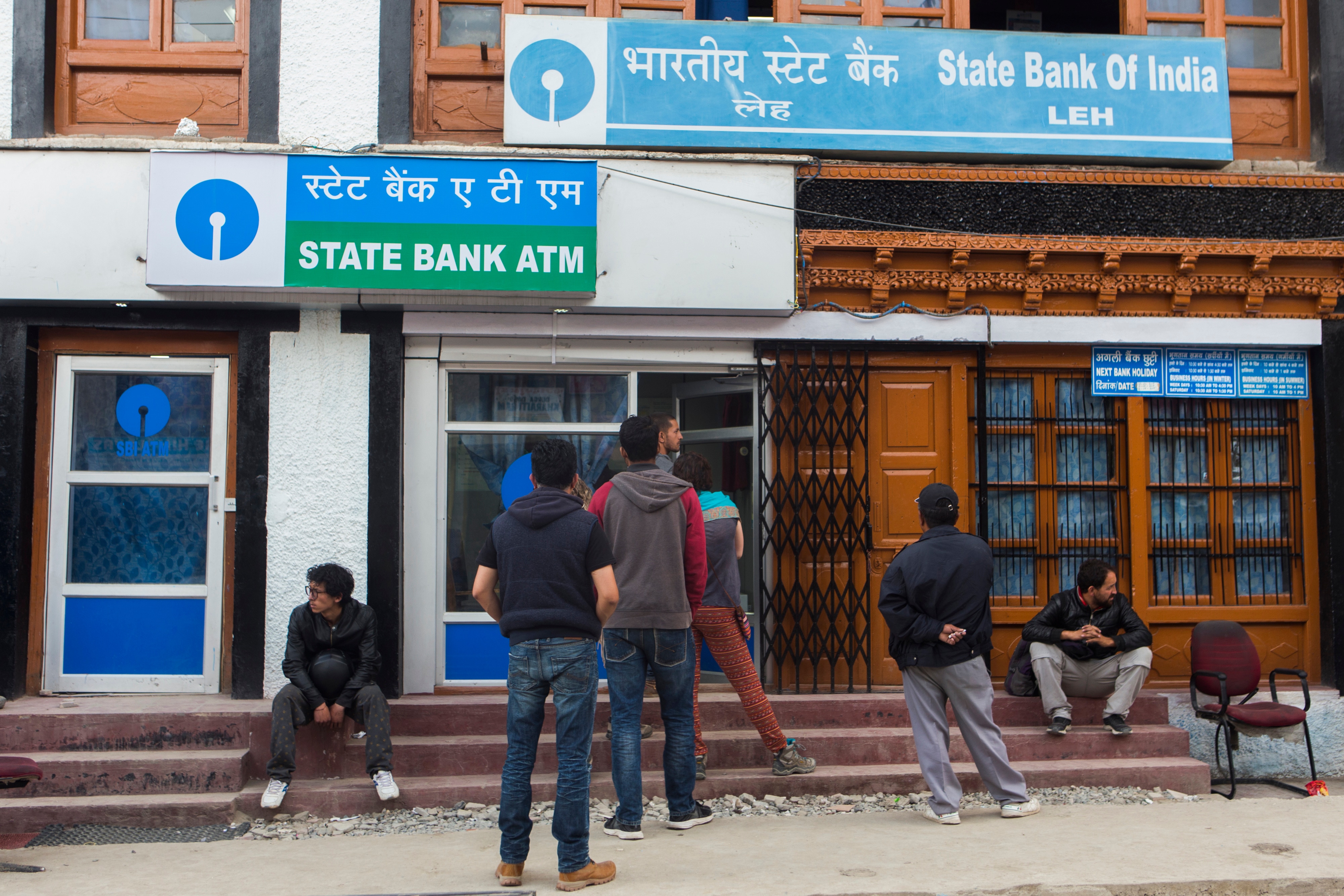
It has been five months since demonetisation was announced. Three-fourths of the amount of currency in circulation that was withdrawn has been replaced. As of last count, over Rs 13 lakh crore in currency was available in the system as compared to just under Rs 18 lakh crore before demonetisation.
Each of these facts suggest that availability of cash should now be near normal and lines at ATMs should be a thing of the past.
It was certainly that way till March. Early April, however, has seen some return of cash shortages, according to anecdotal reports which have been confirmed by banking and cash management industry officials.
Normalcy has been restored. People's faith in cash, I mean. Lines outside ATM, Mumbai, in searing heat@IndiaExplained @sanjayuvacha pic.twitter.com/S3bo2nPSfn
April 15, 2017Not a single ATM in Hiranandani #Powai has cash. All have the "out of service" board placed. @ICICIBank_Care @HDFC_Bank
April 1, 2017CMS Infosystems India's largest cash management firm, says that there has been a decline in the amount of cash being transported in April. A company spokesperson told BloombergQuint that, nationwide, the company transported 20 percent less cash in the first week of April compared to the first week of March. This is likely to have been the case in the second week of April as well, said the spokesperson.
It is not easy to understand why this is happening. After all, at an aggregate level, there appears to be enough currency in circulation.
Bankers that BloombergQuint spoke to had different explanations. One pointed to a regional problem with a surge in cash demand reported from the Andhra Pradesh and Telangana regions; another said that supply has slowed as the currency printing presses may be working fewer shifts. A third pointed to possible hoarding of cash. A fourth said he was as confused as everyone else.
The one thing they all accepted, though, was that a shortage of cash has re-emerged, albeit temporarily.
It (shortage of currency) is not across the country. There are pockets where shortage is there. We had a lot of problems in Hyderabad and Andhra Pradesh and Telangana states...things are getting back to normal. But yes, in my assessment, the demand supply gap still exists.Rajnish Kumar, Managing Director, State Bank of IndiaAnother senior banker, requesting anonymity, said that some mismatch has been created because the Reserve Bank of India (RBI) has been concentrating on printing more small value notes.
In the early days after demonetisation was announced, the RBI was focused on printing Rs 2,000 notes to quickly replenish the value of currency available. However, since one goal of demonetisation is typically to reduce the proportion of high-value notes in the economy (as these can be used as a store of illegal wealth), the central bank may have since then recalibrated the printing towards lower value notes.
According to a third person, working with a large private sector bank, at present the RBI is able to meet only 15-25 percent of banks' requirements through fresh supply of notes. The person spoke on the condition of anonymity.
Talk of a shortage of cash is, in a sense, compounding the problem, said SBI's Kumar, who believes that people are withdrawing more than they need. “What happens is that when there is a feeling that there is a shortage of currency, then people begin to keep it with themselves, not spend, and not bring it to the bank,” said Kumar. He added that for SBI, at present, the outgo of currency is more than what is being received by way of cash deposits.
While the recent shortage in cash supply is being attributed to various reasons, the slower pace of remonetisation has been confirmed by recent data releases.
While maintaining the uptrend, the pace of weekly increase in currency in circulation (CIC) has been waning. CIC for the week ending April 7 witnessed an increase of Rs 264 billion (Rs 26,400 crore) to Rs 13.6 trillion (Rs 13.6 lakh crore) now compared to the 2017 weekly average of Rs 357 billion (Rs 35,700 crore). This roughly forms around 9.1 percent of nominal GDP (gross domestic product) compared to around 12.4 percent prior to demonetisation.Kotak Institutional Equities Report (April 10)In an interview with BloombergQuint last week, former RBI deputy governor R Gandhi cautioned authorities against maintaining an artificial shortage of cash.
“If a public service authority, the government or the Reserve Bank, decide to have an artificial control on currency to force the people to go for an alternate course of payment, that will not work,” said Gandhi while adding that you can't compel citizens to move away from cash. “Cash is a reality. It will continue,” said Gandhi.

-
Where You Live Shapes How You Get To Work | The Reason Why

Two-wheelers are the most popular way to get to work in India, accounting for nearly 43% of workplace commutes.
-
High US Salaries, No Green Card Certainty: The Financial Calculation Facing Indian H-1B Families
The suspension of PERM processing at eight technology employers does not cancel existing H-1B visas. What it does is force a question many Indian families have been avoiding: is the US salary worth tying your career and family plans to one employer?
-
Unhedged Position: Can India See An Indonesia-Style Time Correction?
The Nifty is trading below levels it first clocked in 2024. Is there, then, as I have suggested in the headline, potential that the current time correction drags on painfully for the next three-five, even ten years?
-
Navigating Friction And Energy Realities: An Analysis Of Marco Rubio's October Visit To India
Occurring at a critical juncture marked by stalled trade negotiations and escalating geopolitical pressures over global energy supplies, the visit offers a profound window into modern US-India relations.
-
India Exports Capital. Why Not Export Trusteeship?
The big question, then, is whether India can build an institution that global borrowers, investors, banks, and lawyers can trust, even without an Indian connection.
-
France's Economy & Politics Are In Crisis | The Reason Why
Let's look at how the French economy and politics evolved under Nicolas Sarkozy, Franois Hollande and Emmanuel Macron.
-
You May Inherit The Business. You Must Earn Its Credibility.
Succession tests the founder's ability to share authority as much as it tests the next generation's readiness to assume it.
-
Signing Deals Is One Thing; Making Them Work Is Another | The Week In Whys
Sometimes, things don't turn out as planned. Indian companies have lost some bids to rivals, some projects won't produce until 2030.
-
FOMC Wall, PERM Suspension, Hospital Stocks | Talking Points This Week
A PERM suspension would directly affect green-card sponsorship rather than H-1B visas, so the near-term earnings impact could remain relatively limited. The key question is whether this marks a new phase in US scrutiny of Indian IT.
-
Everything, Everywhere, All At Once: Dalal Street's Week To Forget | Joining The Dots
Visa curbs, a Starlink spat and cancer drug caps: what connects this week's shocks for Indian markets









