Tencent Is World's Worst Stock Bet With $170 Billion Wipeout
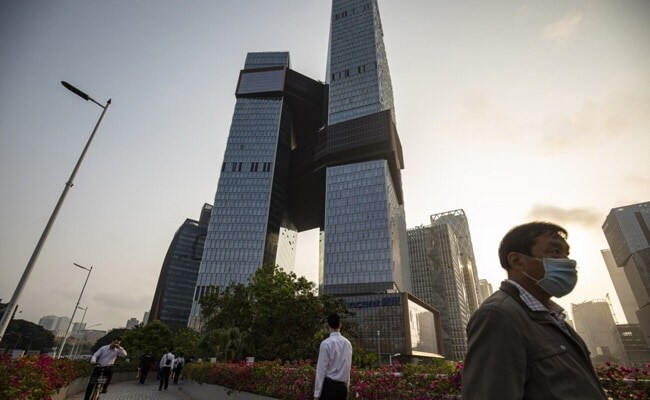
China's unprecedented crackdown on its technology industry has turned Tencent Holdings Ltd. from a market darling into the world's biggest stock loser this month.
The Chinese Internet giant had tumbled 23% in July as of Wednesday, set for its worst month ever after erasing about $170 billion of market value. That marks the fastest evaporation of shareholder wealth worldwide during this period, Bloomberg data shows. Nine of the top 10 losers in shareholder value this month are Chinese companies, including Meituan and Alibaba Group Holding Ltd.
Tencent's shares rebounded by 7.1% on Thursday morning, tracking broader gains in Chinese stocks after Beijing intensified efforts to alleviate concerns about its crackdown on the private education industry.
The Shenzhen-based firm is one of the key casualties of an official campaign that targets some of the nation's tech behemoths considered posing a potential threat to China's data security and financial stability. The selloff in its shares intensified earlier this week after Beijing broadened the regulatory clampdown to include other once high-flying industries such as private education.

"I don't see an end to the regulatory crackdown. Data security is a top priority to policy makers in the coming years. It's a new normal," said Paul Pong, managing director at Pegasus Fund Managers Ltd. "Valuations will have to be adjusted to cope with that, especially for technology giants like Tencent."
The regulatory storm has resulted in penalties such as the loss of exclusive music streaming rights and anti-trust fines for Tencent. This week, the company said it was also suspending new user registration for its popular WeChat services and was ordered to fix mobile app-related issues.
Despite concerns about further punitive measures from regulators, the company's stock is starting to look cheap and most analysts have refrained from cutting their price targets: Among the 68 analysts who have a rating on Tencent, 62 still recommend the stock as a "buy." The average target price among analysts is HK$736.3, representing a 65% premium over Wednesday's close of HK$447.2, Bloomberg data shows.
At HK$447.2, the stock was trading at 22.5 times forward earnings, well below its historical average of 30 times. It also has fallen to the most oversold level in more than six years.

"Tencent trading below HK$500 is attractive, but the upcoming earnings will be a key thing to watch," said Pong, adding that if the firm can achieve 20%-30% growth, its shares could enjoy a solid rebound. "Because that would show they can still maintain good profitability in this tough environment."
To Citigroup analysts including Alicia Yap, any substantial share buyback by the company could also help reverse currently poor investor mood.
"We believe if major Internet companies announce new share buyback programs or increase size of existing buybacks, it would demonstrate the management's confidence in fundamentals and reassure investors on profit growth outlook," Yap and her colleagues wrote in a research note. Yap has a 'buy' rating on the stock.
(This story has not been edited by NDTV staff and is auto-generated from a syndicated feed.)

-
Midterm Rally Lasted A Day. The Hard Reality Of A Divided US May Last Two Years | Opinion

Between a contested AI boom, a debt ceiling that arrives in 2027 and a president with every incentive to act alone, the next two years may prove more volatile than the first day's rally suggests.
-
Blue Wave Will Derail the AI Trade but Won't Dismantle the AI Era | Unhedged Position
The Democrats' sweep of the US Congress will see politics collide with economic forces both over the long and short term.
-
It's Time To Take The GST Council's Bet On Trust Global
Payment records can prove India's services exports, and clear, proportionate rules can bring foreign digital sellers into the tax net.
-
Opinion | India at 38: From Innovation Overperformer to Innovation Powerhouse
India now has 453 VC-backed deep science startups, 18 of them late-stage, after 117 percent growth since 2020. Laurus Labs, at USD 9.3 billion, is the most valuable deep science company in any middle-income economy outside China.
-
Navigating Energy Crossroads: S Jaishankar's Call For Diversified Supply Chains At G20 Ministerial Meeting
As geopolitical fault lines continue to test maritime trade routes and commodity flows, Jaishankar's message remains pertinent: true economic resilience requires open markets, protected transit lines, and a genuine commitment to multilateral cooperation rather than coercion.
-
Indians Are Travelling, But Not Every Journey Is A Holiday | The Week In Whys
Pilgrims, patients and working women are the real travellers, and the system hasn't quite caught up with them.
-
Getting To Work Costs Women More | The Reason Why
It is not just about women paying more than men. It is about women paying much more in cities than in villages.
-
AI Bias In Investing Cannot Be Eliminated, But It Can Be Governed
Framing is a particularly important example as identical financial information presented in terms of gains rather than losses can lead an LLM to reach a different assessment.
-
Joining The Dots | Dark Skies, Steady Diya: Why Hope Holds This Diwali
With war, a weak rupee and foreign outflows weighing on sentiment, policymakers at the NDTV World Summit and market veterans at NDTV Profit Ignite: Diwali Edition offered the same advice: stay invested and filter out the noise.









