Tax Searches On Ex-NSE Head Accused Of Sharing Info With Himalayan Yogi
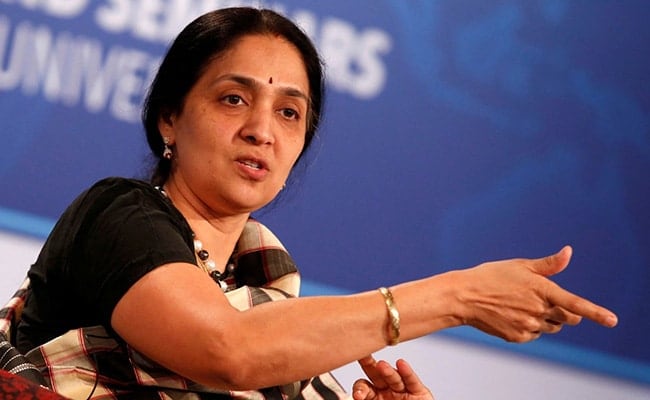
Chitra Ramkrishna, the former head of the country's largest stock exchange who allegedly shared confidential information with a Himalayan yogi and took his advice on crucial decisions, was searched by the Income Tax department today.
Chitra Ramkrishna was the managing director and CEO of the National Stock Exchange (NSE) between 2013 and 2016 and quit citing "personal reasons".
She shared information including the bourse's financial projections, business plans and board agenda with the spiritual guru living in the Himalayas, the Securities and Exchange Board of India (SEBI) said in an order.
The market regulator called it "bizarre misconduct" and a "glaring breach" of regulations.
"The sharing of financial and business plans of NSE ... is a glaring, if not unimaginable, act that could shake the very foundations of the stock exchange," SEBI said in its order, imposing penalties on Ms Ramkrishna, NSE and other top former executives for the lapses.
The guru was running the exchange, and Ms Ramkrishna was "merely a puppet in his hands", SEBI said.
The decisions that Ms Ramkrishna took under the influence of the yogi included the appointment of a mid-level executive without any capital market experience, as an adviser and NSE's operating officer. Ms Ramkrishna is accused of giving "frequent, arbitrary and disproportionate" increase in compensation to Anand Subramanian without any evidence of a performance evaluation.
Ms Ramkrishna is also accused of sharing internal information including financial and business plans of the NSE, dividend scenario, financial results with the yogi and consulting him over the performance appraisals of the exchange's employees.
SEBI imposed a penalty of 30 million rupees on Ms Ramkrishna and barred her from any bourse and SEBI-registered intermediary for three years.
Ms Ramkrishna, defending herself, told SEBI that sharing of information with the person who was "spiritual in nature" did not compromise confidentiality or integrity.
She referred to the yogi as "Sironmani" and said that he guided her for the past 20 years on personal and professional matters. She also called him a "spiritual force that could manifest itself anywhere it wanted and did not have any physical or locational co-ordinates and largely dwelt in the Himalayan range".
Ms Ramkrishna was among a group of executives who in the early 1990s started NSE as a challenger to the more established BSE Ltd, then known as Bombay Stock Exchange. She was appointed joint managing director of NSE in 2009 and promoted to CEO in 2013.

-
Ten Things I Learnt This Samvat

Patience can be a trap. Cheap stocks can stay cheap. Leverage can wipe you out. What did Samvat 2082 teach us? Niraj Shah writes on 10 lessons from the year gone by.
-
Talking Points This Week: Tech Nerves, FII Buying, And A Faraway Banking Shock
The global markets are not shining this Diwali. The exception in the large markets is, India.
-
Midterm Rally Lasted A Day. The Hard Reality Of A Divided US May Last Two Years | Opinion
Between a contested AI boom, a debt ceiling that arrives in 2027 and a president with every incentive to act alone, the next two years may prove more volatile than the first day's rally suggests.
-
Blue Wave Will Derail the AI Trade but Won't Dismantle the AI Era | Unhedged Position
The Democrats' sweep of the US Congress will see politics collide with economic forces both over the long and short term.
-
It's Time To Take The GST Council's Bet On Trust Global
Payment records can prove India's services exports, and clear, proportionate rules can bring foreign digital sellers into the tax net.
-
Opinion | India at 38: From Innovation Overperformer to Innovation Powerhouse
India now has 453 VC-backed deep science startups, 18 of them late-stage, after 117 percent growth since 2020. Laurus Labs, at USD 9.3 billion, is the most valuable deep science company in any middle-income economy outside China.
-
Navigating Energy Crossroads: S Jaishankar's Call For Diversified Supply Chains At G20 Ministerial Meeting
As geopolitical fault lines continue to test maritime trade routes and commodity flows, Jaishankar's message remains pertinent: true economic resilience requires open markets, protected transit lines, and a genuine commitment to multilateral cooperation rather than coercion.
-
Indians Are Travelling, But Not Every Journey Is A Holiday | The Week In Whys
Pilgrims, patients and working women are the real travellers, and the system hasn't quite caught up with them.
-
Getting To Work Costs Women More | The Reason Why
It is not just about women paying more than men. It is about women paying much more in cities than in villages.









