Tata Motors Says Nano Investment Significantly Written Off
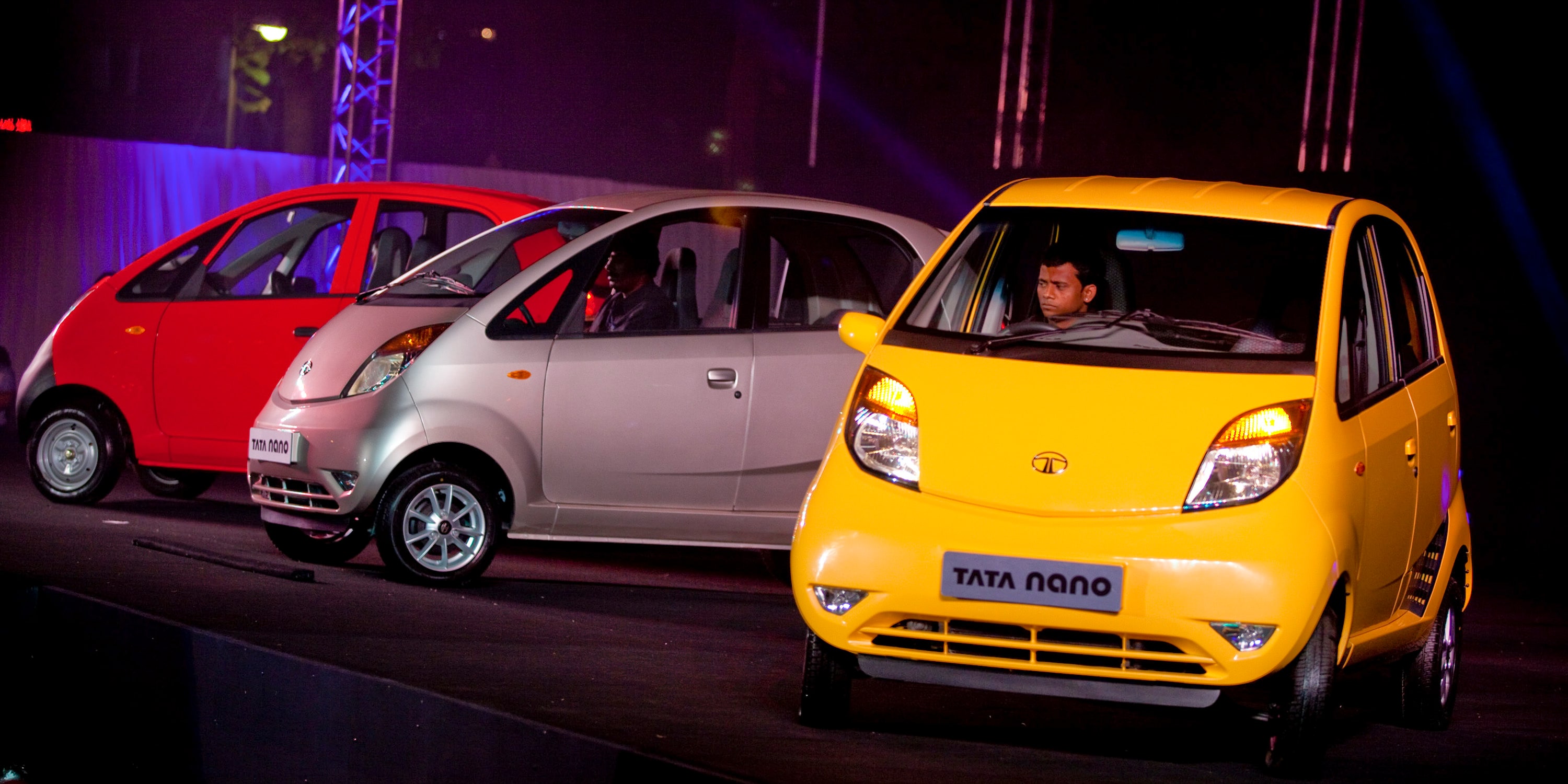
Days after ousted Tata Sons chairman Cyrus Mistry blamed Nano for bleeding Tata Motors, the company on Friday said it has significantly written off development cost and investments related to the car and is now refocusing its strategy on "growing and attractive segments" of the passenger vehicles market.
The company, however, refuted Mistry's allegations that another reason for it not shutting down the Nano, besides emotional reasons, was the supply of gliders to an electric car maker in which Ratan Tata has a stake.
Due to combination of several factors including project delays, due to change in location of the factory and the perception of being a low-priced car, the volumes initially anticipated did not materialise and utilisation of capacities are significantly lower. In a highly-priced sensitive segment of the market, coupled with low volumes, it has been a loss-making product.Tata Motors clarification to the BSE
The company, however, said a major part of investments at the Sanand plant, where the Nano is manufactured, is capable of being utilised for other products as is evident from the production of the Tiago model.
"As far as development cost and investments in Nano-specific dyes and toolings are concerned, these have been significantly written off in line with the accounting policies of over the last several years," Tata Motors added.
A day after he was ousted as chairman of Tata Sons on October 24, Mistry had written to the board members of Tata Sons, saying the Nano product development required a concept that called for a car below Rs 1 lakh but the cost was always above this. This product has consistently lost money, peaking at Rs 1,000 crore.
He had said Tata Motors has been unable to shut down the loss-making small car Nano due to "emotional reasons" and doing so would also stop the supply of "gliders" to an entity that makes electric cars in which Ratan Tata has a stake.
Refuting the particular allegation, the company said: "We would like to clarify that the matter is at a preliminary exploratory stage and no arrangement for supply of gliders has been concluded."
On its turnaround plan, Tata Motors said it has recently presented and received the approval of the board for its future passenger vehicle product and business strategy. The strategy envisaged refocusing strategy "on growing and attractive segments of the passenger vehicle market in terms of volumes and profitability and aligning with the changing and enhanced expectations of the consumers regarding content and features".
"The company is committed to pursuing this refocused long-term strategy and future product decisions arising from the will be announced in the course of implementation of this approved strategy," it said. Mistry had said that before 2013, in order to shore up sales and market share, Tata Motors Finance extended credit with tax risk assessment which resulted in NPAs exceeding Rs 4,000 crore, a claim that the company refuted.
"These credits were pre-dominantly comprising financing for the entry-level vehicle segment and first-time users, which were severely impacted by business and macro economic downturn in the previous years, which aggravated the risk profile of this portfolio," the auto major said.
"We would like to clarify that these have been fully provided for in line with our current assessment of future loses and we do not anticipate further provisions." The company said its accounting policies are in due compliance of the relevant accounting standards under IGAAP, IND-AS and IFRS accounting standards and appropriate to present true and fair view of the financial statements.
"These are regularly reviewed by our audit committee, statutory auditors and appropriately discussed in our financial statements," it added.
Tata Motors was responding to Mistry's charge that it had employed "aggressive accounting" to capitalise on substantial proportion of the product development expenses creating future liability.
Ratan Tata's dream project Nano came alive in January 2008 when it was launched at a promised price tag of Rs 1 lakh, which was then the cheapest car in the world. However, the car faced setbacks one after another.
Tata Motors had to shift the manufacturing plant of the car to Sanand in Gujarat from its original site at Singur in West Bengal due to farmers' opposition led by the Trinamool Congress. Although the company had managed to roll out the car from its new location, initial instances of the car catching fire raised many safety issues.
It could never live up to its potential, with Tata even admitting that Tata Motors had made a mistake of marketing Nano as the cheapest car.

-
Navigating Friction And Energy Realities: An Analysis Of Marco Rubio's October Visit To India

Occurring at a critical juncture marked by stalled trade negotiations and escalating geopolitical pressures over global energy supplies, the visit offers a profound window into modern US-India relations.
-
India Exports Capital. Why Not Export Trusteeship?
The big question, then, is whether India can build an institution that global borrowers, investors, banks, and lawyers can trust, even without an Indian connection.
-
France's Economy & Politics Are In Crisis | The Reason Why
Let's look at how the French economy and politics evolved under Nicolas Sarkozy, Franois Hollande and Emmanuel Macron.
-
You May Inherit The Business. You Must Earn Its Credibility.
Succession tests the founder's ability to share authority as much as it tests the next generation's readiness to assume it.
-
Signing Deals Is One Thing; Making Them Work Is Another | The Week In Whys
Sometimes, things don't turn out as planned. Indian companies have lost some bids to rivals, some projects won't produce until 2030.
-
FOMC Wall, PERM Suspension, Hospital Stocks | Talking Points This Week
A PERM suspension would directly affect green-card sponsorship rather than H-1B visas, so the near-term earnings impact could remain relatively limited. The key question is whether this marks a new phase in US scrutiny of Indian IT.
-
Everything, Everywhere, All At Once: Dalal Street's Week To Forget | Joining The Dots
Visa curbs, a Starlink spat and cancer drug caps: what connects this week's shocks for Indian markets
-
India Is Going Abroad For Critical Minerals. But It May Take Years To Pay Off | The Reason Why
Although India's steps are in the right direction, they remain modest compared with India's growing dependence.
-
When Everyone Has AI, What Gives You An Edge?
India's young workforce is entering an uncertain world of work where powerful AI tools are becoming widely accessible. The advantage will belong to those who combine deep expertise with digital fluency, and the distinctly human capabilities that technology cannot manufacture.
-
Wrong Labels, High Pesticide Residues Holding Back Agri Exports | The Reason Why
India needs stronger domestic food-safety and labelling standards, with best practices becoming part of everyday business for farmers, traders and food companies.










