Tata-Mistry Spat Shows Vulnerability Of Independent Company Directors
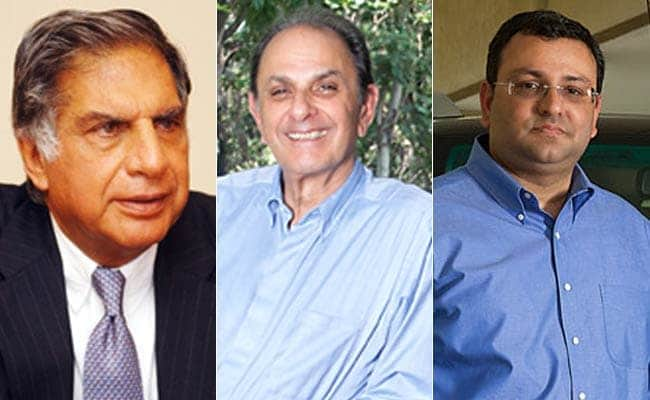
Mumbai: The bitter boardroom battle at the heart of Tata Sons has put a spotlight on the vulnerability of independent company directors who stand-up to, or take on a dominant shareholder.
Tata Sons is not only fighting former chairman Cyrus Mistry, who has complained of mismanagement and corporate governance failures within the company, but is now also trying to oust Nusli Wadia - one of the group's most fiercely vocal independent directors - after he publicly backed Mr Mistry.
While Mr Mistry has resigned from all listed Tata entities, Mr Wadia was removed from the board of Tata Steel and Tata Motors this week. Tata Chemicals will vote on Mr Wadia's ouster on Friday.
Such corporate infighting is not rampant in India, but the latest events could set a dangerous precedent, suggesting an urgent need to relook at the role of independent company directors in the country, experts say.
"What is at stake right now is not an independent director. What is at stake is the independence of independent directors," said L. Iyer of LVV Iyer & Associates.
"If independent directors are under constant threat of being removed ... why would they act in an independent manner?"
In developed markets such as the United States and the United Kingdom, independent directors are relatively protected as shareholdings are much more diffused. But in India, listed firms are dominated by a major shareholder, making it easier for the latter to stamp out dissenting independent voices.
Of the 1,594 listed and actively traded firms on India's main bourse, some 88 percent have dominant shareholders with 30-80 percent stakes, data from Prime Database shows.
Test Case
Tata Sons is the single-largest shareholder in the group companies where Mr Wadia was an independent director. Mr Mistry's Shapoorji Pallonji family owns about 18 percent of Tata Sons.
To oust Mr Wadia from Tata Steel and Tata Motors, all Tata Sons needed to do was call for a special shareholder meeting and win a simple majority vote. The dominant shareholder, who is calling for the removal, is not barred from voting on the issue.
"I think this particular case will be effectively the test case for how robust the regime (India's company law) is or whether any further changes need to be made to it," said Umakanth Varottil, an associate law professor at National University of Singapore.
India's market regulator SEBI, however, said there was no immediate need to change the norms around independent directors.
"I, at this stage, don't foresee any particular compelling reason to review that," Chairman UK Sinha has said.
India has only recently moved to recognise the role and the significance of independent directors. The function was formally introduced into the Companies Act 2013.
The law details the duties of independents - from looking after interests of minority shareholders to scrutinising management performance and providing objective views on strategy decisions and other matters.
"The institution of independent directors in India is quite nascent, so if you allow independence to be compromised at this stage, then things can go wrong," said Iyer.

-
High US Salaries, No Green Card Certainty: The Financial Calculation Facing Indian H-1B Families

The suspension of PERM processing at eight technology employers does not cancel existing H-1B visas. What it does is force a question many Indian families have been avoiding: is the US salary worth tying your career and family plans to one employer?
-
Unhedged Position: Can India See An Indonesia-Style Time Correction?
The Nifty is trading below levels it first clocked in 2024. Is there, then, as I have suggested in the headline, potential that the current time correction drags on painfully for the next three-five, even ten years?
-
Navigating Friction And Energy Realities: An Analysis Of Marco Rubio's October Visit To India
Occurring at a critical juncture marked by stalled trade negotiations and escalating geopolitical pressures over global energy supplies, the visit offers a profound window into modern US-India relations.
-
India Exports Capital. Why Not Export Trusteeship?
The big question, then, is whether India can build an institution that global borrowers, investors, banks, and lawyers can trust, even without an Indian connection.
-
France's Economy & Politics Are In Crisis | The Reason Why
Let's look at how the French economy and politics evolved under Nicolas Sarkozy, Franois Hollande and Emmanuel Macron.
-
You May Inherit The Business. You Must Earn Its Credibility.
Succession tests the founder's ability to share authority as much as it tests the next generation's readiness to assume it.
-
Signing Deals Is One Thing; Making Them Work Is Another | The Week In Whys
Sometimes, things don't turn out as planned. Indian companies have lost some bids to rivals, some projects won't produce until 2030.
-
FOMC Wall, PERM Suspension, Hospital Stocks | Talking Points This Week
A PERM suspension would directly affect green-card sponsorship rather than H-1B visas, so the near-term earnings impact could remain relatively limited. The key question is whether this marks a new phase in US scrutiny of Indian IT.
-
Everything, Everywhere, All At Once: Dalal Street's Week To Forget | Joining The Dots
Visa curbs, a Starlink spat and cancer drug caps: what connects this week's shocks for Indian markets
-
India Is Going Abroad For Critical Minerals. But It May Take Years To Pay Off | The Reason Why
Although India's steps are in the right direction, they remain modest compared with India's growing dependence.









