Tamil Nadu Orders Permanent Closure Of Sterlite Plant
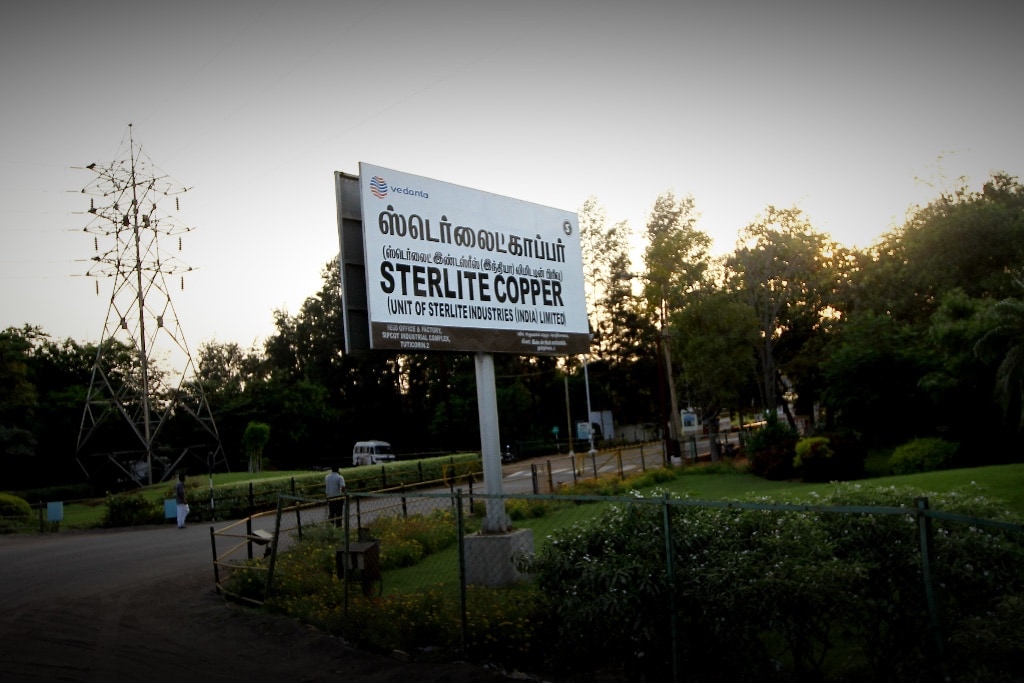
The Tamil Nadu government today ordered the state pollution control board to seal and “permanently” close the Vedanta Group's copper plant in Tuticorin after last week's violent protests saw 13 people killed in police firing.
The government's decision came a day ahead of the start of the state Assembly session where it is likely to come under intense opposition fire over the Tuticorin incidents. “Now the plant is permanently closed. The government order has been implemented,” Tuticorin District Collector Sandeep Nanduri said.
Soon after the issuance of the order, top Tuticorin district officials sealed the copper smelter unit premises and pasted the order at the main gate. Chief Minister Palaniswami told reporters in Chennai the “plant has been permanently closed”.
The closure of the copper plant caps sustained protests and campaign for the last several years by the local people against copper factory over environmental pollution concerns.
The government order said it endorsed the recent closure direction of the Tamil Nadu Pollution Control Board, and also asked it to “seal the unit and close the plant permanently”. The document cited the Constitution's directive principles of state policy (Article 48-A) enjoining protection of environment and provisions of the Water Act, 1974, to order the closure “in the larger public interest”.

It referred to the PCB's order of April 9 refusing to renew its consent to allow Vedanta's copper smelter plant at Tuticorin to operate. The order recalled how on May 23 the TNPCB had issued directions for closure of the unit and disconnection of power supply to it. The power supply was disconnected a day later.
At least 13 people were killed, and several injured in police firing as the months-long protests in Tuticorin against the closure of Vedanta's Sterlite Copper unit turned violent last week. Locals had been demanding closure of the copper smelter for allegedly polluting the area causing severe health problems for residents, besides the depleting groundwater table.
Palaniswami said that the decision was taken to respect the sentiments of the people. “Peace has returned to the town and it must continue, and people should cooperate with the government. Their demand has been fulfilled by Amma's government,” the chief minister said.
He added that people of Tuticorin wanted the plant to be closed permanently because it did not meet the environment related conditions of the National Green Tribunal and the Tamil Nadu Pollution Control Board.

Vedanta's Response
The metals-to-mining conglomerate called the closure an unfortunate development in a media statement. “Closure of Sterlite Copper plant is an unfortunate development, especially since, we have operated the plant for over 22 years in most transparent and sustainable way, contributing to the Tuticorin and State's socio-economic development. We will study the order and decide on the future course of action”
This copy has been modified to include Vedanta's statement.
Environmental activist Nityanand Jayaraman welcomed the Tamil Nadu government's decision. Watch the full interview here.

-
Why Amazon And Flipkart Are Struggling To Beat Meesho In India's Smaller Cities

With 274 million users and lowest-cost logistics, Meesho is defending its value commerce crown against giants like Amazon and Flipkart.
-
High US Salaries, No Green Card Certainty: The Financial Calculation Facing Indian H-1B Families
The suspension of PERM processing at eight technology employers does not cancel existing H-1B visas. What it does is force a question many Indian families have been avoiding: is the US salary worth tying your career and family plans to one employer?
-
Swiggy vs Eternal: Food Delivery's Two Rivals Are No Longer In The Same Race
Eternal is building a private AI assistant, dark.ai. Swiggy is still working out how to make Instamart pay, with an operating loss of Rs 895 crore in the July-September quarter while Blinkit stayed profitable.
-
Where You Live Shapes How You Get To Work | The Reason Why
Two-wheelers are the most popular way to get to work in India, accounting for nearly 43% of workplace commutes.
-
Unhedged Position: Can India See An Indonesia-Style Time Correction?
The Nifty is trading below levels it first clocked in 2024. Is there, then, as I have suggested in the headline, potential that the current time correction drags on painfully for the next three-five, even ten years?
-
Navigating Friction And Energy Realities: An Analysis Of Marco Rubio's October Visit To India
Occurring at a critical juncture marked by stalled trade negotiations and escalating geopolitical pressures over global energy supplies, the visit offers a profound window into modern US-India relations.
-
India Exports Capital. Why Not Export Trusteeship?
The big question, then, is whether India can build an institution that global borrowers, investors, banks, and lawyers can trust, even without an Indian connection.
-
France's Economy & Politics Are In Crisis | The Reason Why
Let's look at how the French economy and politics evolved under Nicolas Sarkozy, Franois Hollande and Emmanuel Macron.
-
You May Inherit The Business. You Must Earn Its Credibility.
Succession tests the founder's ability to share authority as much as it tests the next generation's readiness to assume it.
-
Signing Deals Is One Thing; Making Them Work Is Another | The Week In Whys
Sometimes, things don't turn out as planned. Indian companies have lost some bids to rivals, some projects won't produce until 2030.










