Tamil Nadu Factories Bill Providing Flexible Working Hours Passed Amid Protests
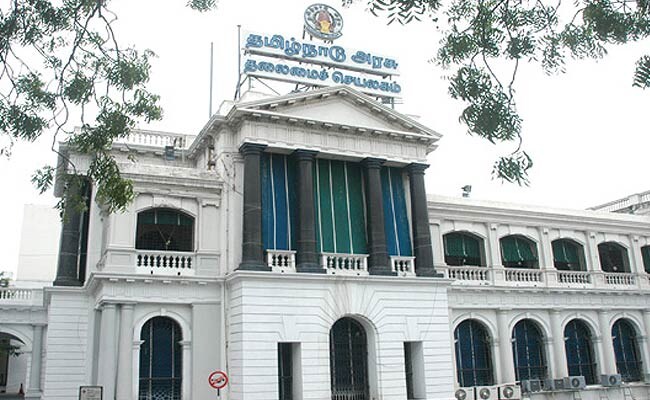
The Tamil Nadu Assembly today passed the Factories (Amendment) Act 2023 providing flexible working hours for employees in factories across the State, amidst protests and claims by several parties that the Act would stretch the mandatory working hours to 12 hours from the present 8 hours duty.
Industries Minister Thangam Thennarasu, however, assured that the total working hours in a week would remain unchanged for the workers who would now have the option to work for four days in a week and avail three days leave. "This would immensely benefit women workers," he claimed.
"The remaining three days would be paid leave and the existing rules on leaves, overtime, salaries, etc., would remain unchanged," Labour Welfare Minister C V Ganesan said. Action would be taken against factories, which coerced their employees to work against their wishes, he clarified.
The Ministers' clarification on the TN Factories Act, 2023, follows protests and a walkout by the Left parties, the Congress and Viduthalai Chiruthaigal Katchi (VCK) from the Assembly when the bill was taken up for discussion on the concluding day of the Assembly session today.
The bill was however passed by voice vote as the ruling DMK enjoyed a majority in the House and also because other allies like the Marumalarchi Dravida Munnetra Kazhagam (MDMK) supported the government.
Earlier, tabling the bill to amend the Tamil Nadu Factories Act, 1948, the Labour and Welfare Minister said the State is the hub of major manufacturing companies and has the highest number of factories and industrial workers in the country.
"Representations were received from many industries and industry associations by the State government to bring out working hour reforms by making statutory provision for flexible working hours, citing the number of benefits it could bring for workers, especially women employees, industry and the economy as a whole," Ganesan said.
As per the statement of objects and reasons stated in the bill, section 127 of the Central code enabled the State government by notification to provide among others flexible working hours including overtime and spread over hours inclusive of rest intervals, subject to such conditions and restrictions and for such period as deemed fit in relation to any factory or class of factories.
The State government has decided to amend the Factories Act of 1948 (Central Act 63 of 1948) for its application to Tamil Nadu, as the said Central code has not been brought into force, it said.
"As per the amendment, factories seeking exemption should obtain the employees' consent to extend the working hours and this should not affect the employees' wellbeing," Ganesan, accompanied by Thennarasu, later told reporters at the Secretariat. There would be no change in the total number of 48 hours of work in a week and this amendment would apply only to factories or establishments where their staff opt, he said.
"This is not an anti-worker act. It will be treated as a special case to firms, and the government will implement it only after scrutiny," he added.
Thennarasu claimed that the amendment has been brought taking into account the current conditions across the world, as Tamil Nadu has emerged as a global investment destination. "The move would create new employment opportunities, especially for women, and it is applicable only to certain sectors such as electronic industries, non-leather shoe-making industries, and electronic clusters," he claimed.
CPI (M) legislator V P Nagaimali claimed the act would favour the corporates while CPI MLA T Ramachandran claimed the act, if implemented in the present form, would strike down the hard-won rights of the employees particularly wage hike and job permanency.
VCK member Sinthanai Selvan said, "this anti-worker act would lead to exploitation of workers and hence it should be withdrawn." Congress member K Selvaperunthagai insisted that the "anti-labour bill" will take away the rights of the workers.
(Except for the headline, this story has not been edited by NDTV staff and is published from a syndicated feed.)

-
Opinion | India at 38: From Innovation Overperformer to Innovation Powerhouse

India now has 453 VC-backed deep science startups, 18 of them late-stage, after 117 percent growth since 2020. Laurus Labs, at USD 9.3 billion, is the most valuable deep science company in any middle-income economy outside China.
-
Navigating Energy Crossroads: S Jaishankar's Call For Diversified Supply Chains At G20 Ministerial Meeting
As geopolitical fault lines continue to test maritime trade routes and commodity flows, Jaishankar's message remains pertinent: true economic resilience requires open markets, protected transit lines, and a genuine commitment to multilateral cooperation rather than coercion.
-
Indians Are Travelling, But Not Every Journey Is A Holiday | The Week In Whys
Pilgrims, patients and working women are the real travellers, and the system hasn't quite caught up with them.
-
Getting To Work Costs Women More | The Reason Why
It is not just about women paying more than men. It is about women paying much more in cities than in villages.
-
AI Bias In Investing Cannot Be Eliminated, But It Can Be Governed
Framing is a particularly important example as identical financial information presented in terms of gains rather than losses can lead an LLM to reach a different assessment.
-
Joining The Dots | Dark Skies, Steady Diya: Why Hope Holds This Diwali
With war, a weak rupee and foreign outflows weighing on sentiment, policymakers at the NDTV World Summit and market veterans at NDTV Profit Ignite: Diwali Edition offered the same advice: stay invested and filter out the noise.
-
The Curious Case of Equitas Small Finance Bank And A CEO Who Quit For Stock
PN Vasudevan believes persistent investor concerns over a perceived conflict of interest had become a governance overhang on Equitas Small Finance Bank's stock, even as the lender improved profitability and asset quality.
-
Talking Points This Week: AI Cash Burn, A Tiger Comeback And An India That Still Finds Its Own Path
India is not immune to higher oil or tighter global liquidity, yet its earnings base is broader, its domestic policy levers are still available.
-
Foreign Investors Own Half Of HDFC Bank and ICICI Bank. An LTCG Cut Could Matter Most Here
Foreign portfolio investors have US$115 billion parked in HDFC Bank, ICICI Bank. If the government cuts long-term capital gains tax, Jefferies says returning foreign money could land here first.










