Talks Today On Rajan's Successor, The Boxes PM Modi Will Seek To Check
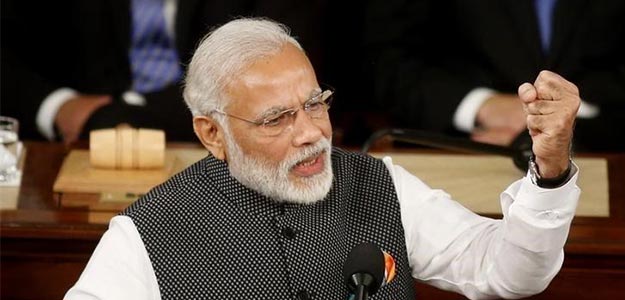
Prime Minister Narendra Modi will hold discussions today on the choice of a successor to Reserve Bank of India Governor Raghuram Rajan whose term ends in September.
Traditionally, the prime minister picks the RBI governor after consultations with the finance minister.
PM Modi needs to juggle competing demands from within his own party, the economy's need for more stimulus and investors' demands for an independent thinker.
Global and Indian investors are on edge with reports that Prime Minister Modi could select the new governor of the RBI this week.
Outgoing RBI Governor Raghuram Rajan stunned financial markets last month by announcing he would step down after a single three-year term to return to academia.
Dr Rajan was held in high esteem for defusing a currency crisis, cutting interest rates and overhauling the way the RBI operates, including introducing inflation targeting. But his sudden exit after persistent criticism from BJP law-maker Subramanian Swamy and right-wing affiliates has raised questions about the RBI's independence.
That has made the choice of the next RBI governor critical.
Of the candidates widely seen as on the short-list, three insiders - current Deputy Governor Urjit Patel and former Deputy Governors Rakesh Mohan and Subir Gokarn - would likely easily pass that muster, and are seen by markets as ensuring both policy continuity and the RBI's independence.
"The candidates from RBI (Gokarn, Mohan, Patel) would have been considered steady hands that would continue current Governor Raghuram Rajan's inflation targeting framework (and be the least disruptive)," BNP said in an email to clients on Tuesday.
Less certain is State Bank of India chair Arundhati Bhattacharya. She is a career commercial banker with no economics background, but may be seen as an ideal candidate with the inside know-how to best deal with $130 billion in non-performing loans weighing on the banking sector.
But PM Modi will also need to reconcile market demands with those from forces within his own administration.
As with previous governments, PM Modi and Finance Minister Arun Jaitley are bound to prefer somebody who is more accommodating on interest rates, especially given the new governor's term should run through the government's re-election in around three years.
Dr Rajan was widely seen as hawkish on inflation, though the RBI has cut rates by a total of 150 basis points since last year. Recently he turned more stubborn on the prospects of further easing, complaining Indian banks were not passing along most of the RBI's rate reductions to companies and consumers.
Meanwhile, the Rashtriya Swayamsevak Sangh (RSS), the ideological mentor of the ruling BJP, is keen on a candidate who does not seek the limelight - an accusation often thrown at Dr Rajan by some officials.
Some media reports said that PM Modi's policy adviser Arvind Panagariya was a potential surprise front-runner. His candidacy could raise uncertainties in markets because of his perceived closeness to the Prime Minister. He is also seen as close to the RSS and BJP President Amit Shah.

-
High US Salaries, No Green Card Certainty: The Financial Calculation Facing Indian H-1B Families

The suspension of PERM processing at eight technology employers does not cancel existing H-1B visas. What it does is force a question many Indian families have been avoiding: is the US salary worth tying your career and family plans to one employer?
-
Swiggy vs Eternal: Food Delivery's Two Rivals Are No Longer In The Same Race
Eternal is building a private AI assistant, dark.ai. Swiggy is still working out how to make Instamart pay, with an operating loss of Rs 895 crore in the July-September quarter while Blinkit stayed profitable.
-
Where You Live Shapes How You Get To Work | The Reason Why
Two-wheelers are the most popular way to get to work in India, accounting for nearly 43% of workplace commutes.
-
Unhedged Position: Can India See An Indonesia-Style Time Correction?
The Nifty is trading below levels it first clocked in 2024. Is there, then, as I have suggested in the headline, potential that the current time correction drags on painfully for the next three-five, even ten years?
-
Navigating Friction And Energy Realities: An Analysis Of Marco Rubio's October Visit To India
Occurring at a critical juncture marked by stalled trade negotiations and escalating geopolitical pressures over global energy supplies, the visit offers a profound window into modern US-India relations.
-
India Exports Capital. Why Not Export Trusteeship?
The big question, then, is whether India can build an institution that global borrowers, investors, banks, and lawyers can trust, even without an Indian connection.
-
France's Economy & Politics Are In Crisis | The Reason Why
Let's look at how the French economy and politics evolved under Nicolas Sarkozy, Franois Hollande and Emmanuel Macron.
-
You May Inherit The Business. You Must Earn Its Credibility.
Succession tests the founder's ability to share authority as much as it tests the next generation's readiness to assume it.
-
Signing Deals Is One Thing; Making Them Work Is Another | The Week In Whys
Sometimes, things don't turn out as planned. Indian companies have lost some bids to rivals, some projects won't produce until 2030.
-
FOMC Wall, PERM Suspension, Hospital Stocks | Talking Points This Week
A PERM suspension would directly affect green-card sponsorship rather than H-1B visas, so the near-term earnings impact could remain relatively limited. The key question is whether this marks a new phase in US scrutiny of Indian IT.









