Synergy Group: The South American Investor Eyeing Jet Airways
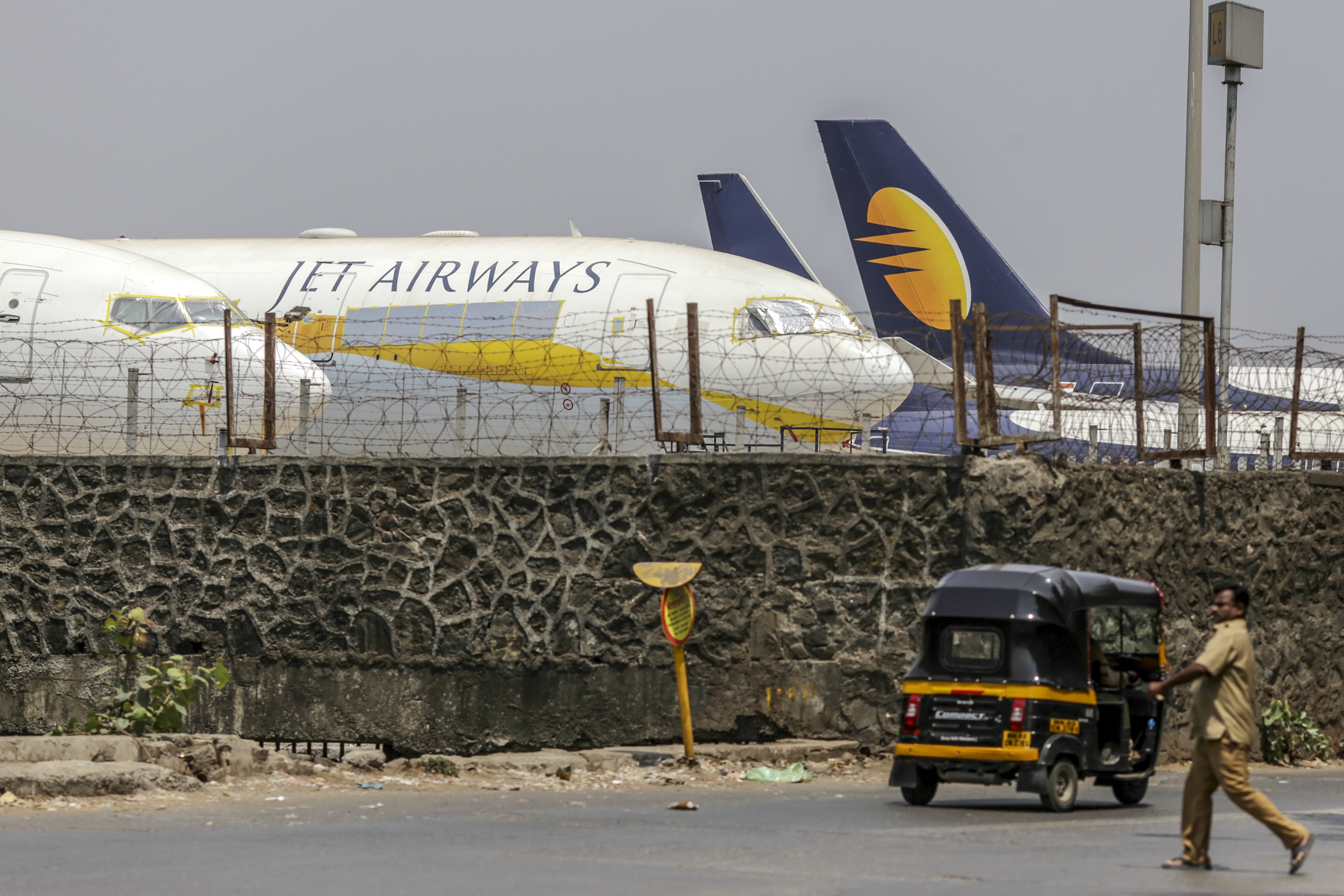
Lenders to Jet Airways Ltd. have some hope again.
On Jan. 15, the airline, currently undergoing insolvency proceedings, received an expression of interest from two prospective bidders—South American investor Synergy Group and New Delhi-based Prudent Asset Reconstruction Company Ltd. While the interest from Prudent Asset Reconstruction is recent, the Synergy Group has flirted with the idea of bidding for Jet Airways for a few months now.
In October 2019, when the first round of bidding was coming to a close, Synergy Group had expressed an interest and sought more time from the lenders to submit a firm bid. The lenders extended the deadline by a month. However, Synergy Group was still not ready with a bid, as it sought clarity on the redistribution of airport slots, which had been taken away from Jet Airways in April 2019, when it stopped flying.
On Jan. 6, Synergy Group submitted a second EoI for Jet Airways, suggesting that it is seriously considering a bid for the insolvent airline.
Lenders are hoping that in the current round, Synergy Group actually submits a full resolution plan, said a banker involved in the process, while speaking on condition of anonymity. While the bidder has held discussions with the creditors and their advisers, it is yet to put money on the table, this person said. The group is looking to buy 49 percent stake in Jet Airways and may have to tie up with a local partner to run Jet Airways, the banker quoted earlier said.
Synergy Group did not respond to queries emailed on Thursday.
Who Is The Synergy Group?
The Synergy Group is no stranger to the airline sector.
Founded in 2003 and headquartered in Rio de Janeiro, Brazil, the group operates a number of airlines in South America. It is a well-known airline investor, said Mark Martin, founder and chief executive officer at Martin Consulting.
“Synergy Group is one of the world's most stable airline investors. The Indian aviation business has a large presence of airlines from the Middle East. American, Latin American and South East Asian airlines have been trying to get a foot into the Indian market for over 20 years,” said Martin.
In 2004, the group's Chairman and Founder German Efromovich bought controlling stake in Latin America's airline holding company—Avianca Holdings, which is now listed on the New York Stock Exchange. It reported an operating profit of $100.3 million for the quarter ended September 2019.
The broader Synergy group, however, has had its fair share of troubles.
In 2018, Efromovich had decided to sign a joint venture between Avianca Holdings, United Airlines and Panama-based Copa Airlines. To support the joint venture, Synergy Group had borrowed $456 million from United Continental Holdings, the parent company of United Airlines, against 51.5 percent stake in Avianca Holdings as collateral, Bloomberg reported in May 2019. By April 2018 though, the repayment on the loan went into default. This led to United Continental forcing Efromovich out of the chairman position at the South American airline, to extend further financing to it, Reuters reported in May 2019.
Avianca Brasil, another airline which Synergy Group owns, has been facing its own bankruptcy proceedings since December 2018. By May last year, the Brazilian aviation authority had grounded Avianca Brasil. Similarly, Efromovich's shipping businesses have also had to shut down owing to financial difficulties, the Bloomberg report quoted earlier said.
The group also owns airlines in other nations such as Ecuador, Colombia and Argentina. It also operates hydroelectric power plants and builds telecom infrastructure in Brazil.
The Synergy Group's consolidated financials are not available in the public domain.
Synergy's Interest In Jet Airways
Do lenders to Jet Airways believe that the Synergy Group can follow up on its EoI with a firm bid?
According to a second banker, who spoke on condition of anonymity, the committee of creditors will wait to see whether the Synergy Group submits a firm resolution plan. If the group is able to bring in the necessary financing and the plan implies a larger return than liquidation, the committee would be willing to consider the offer favorably, this banker said.
The pre-bidding requirements for Jet Airways say that a strategic investor would require a minimum turnover of Rs 1,000 crore. It should also have Rs 1,000 crore in funds available for investment in India.
Would such a large financial commitment make sense for a completely new investor like the Synergy Group?
According to Martin of Martin Consulting, the Indian aviation market is a long-term play for large international airlines, owing to the population and the spending capacity. The Synergy Group is trying to enter a stressed entity, taking on considerable risk on its books, he said. “But the Jet Airways case has been dragging on in the insolvency courts for too long and needs to be closed soon,” Martin added.
Kapil Kaul, chief executive officer at CAPA India, however, does not see a promising future for Jet Airways. According to him, the chances of reviving Jet Airways are slim and the efforts undertaken by the stakeholders are not practical. “The government must start allocating slots to airlines on a permanent basis and end the uncertainty, Kaul said.
The Next Steps
The committee of creditors will finalise a list of potential bidders next week, after which the bidders would be able to access Jet Airways' financial information. A final bid would have to be submitted by the second week of February, though a deadline is yet to be decided.
Naresh Goyal-owned Jet Airways has been under financial stress since late 2018. Lenders to the Indian airline have been asked to finalise a resolution plan but have failed.
Financial and operational creditors have claims worth over Rs 36,000 crore against the airline, with State Bank of India being the largest lender. The resolution professional has admitted about Rs 14,600 crore worth dues so far. Another Rs 4,500 crore worth dues are still under verification.

-
High US Salaries, No Green Card Certainty: The Financial Calculation Facing Indian H-1B Families

The suspension of PERM processing at eight technology employers does not cancel existing H-1B visas. What it does is force a question many Indian families have been avoiding: is the US salary worth tying your career and family plans to one employer?
-
Swiggy vs Eternal: Food Delivery's Two Rivals Are No Longer In The Same Race
Eternal is building a private AI assistant, dark.ai. Swiggy is still working out how to make Instamart pay, with an operating loss of Rs 895 crore in the July-September quarter while Blinkit stayed profitable.
-
Where You Live Shapes How You Get To Work | The Reason Why
Two-wheelers are the most popular way to get to work in India, accounting for nearly 43% of workplace commutes.
-
Unhedged Position: Can India See An Indonesia-Style Time Correction?
The Nifty is trading below levels it first clocked in 2024. Is there, then, as I have suggested in the headline, potential that the current time correction drags on painfully for the next three-five, even ten years?
-
Navigating Friction And Energy Realities: An Analysis Of Marco Rubio's October Visit To India
Occurring at a critical juncture marked by stalled trade negotiations and escalating geopolitical pressures over global energy supplies, the visit offers a profound window into modern US-India relations.
-
India Exports Capital. Why Not Export Trusteeship?
The big question, then, is whether India can build an institution that global borrowers, investors, banks, and lawyers can trust, even without an Indian connection.
-
France's Economy & Politics Are In Crisis | The Reason Why
Let's look at how the French economy and politics evolved under Nicolas Sarkozy, Franois Hollande and Emmanuel Macron.
-
You May Inherit The Business. You Must Earn Its Credibility.
Succession tests the founder's ability to share authority as much as it tests the next generation's readiness to assume it.
-
Signing Deals Is One Thing; Making Them Work Is Another | The Week In Whys
Sometimes, things don't turn out as planned. Indian companies have lost some bids to rivals, some projects won't produce until 2030.
-
FOMC Wall, PERM Suspension, Hospital Stocks | Talking Points This Week
A PERM suspension would directly affect green-card sponsorship rather than H-1B visas, so the near-term earnings impact could remain relatively limited. The key question is whether this marks a new phase in US scrutiny of Indian IT.









