Growth Likely To Pick Up To 6.5-7% In 2019-20 Second Half, Says Surjit Bhalla
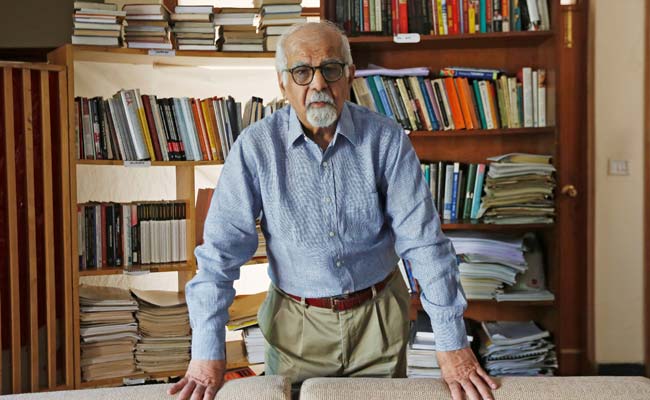
Personal income taxes need to be reformed and there is a need to bring in more reforms to push economic growth, eminent economist Surjit Bhalla told NDTV. "There's absolutely no question that the Indian economy has slowed down... We are absolutely in the middle of a slowdown. No doubt about it," said Mr Bhalla, executive director-designate at the International Monetary Fund (IMF), in an exclusive interview to NDTV. The comments from the top economist come at a time when the country's economy is struggling against the slowest pace of growth in more than six years amid thousands of job losses across sectors.
"The April-June GDP data looks bad and another aspect which hasn't been highlighted as much is that nominal growth is I think the sixth lowest since 1996," Mr Bhalla said. India's GDP or gross domestic product grew 5 per cent in the first quarter of fiscal year 2019-20.
Nominal GDP growth rate (without adjusting for inflation) stood at 8 per cent in the quarter ended June 30, according to official data released in August.
"While fiscal policy has been expansionary, monetary policy has been contractionary," said Mr Bhalla, advocating that the policy environment is not suitable for corporates to invest. "Despite the 135-basis-point cut (repo rate), inflation has declined by 150 basis points," he explained.
Mr Bhalla was referring to the current easing phase of monetary policy by the central bank, in which it has lowered the repo rate - the key interest rate at which the RBI lends short-term funds to commercial banks - by 135 basis points (1.35 percentage point).
The government has in the past few months announced a slew of measures to push corporate investments and boost growth. The range of steps taken include a cut in corporate taxes, a mega consolidation plan for state-run banks and withdrawal of higher taxes on foreign investors.
Mr Bhalla describes the corporate tax cut as the "biggest corporate tax cut by any nation in history".
The economist believes that there is a set of measures that can further revive the economy. "In terms of fiscal policy, long-term capital gains tax needs to go... double dividend tax, which started in 1997, needs to go and personal taxes need to be reformed," he said.
Mr Bhalla, also believes economic growth will bottom out to 5 per cent or lower levels in the second quarter (July-September) of the current fiscal year and pick up afterwards. Official data for the second quarter will be released at the end of November.
In the final two quarters of 2019-20 - the period from October to March, data suggests that GDP growth would be around 6.5-7 per cent, due to the policy measures introduced by the government.
The current slowdown started in September 2018, Mr Bhalla said. "The present slowdown has nothing to do with demonetisation."
The government recently appointed Mr Bhalla as the executive director for India on the board of the multilateral agency - IMF - for a period of three years, after the key post had fallen vacant following the death of Dr Subir Gokarn in July.
Mr Bhalla resigned as part-time member of Prime Minister Narendra Modi's Economic Advisory Council (EAC) in December last year. The EAC-PM or Economic Advisory Council to the Prime Minister is an independent body constituted to give advice on economic and related issues to the Government of India, specifically to the Prime Minister.

-
High US Salaries, No Green Card Certainty: The Financial Calculation Facing Indian H-1B Families

The suspension of PERM processing at eight technology employers does not cancel existing H-1B visas. What it does is force a question many Indian families have been avoiding: is the US salary worth tying your career and family plans to one employer?
-
Unhedged Position: Can India See An Indonesia-Style Time Correction?
The Nifty is trading below levels it first clocked in 2024. Is there, then, as I have suggested in the headline, potential that the current time correction drags on painfully for the next three-five, even ten years?
-
Navigating Friction And Energy Realities: An Analysis Of Marco Rubio's October Visit To India
Occurring at a critical juncture marked by stalled trade negotiations and escalating geopolitical pressures over global energy supplies, the visit offers a profound window into modern US-India relations.
-
India Exports Capital. Why Not Export Trusteeship?
The big question, then, is whether India can build an institution that global borrowers, investors, banks, and lawyers can trust, even without an Indian connection.
-
France's Economy & Politics Are In Crisis | The Reason Why
Let's look at how the French economy and politics evolved under Nicolas Sarkozy, Franois Hollande and Emmanuel Macron.
-
You May Inherit The Business. You Must Earn Its Credibility.
Succession tests the founder's ability to share authority as much as it tests the next generation's readiness to assume it.
-
Signing Deals Is One Thing; Making Them Work Is Another | The Week In Whys
Sometimes, things don't turn out as planned. Indian companies have lost some bids to rivals, some projects won't produce until 2030.
-
FOMC Wall, PERM Suspension, Hospital Stocks | Talking Points This Week
A PERM suspension would directly affect green-card sponsorship rather than H-1B visas, so the near-term earnings impact could remain relatively limited. The key question is whether this marks a new phase in US scrutiny of Indian IT.
-
Everything, Everywhere, All At Once: Dalal Street's Week To Forget | Joining The Dots
Visa curbs, a Starlink spat and cancer drug caps: what connects this week's shocks for Indian markets
-
India Is Going Abroad For Critical Minerals. But It May Take Years To Pay Off | The Reason Why
Although India's steps are in the right direction, they remain modest compared with India's growing dependence.









