Supreme Court's Coal Block Ruling May Have Wider Economic Impact
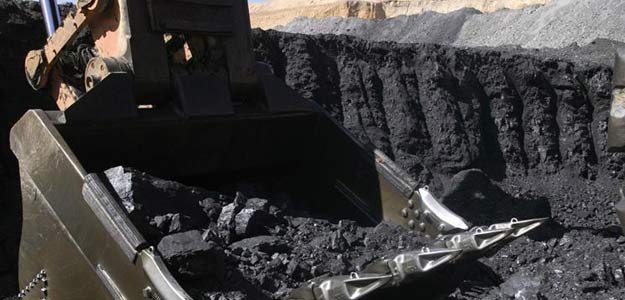
A mass cancellation of coal blocks awarded since 1993 could cost the country up to $3 billion or Rs 18,000 crore ($1 = Rs 60) in additional imports and hurt financial firms that have lent to the sector, broking firms said on Tuesday.
The Supreme Court ruled on Monday that the allocation of more than 200 coal blocks at the centre of a cronyism scandal was illegal. The Supreme Court is due to decide on September 1 whether to cancel the allocations, or to impose some sort of penalty.
Shares in resource stocks fell further following a broad sell-off on Monday after the ruling, which jeopardised projects built around the blocks and threatens to exacerbate a shortage of the fuel.
"The ruling creates uncertainty and has to be resolved quickly. I hope the Supreme Court gives a clear roadmap in September," said Samir Arora, a fund Manager at Helios Capital in Singapore.
The government's awards of the blocks to steel, cement and power companies has been at the centre of a scandal Indian media has dubbed "Coalgate", with the Comptroller and Auditor General (CAG) report in 2012 saying the underpriced sales had cost the exchequer up to $33 billion.
Analysts said a mass cancellation of the blocks would be a worst-case scenario and add to a shortage of coal for power plants. Coal is used to generate more than two-thirds of India's electricity.
Macquarie estimated in a note that complete de-allocation of the coal blocks would increase India's import bill by $3 billion.
De-allocation could also impact financial firms, Credit Suisse said, with companies such as State Bank of India and Power Finance Corp Ltd lending some $10-$12 billion to the coal, power and steel sectors.
Jindal Steel and Power Ltd shares fell as much as 8.1 per cent, after falling 13.9 per cent on Monday, while Tata Power Co Ltd fell as much as 4.6 per cent. Some other firms rebounded, with Hindalco edging up after a 9.7 per cent fall in the previous session.
Macquarie urged investors to wait for more clarity to emerge.
"The government will impress upon the Court about coal shortages, power cuts and derailment of the investment process," it said.
Power and Coal Minister Piyush Goyal said on Monday he looked forward to a resolution of the issue, which has kept the sector in limbo for several years.
The uncertainty surrounding the allocations has made it difficult for firms to develop the coal. Dipesh Dipu, partner with Jenissi Management Consultants, said only 30 of the blocks are operational with annual capacity of about 40 million tonnes.
India produced 565 million tonnes of coal in the year to March 31.
Copyright: Thomson Reuters 2014

-
High US Salaries, No Green Card Certainty: The Financial Calculation Facing Indian H-1B Families

The suspension of PERM processing at eight technology employers does not cancel existing H-1B visas. What it does is force a question many Indian families have been avoiding: is the US salary worth tying your career and family plans to one employer?
-
Swiggy vs Eternal: Food Delivery's Two Rivals Are No Longer In The Same Race
Eternal is building a private AI assistant, dark.ai. Swiggy is still working out how to make Instamart pay, with an operating loss of Rs 895 crore in the July-September quarter while Blinkit stayed profitable.
-
Where You Live Shapes How You Get To Work | The Reason Why
Two-wheelers are the most popular way to get to work in India, accounting for nearly 43% of workplace commutes.
-
Unhedged Position: Can India See An Indonesia-Style Time Correction?
The Nifty is trading below levels it first clocked in 2024. Is there, then, as I have suggested in the headline, potential that the current time correction drags on painfully for the next three-five, even ten years?
-
Navigating Friction And Energy Realities: An Analysis Of Marco Rubio's October Visit To India
Occurring at a critical juncture marked by stalled trade negotiations and escalating geopolitical pressures over global energy supplies, the visit offers a profound window into modern US-India relations.
-
India Exports Capital. Why Not Export Trusteeship?
The big question, then, is whether India can build an institution that global borrowers, investors, banks, and lawyers can trust, even without an Indian connection.
-
France's Economy & Politics Are In Crisis | The Reason Why
Let's look at how the French economy and politics evolved under Nicolas Sarkozy, Franois Hollande and Emmanuel Macron.
-
You May Inherit The Business. You Must Earn Its Credibility.
Succession tests the founder's ability to share authority as much as it tests the next generation's readiness to assume it.
-
Signing Deals Is One Thing; Making Them Work Is Another | The Week In Whys
Sometimes, things don't turn out as planned. Indian companies have lost some bids to rivals, some projects won't produce until 2030.
-
FOMC Wall, PERM Suspension, Hospital Stocks | Talking Points This Week
A PERM suspension would directly affect green-card sponsorship rather than H-1B visas, so the near-term earnings impact could remain relatively limited. The key question is whether this marks a new phase in US scrutiny of Indian IT.









