#BQDebates: Top Legal Views On The Supreme Court Ayodhya Verdict
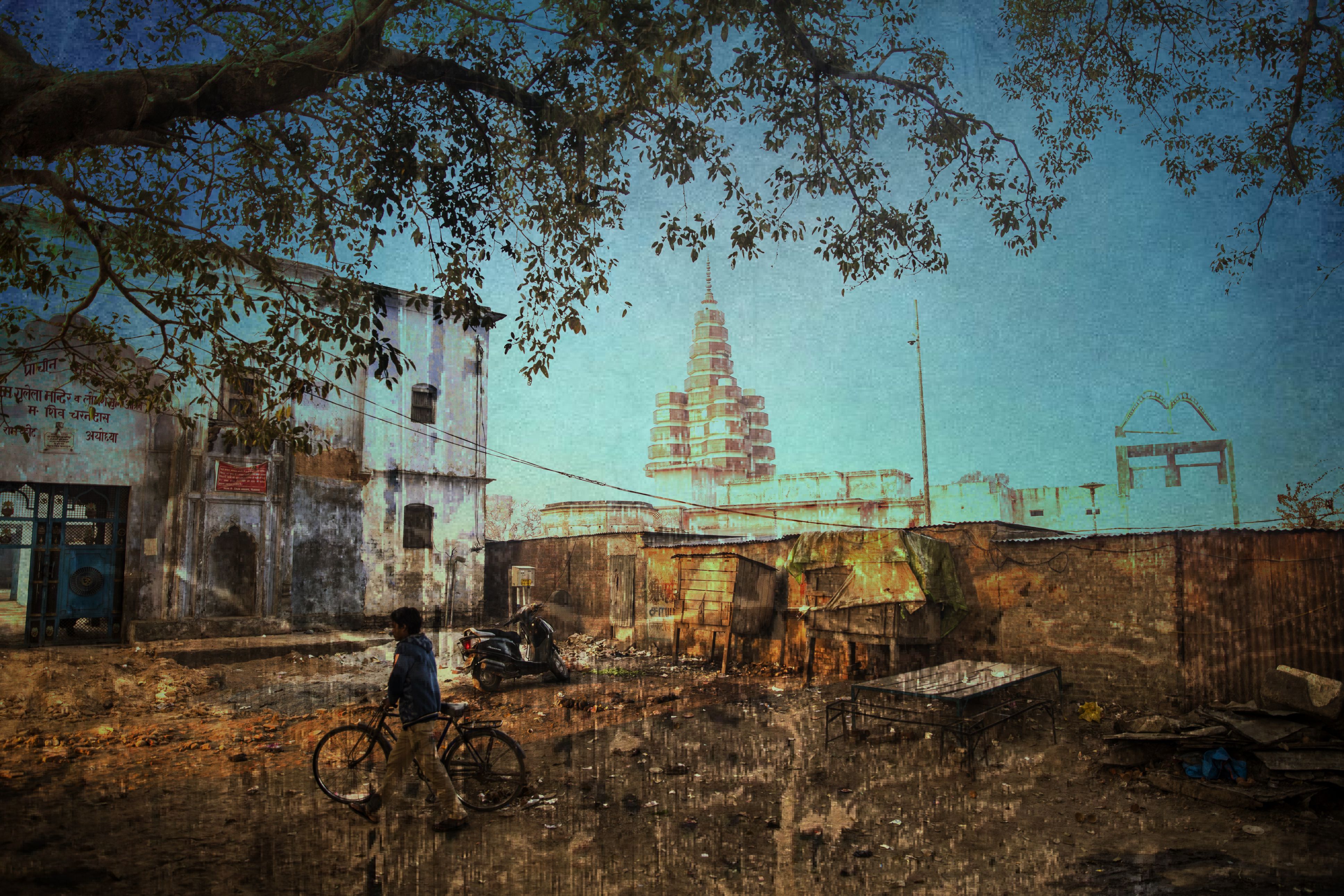
A decades-old dispute between Hindus and Muslims regarding a disputed piece of land in Ayodhya was decided in favour of the Hindus today.
In a unanimous decision, a five-judge bench of the Supreme Court ruled that the disputed land will be handed over to a trust to facilitate the construction of a Ram Mandir there. It also ruled that alternate land will be allotted to Muslims for the construction of a mosque.
To Hindus, the land is the revered birthplace of Lord Ram. To Muslims, it's the site of a 16th century mosque - Bari Masjid - that was razed by mobs in 1992.
The evidence of the Hindus stands on a better footing than the Muslims, said Chief Justice Ranjan Gogoi when delivering the order highlights in court this morning.
Here are quick takes from top legal experts on the 1,045-page judgment.
‘Brilliant Balance' In Judgment
- Sajan Poovayya, Senior Advocate, Supreme Court
What I say must be juxtaposed from the fact that these are title suits which were before the Supreme Court. Appeals emanating from five suits. I think as a constitutional lawyer, as a constitutionalist, and as a lawyer, I find that the Supreme Court has actually arrived at a brilliant balance in this judgment. That balance is to keep on one side faith, aspirations of the people etc, and not be influenced by it, and render a decision on the pure tenets of the law. Therefore if you look at it, they have indicated that two of the five suits are barred by limitation, and therefore, out.
The Supreme Court has actually pronounced that the Janmabhoomi is not a juristic person. Now that shows the independence of the court by saying, listen, we will only consider claims that have come up before us, by juristic persons.
Now, whilst Ram Lalla Virajman, that is the idol of Ram (in child form) was considered as juristic person, because a deity is a juristic person in law, because that suit was filed by Ram Lallah Virajman, Ram Jamnabhoomi, and one of the retired judges of Allahabad as the next friend of the deity. When it comes to everybody saying that Ram Janmabhoomi has a status, we will fight under the Ram Janmabhoomi, all of that is fine politically, but legally, you have no status.
Now, coming to the core issue. I think the Supreme Court has looked at the evidence available. It has looked at the scenario saying that whether the adverse position as claimed, has been made out, and the observation of the court is very clear. That once faith is established, it is not for a secular court to go into whether faith is correct or faith is wrong. Faith is established as a matter of evidence.
When evidence shows that the mosque structure was built not from ground up, in terms of a greenfield property, but on a structure which was not an Islamic structure, which akin to our country, a non-Islamic structure would only be a Hindu structure, and based on those collateral evidence, based on the direct evidence that is available, has come to a conclusion, that this entire land therefore, belongs to the Ram Lalla Virajman, and the Hindu parties. It does not belong to the Muslim parties, which I think is the cleanest way the Supreme Court could have dealt with a title suit.
I disagree with what the Allahabad High Court did, in terms of finding some mutual ground, by saying take one-third each.
While that is fine in a mediation setup, it is unwarranted in a judicial setup. You need a determination. You don't need some sort of middle ground, and the Supreme Court has been successful in providing that determination. At the same time, they have maintained equity, because while the Muslim parties were not able to prove the title to the land, because they were using that land as a matter of place of worship, to manage and maintain equity, the Supreme Court has said an alternate land parcel of five acres must be given to them for a mosque to be built. That shows the following things:
- The Supreme Court has gone on the basis of law and evidence, and law and evidence alone, and not by any other rhetoric.
- The Supreme Court has actually not ventured into the non-secular aspects of faith etc. by giving a rendition of what Hinduism or Islam is.
- It has indicated that once faith was established, from the secular tenets of law, we will make a determination.
- Based on evidence that is available, it has indicated that the Hindu parties are entitled to the entirety of the land.
- They have maintained equity by saying that the Muslim parties must be given an alternate land parcel.
While the Supreme Court has granted the land to the Hindu parties, it has also held that the destruction of the mosque was an illegal act. I don't think any court could have achieved such a fine balance, and that too, in the present circumstances. This issue is so emotionally and politically charged, there is a lot of rhetoric chasing this issue. Despite all of it, I think the Supreme Court of India has done a brilliant task of balancing interests and going by the law, and law alone, and not being influenced by other aspects. Another aspect is the unanimity in the judgment. There is not a single dissent.
A Balanced And ‘Sensible' Judgment
- Soli Sorabjee, Former Attorney General for India
It is a balanced and sensible judgment. The fact that it is unanimous gives it cogency. It is good that the issue has been finally settled, and all parties should accept it in good spirits.
In litigation, none can be a complete winner or loser but in this case all parties have been heard fully and fairly and that will go a long way in fostering harmony between communities.
The Supreme Court deserves full credit for the judgment.
This Is A Historical Judgment
- Mohan Parasaran, Former Solicitor General
The judgment has put an end to a long drawn controversy finally. It is a historic and balanced judgment. They have not shown any passions and have gone strictly by jurisprudence.
Merely because there is a belief, that does not confer title over to any party. The Supreme Court has legally examined the claims and principally gone by the expert evidence that the Archaeological Survey of India offered. Even prior to the British era, there was evidence to show that there was a primarily a Hindu structure which was demolished and Hindus were not allowed beyond a certain point. This has appeared in foreign journals as well.
This judgment has taken into account everybody's preferences, and rejected frivolous claims.
As far as Sunni Muslims are concerned, it has done them justice and allotted them five acres of land.
This is where judicial statesmanship comes into play.
The Supreme Court has examined all documented evidence.
Note: Mohan Parasaran's father, K Parasaran, represented Ram Lalla Virajman, one of the petitioners in the case before the Supreme Court.
Supreme Court Has Done Justice To Both Sides
- Subramanian Swamy, Appellant before the Supreme Court in favour of the Ram temple, and BJP Rajya Sabha MP.
This judgment is exactly what I have been saying that on the issue of faith there is no question of judicial challenge. It is the unanimous faith of the Hindus that Ram was born at this particular spot, and for over centuries they have been saying that. The concept of a mosque is that it can be built anywhere, because Namaz can be done anywhere. There is no such thing as a non-shiftable mosque, so the court has done justice to both sides.
On this principle, for those other temples which were demolished, the Supreme Court judgment will be a landmark decision.
Also Read: Mandir, Masjid And Supreme Court - A Story In Pictures

-
Navigating Energy Crossroads: S Jaishankar's Call For Diversified Supply Chains At G20 Ministerial Meeting

As geopolitical fault lines continue to test maritime trade routes and commodity flows, Jaishankar's message remains pertinent: true economic resilience requires open markets, protected transit lines, and a genuine commitment to multilateral cooperation rather than coercion.
-
Indians Are Travelling, But Not Every Journey Is A Holiday | The Week In Whys
Pilgrims, patients and working women are the real travellers, and the system hasn't quite caught up with them.
-
Getting To Work Costs Women More | The Reason Why
It is not just about women paying more than men. It is about women paying much more in cities than in villages.
-
AI Bias In Investing Cannot Be Eliminated, But It Can Be Governed
Framing is a particularly important example as identical financial information presented in terms of gains rather than losses can lead an LLM to reach a different assessment.
-
Joining The Dots | Dark Skies, Steady Diya: Why Hope Holds This Diwali
With war, a weak rupee and foreign outflows weighing on sentiment, policymakers at the NDTV World Summit and market veterans at NDTV Profit Ignite: Diwali Edition offered the same advice: stay invested and filter out the noise.
-
The Curious Case of Equitas Small Finance Bank And A CEO Who Quit For Stock
PN Vasudevan believes persistent investor concerns over a perceived conflict of interest had become a governance overhang on Equitas Small Finance Bank's stock, even as the lender improved profitability and asset quality.
-
Talking Points This Week: AI Cash Burn, A Tiger Comeback And An India That Still Finds Its Own Path
India is not immune to higher oil or tighter global liquidity, yet its earnings base is broader, its domestic policy levers are still available.
-
Foreign Investors Own Half Of HDFC Bank and ICICI Bank. An LTCG Cut Could Matter Most Here
Foreign portfolio investors have US$115 billion parked in HDFC Bank, ICICI Bank. If the government cuts long-term capital gains tax, Jefferies says returning foreign money could land here first.
-
'Never Seen This Level Of Negativity': Sandeep Tandon Says The Next Rally May Be Closer Than You Think
Veteran investor Sandeep Tandon says foreign selling is easing, large-caps are due a comeback and mid-caps are crowded, while he turns positive on gold, power and pharma this Diwali.
-
Indians Stay With Family, Not In Hotels | The Reason Why
India still lacks enough clean, reliable and affordable hotels for budget-conscious travellers.










