Google's Sundar Pichai To Replace Larry Page As CEO Of Parent Company Alphabet
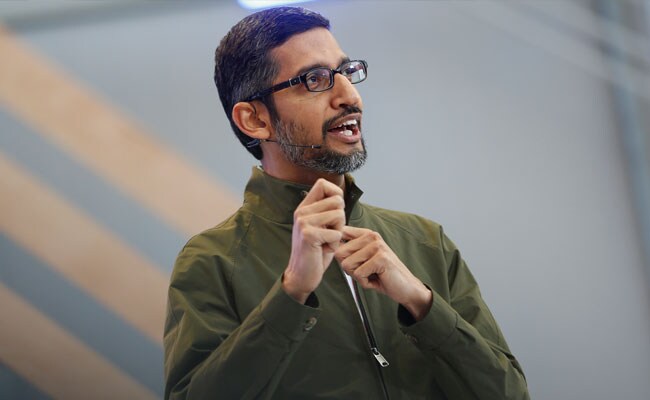
Google CEO Sundar Pichai will replace Larry Page as CEO of parent Alphabet Inc, extending a long retreat from public roles and active management by Mr Page and Sergey Brin at the company they co-founded 21 years ago.
"While it has been a tremendous privilege to be deeply involved in the day-to-day management of the company for so long, we believe it's time to assume the role of proud parents - offering advice and love, but not daily nagging!" Mr Page and Mr Brin wrote in a blog post on Tuesday.
Mr Page, Mr Brin and Mr Pichai have all shared an emphasis on developing artificial intelligence software to make web searching and other tasks faster, while long-time product leader Mr Pichai has increased efforts to make such technology available globally.
But the vision faces unprecedented scrutiny, with governments on five continents demanding better safeguards, less anticompetitive conduct and more taxes from the world's largest online advertising company. Thousands of employees have protested, and some have even resigned, over ongoing uncertainty over why the "don't be evil" dogma famous to Google - and once embraced by Mr Page and Mr Brin - appears to be cracking.
Streamlining management could help Alphabet better respond to the challenges and focus on growing profits, investors said.
"This signals a shift away from the more fringy efforts - like Project Loon - and more towards a company focused on technology that makes money," said Kim Caughey Forrest, chief investment officer at Bokeh Capital Partners, referring to Alphabet's internet-by-balloons business.
Alphabet, which owns more than a dozen companies including self-driving car technology business Waymo and health care software company Verily, emerged in 2015 as part of a restructuring of Google.
Mr Page, who is known for having big expectations and strong thoughts on technological details, had wanted to focus on developing those newer businesses, which collectively lose money. He left Alphabet's biggest and most profitable unit, Google, to the similarly soft-spoken Mr Pichai, who heavily delegates to direct reports to manage various product lines. Mr Brin had stayed on as Alphabet's president, spending some time on robotics and other research projects.
But Mr Page and Mr Brin, once regular sights at public events and at Google headquarters, are now seen much less often. The pair of 46-year-olds' retreat into the background, particularly for Mr Page as CEO, had drawn criticism in the last two years from employees and US lawmakers that demanded answers from him rather than Mr Pichai about controversial company projects such as an experimental search app for Chinese users.
Meanwhile, Mr Page's oversight job has largely fallen to Alphabet chief financial officer Ruth Porat for the startup businesses and Alphabet chief legal officer David Drummond for the company's two big investment funds.
Mr Page and Mr Brin will remain directors, but will cede their CEO and president titles, respectively, immediately, Alphabet said. The president role will not be filled, the company said, describing the changes as long discussed.
Mr Page's voice has been impaired for years because of a chronic condition, but his health did not play a role in the decision to step aside, Alphabet said.
"With Alphabet now well-established, and Google and the Other Bets operating effectively as independent companies, it's the natural time to simplify our management structure," the co-founders said. "We are deeply committed to Google and Alphabet for the long term."
While publicly stepping back, the co-founders still control more than 51 per cent of shares. As of April, Mr Page held 26.1 per cent of Alphabet's total voting power, Mr Brin 25.25 per cent and Mr Pichai less than 1 per cent.
Alphabet shares rose 0.64 per cent following the after-hours announcement to $1,303.
The company had used the separation between Mr Page's and Mr Pichai's roles to defend its limited financial disclosures about YouTube and other businesses owned by Google when the practice was questioned by US securities regulators in 2017. It contended that publicly reported financial results were in line with what Mr Page reviewed as Alphabet CEO. Regulators did not take further action, but the company's stance has frustrated
investors looking to deeply evaluate the company's performance.
Alphabet declined to comment on whether public financial reporting would change with Mr Pichai assuming both CEO positions.
Mr Pichai, 47, who has spent 15 years at Google, rose to prominence while leading development of Google's Chrome browser. He later led product development and engineering across all of Google's services for a year before gaining the CEO title and adding with it oversight of Google's advertising and cloud computing business.
Mr Page and Mr Brin are active in other ventures. Mr Page's funding kickstarted a company attempting to develop flying cars, and Mr Brin at a conference last year discussed a budding interest in cryptocurrency.

-
Midterm Rally Lasted A Day. The Hard Reality Of A Divided US May Last Two Years | Opinion

Between a contested AI boom, a debt ceiling that arrives in 2027 and a president with every incentive to act alone, the next two years may prove more volatile than the first day's rally suggests.
-
Blue Wave Will Derail the AI Trade but Won't Dismantle the AI Era | Unhedged Position
The Democrats' sweep of the US Congress will see politics collide with economic forces both over the long and short term.
-
It's Time To Take The GST Council's Bet On Trust Global
Payment records can prove India's services exports, and clear, proportionate rules can bring foreign digital sellers into the tax net.
-
Opinion | India at 38: From Innovation Overperformer to Innovation Powerhouse
India now has 453 VC-backed deep science startups, 18 of them late-stage, after 117 percent growth since 2020. Laurus Labs, at USD 9.3 billion, is the most valuable deep science company in any middle-income economy outside China.
-
Navigating Energy Crossroads: S Jaishankar's Call For Diversified Supply Chains At G20 Ministerial Meeting
As geopolitical fault lines continue to test maritime trade routes and commodity flows, Jaishankar's message remains pertinent: true economic resilience requires open markets, protected transit lines, and a genuine commitment to multilateral cooperation rather than coercion.
-
Indians Are Travelling, But Not Every Journey Is A Holiday | The Week In Whys
Pilgrims, patients and working women are the real travellers, and the system hasn't quite caught up with them.
-
Getting To Work Costs Women More | The Reason Why
It is not just about women paying more than men. It is about women paying much more in cities than in villages.
-
AI Bias In Investing Cannot Be Eliminated, But It Can Be Governed
Framing is a particularly important example as identical financial information presented in terms of gains rather than losses can lead an LLM to reach a different assessment.
-
Joining The Dots | Dark Skies, Steady Diya: Why Hope Holds This Diwali
With war, a weak rupee and foreign outflows weighing on sentiment, policymakers at the NDTV World Summit and market veterans at NDTV Profit Ignite: Diwali Edition offered the same advice: stay invested and filter out the noise.









