Larry Summers Sees Risk Of U.S. Unemployment Needing To Climb Toward 6%
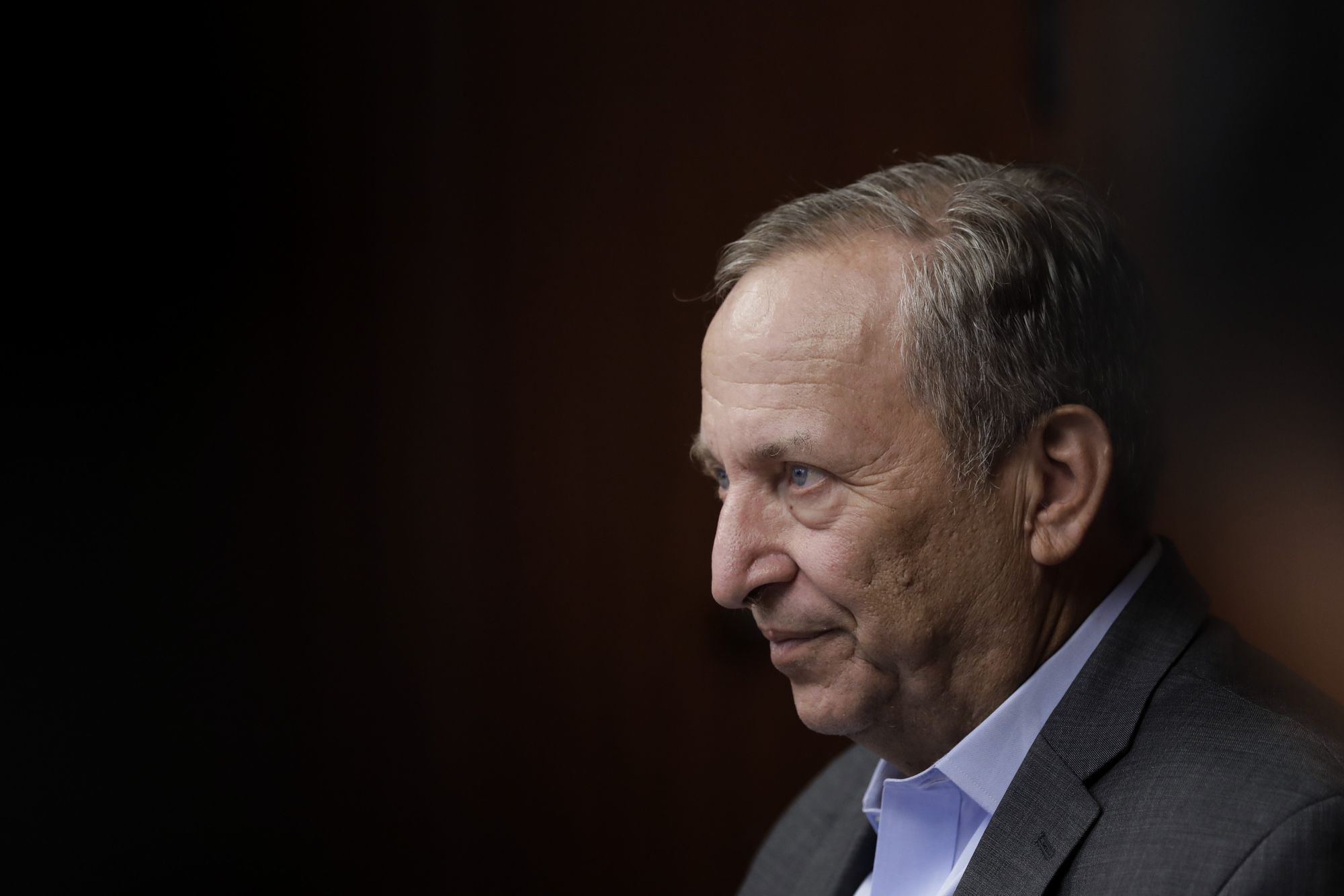
(Bloomberg) -- Former Treasury Secretary Lawrence Summers renewed his criticism of Federal Reserve economic forecasts, saying that the US unemployment rate would need to increase by much more than policy makers anticipate in order to quell inflation.
“I still think the Fed and most market participants are underestimating the gravity of our situation,” Summers told Bloomberg Television's “Wall Street Week” with David Westin.
Fed policy makers, in their outlook released on Wednesday, signaled they see inflation easing from above 6% today to below 3% next year and near 2% in 2024. The median forecast showed unemployment rising to 4.1% by 2024, from 3.6% in May.
Summers said that while the latest predictions mark an “epic” revision from the March outlook, they still look more like an optimistic risk scenario rather than a baseline forecast.
“A better judgment is that there's no reduction to normality without a significant increase in unemployment of perhaps 2 percentage points or more at some point down the road,” said Summers, a Harvard University professor and paid contributor to Bloomberg Television.
Read More: Median Economic Projections of the Federal Reserve
Summers's scenario would have the jobless rate going to 5.6% or higher. The median projections of economists surveyed by Bloomberg are for rates below 4% both next year and in 2024.
“I would be very, very surprised if we saw inflation come down to 2.5% without also having seen a recession,” Summers also said. The more likely scenario is that the recession won't bring consumer-price gains “all the way down” to 2.5% -- “that's why I think the central tendency is towards stagflation.”
Fed Chair Jerome Powell on Wednesday said that policy makers aren't trying to “induce a recession now,” but that the “pathways” to overcoming inflation while maintaining a strong job market “have become much more challenging due to factors that are not under our control.” He cited continuing fallout from the Russian invasion of Ukraine among the supply-side constraints on the economy.
“I don't think that the recession that Chair Powell says he's willing to tolerate necessarily a large enough recession to do what would be necessary with respect to inflation,” Summers said. There remains “very substantial ambiguity” about what the Fed is prepared to do, he said.
The former Treasury chief said that a fresh challenge could emerge in the next month is geopolitical tensions with Iran. That could “feed through into energy markets,” he said.
Summers judged that while the US is going through difficulties now, history shows a record of bouncing back.
President Jimmy Carter declared the nation to be suffering a “crisis of confidence” in 1979 remarks known as the “malaise speech.” But the malaise debate “looked kind of ridiculous several years later,” Summers noted, referring to the economic boom that ignited in the mid-1980s.
More stories like this are available on bloomberg.com
©2022 Bloomberg L.P.

-
Blue Wave Will Derail the AI Trade but Won't Dismantle the AI Era | Unhedged Position

The Democrats' sweep of the US Congress will see politics collide with economic forces both over the long and short term.
-
It's Time To Take The GST Council's Bet On Trust Global
Payment records can prove India's services exports, and clear, proportionate rules can bring foreign digital sellers into the tax net.
-
Opinion | India at 38: From Innovation Overperformer to Innovation Powerhouse
India now has 453 VC-backed deep science startups, 18 of them late-stage, after 117 percent growth since 2020. Laurus Labs, at USD 9.3 billion, is the most valuable deep science company in any middle-income economy outside China.
-
Navigating Energy Crossroads: S Jaishankar's Call For Diversified Supply Chains At G20 Ministerial Meeting
As geopolitical fault lines continue to test maritime trade routes and commodity flows, Jaishankar's message remains pertinent: true economic resilience requires open markets, protected transit lines, and a genuine commitment to multilateral cooperation rather than coercion.
-
Indians Are Travelling, But Not Every Journey Is A Holiday | The Week In Whys
Pilgrims, patients and working women are the real travellers, and the system hasn't quite caught up with them.
-
Getting To Work Costs Women More | The Reason Why
It is not just about women paying more than men. It is about women paying much more in cities than in villages.
-
AI Bias In Investing Cannot Be Eliminated, But It Can Be Governed
Framing is a particularly important example as identical financial information presented in terms of gains rather than losses can lead an LLM to reach a different assessment.
-
Joining The Dots | Dark Skies, Steady Diya: Why Hope Holds This Diwali
With war, a weak rupee and foreign outflows weighing on sentiment, policymakers at the NDTV World Summit and market veterans at NDTV Profit Ignite: Diwali Edition offered the same advice: stay invested and filter out the noise.
-
The Curious Case of Equitas Small Finance Bank And A CEO Who Quit For Stock
PN Vasudevan believes persistent investor concerns over a perceived conflict of interest had become a governance overhang on Equitas Small Finance Bank's stock, even as the lender improved profitability and asset quality.










