Stricter Emission Standards: Is India Ready For The Big Change In Shipping?
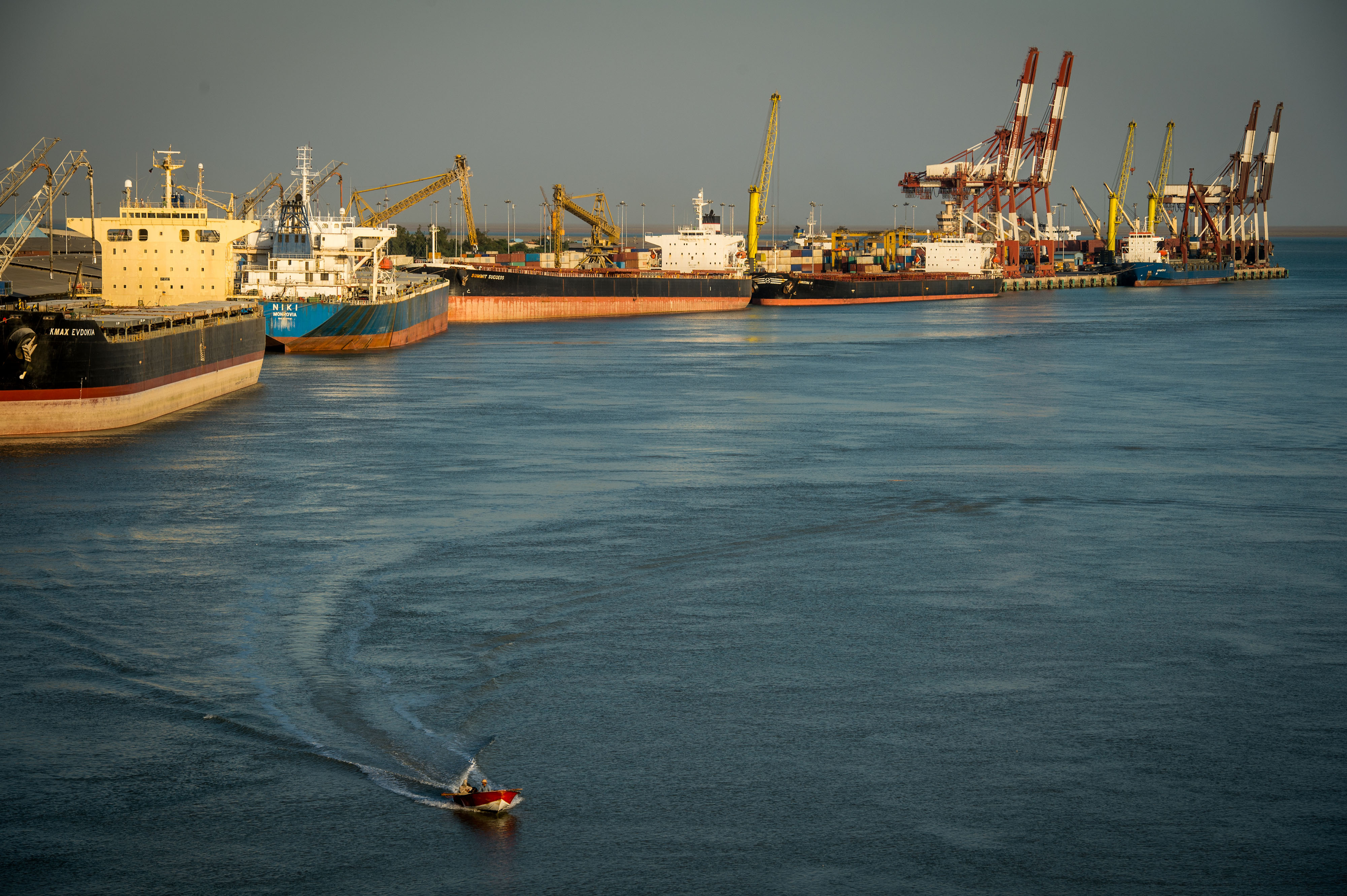
Maritime trade will become expensive in about five months as merchant shipping firms need to comply with stricter fuel emission standards.
Starting Jan. 1, ships will have to slash sulphur content in fuel oil by 85 percent by using fuel oil containing 0.5 percent of the chemical, according to the International Maritime Organization's changed rules. That means they either use costlier low-sulphur grade fuel or install scrubbers or equipment to contain toxic fumes.
Prices of the low-sulphur shipping fuel have already have jumped on anticipation of higher demand, Bloomberg reported. That's likely to affect India's trade as around 95 percent of the nation's trading by volume and 70 percent by value is done through maritime transport, according to the Ministry of Shipping.
Low-sulphur fuel could cost nearly $300-400 per tonne more than the high-sulphur grade, Anil Devli, chief executive officer of Indian National ShipOwners' Association, told BloombergQuint over the phone.
Stricter emission norms already apply to high-traffic trade routes in northern Europe, North America and Canada and on vessels crossing areas that use low-sulphur oil.
Scrubbers Or Cleaner Fuel
For retrofitting with scrubbers, ships need to be berthed at drydocks or shipyards, Devli said. The cumulative cost, including shipyard space, engineering works and downtime, would be around $4.5-5 million per vessel, he said.
Yet, ship owners may prefer to install scrubbers than use low-sulphur grade fuel, a senior official at the Ministry of Shipping told BloombergQuint requesting anonymity. Scrubbers, the official said, are viable in the long term as their costs can be recovered in about four to six years. The official also said the effluents that get filtered by scrubbers can be stored and find utility in industries like rubber making.
The Great Eastern Shipping Co. Ltd.—that operates 47 ships—said that it will use a mix of scrubbers and low-sulphur fuel for its fleet. “We have installed scrubbers only on seven ships because they are modern and have longer life,” G Shivakumar, the company's chief financial officer, told BloombergQuint over the phone.
“We'll be making a total investment of $20 million for scrubbers.” For older ships, he said, the cargo transporter would source low-sulphur grade fuel.
Refiners Need To Step Up
Shipping's demand for high-sulphur fuel oil, according to International Energy Agency's estimates, may drop to about 1.4 million barrels a day in 2020, down from 3.5 million this year. That means refineries would have to step up capacities.
Refiners worldwide will need to invest around $80 billion to make low-sulphur fuel, said Davinder Sandhu, partner and transport sector lead at consultancy KPMG India. There will be many challenges for this transition as greater demand for low-sulphur fuel after January will lead to decreased demand for high-sulphur fuel. “If premium (of cleaner fuel) is high, working capital requirements of ships will also increase.”
India's largest refiner says it's ready. “It (low-sulpur fuel) will be available at Indian ports from October,” BV Rama Gopal, director of refineries at Indian Oil Corporation Ltd., told BloombergQuint over the phone. But it's yet to disclose pricing.
The goods and services tax framework may have to be tweaked if the adoption of cleaner shipping fuel is to encouraged. The shipping industry pays 5 percent GST on bunker fuel and if they burn distillate fuel—marine oil with low-sulphur content—the tax can range between 25 percent and 28 percent, which will make bunker fuel costing much higher in India, said Indra Bose, adviser at Great Eastern Shipping.
Moreover, according to Devli, Indian Oil and Bharat Petroleum Corporation Ltd. would supply cleaner fuel to one port each on India's east and west coasts. “We don't have tanks on all ports so there will be only a few restricted ports where we will be able to get this fuel,” he said. Old fuel, he said, has to be emptied from those tanks and they have to be washed completely, which will take some time.
India had sought time to implement these regulations for these reasons, said the shipping ministry official cited earlier. The official, however, said all ports have bunkering facilities, so there won't be problems with fuel availability.
BloombergQuint has written to the Ministry of Petroleum and Natural Gas seeking clarity on availability of low sulphur-grade fuel oil. This story will be updated once the ministry responds.
Another challenge for shippers using scrubbers would be disposal of effluents, which pollute coastal waters. This, KPMG said in its report, requires stringent guidelines and a robust monitoring mechanism to prohibit ships from dumping polluted effluents from scrubber systems into port limits and territorial waters.
That may pose operational challenges to shipping firms. “In India, you're allowed to discharge effluents in the sea,” Shivakumar said. “Countries like Singapore, Hong Kong and China don't permit that.”
“We will have to use low-sulphur fuel on scrubber ships in such situations," he said. “That will further increase costs.”
Impact On Consumers
Shipping firms, according to the KPMG report, may have to pass a major chunk of their costs to customers through a mechanism that allows them to pass on costs to compensate for fluctuation in prices of fuels.
According to industry estimates, that could result in an increase of $150-200 per twenty-foot equivalent unit—a standard unit used to describe container ship cargo capacity—for customers.
Shippers using low-sulphur fuel will pass additional costs to charters, Anjali Kumar, chief general manager of Great Eastern Shipping, told BloombergQuint over the phone. “But how much of the increased cost can be passed on to the customer will depend on the strength of the market at that point of time.”

-
A New Samvat Wishlist: Inclusive Prosperity And Human Development

India has strengthened its economic foundations through infrastructure, digital access and enterprise. Its next growth chapter must deepen productivity, create better livelihoods and widen participation in prosperity.
-
Love, Sex Aur Dhokha: The Audacious Plot To Spy On Jensen Huang
A Taipei dinner, a Singapore chip buyer and a suspected Chinese asset: inside the alleged spy operation that got close to NVIDIA's Jensen Huang.
-
Ten Things I Learnt This Samvat
Patience can be a trap. Cheap stocks can stay cheap. Leverage can wipe you out. What did Samvat 2082 teach us? Niraj Shah writes on 10 lessons from the year gone by.
-
Talking Points This Week: Tech Nerves, FII Buying, And A Faraway Banking Shock
The global markets are not shining this Diwali. The exception in the large markets is, India.
-
Midterm Rally Lasted A Day. The Hard Reality Of A Divided US May Last Two Years | Opinion
Between a contested AI boom, a debt ceiling that arrives in 2027 and a president with every incentive to act alone, the next two years may prove more volatile than the first day's rally suggests.
-
Blue Wave Will Derail the AI Trade but Won't Dismantle the AI Era | Unhedged Position
The Democrats' sweep of the US Congress will see politics collide with economic forces both over the long and short term.
-
It's Time To Take The GST Council's Bet On Trust Global
Payment records can prove India's services exports, and clear, proportionate rules can bring foreign digital sellers into the tax net.
-
Opinion | India at 38: From Innovation Overperformer to Innovation Powerhouse
India now has 453 VC-backed deep science startups, 18 of them late-stage, after 117 percent growth since 2020. Laurus Labs, at USD 9.3 billion, is the most valuable deep science company in any middle-income economy outside China.
-
Navigating Energy Crossroads: S Jaishankar's Call For Diversified Supply Chains At G20 Ministerial Meeting
As geopolitical fault lines continue to test maritime trade routes and commodity flows, Jaishankar's message remains pertinent: true economic resilience requires open markets, protected transit lines, and a genuine commitment to multilateral cooperation rather than coercion.









