Stranded Trucks, Unpaid Workers: India Inc Looks At Cost Of Cash Crunch
Mumbai/New Delhi: Like millions fed up with corruption and counterfeiting, Vimal Somani cheered Prime Minister Narendra Modi's shock move earlier this month to replace all high-value banknotes. Two weeks on, his business is being hammered by the ensuing cash crunch.
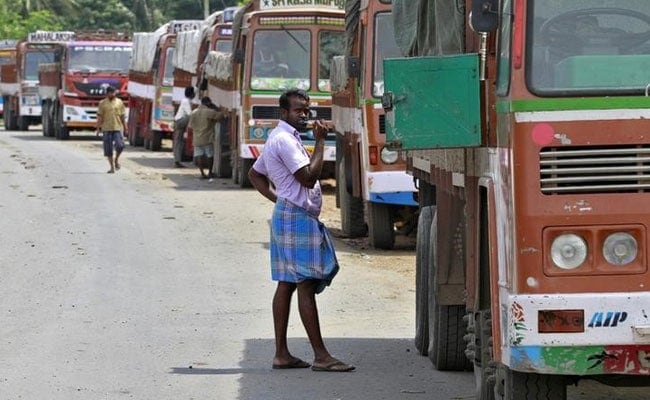
Sales at Somani's aluminium foil maker, Rockdude Impex, have fallen by roughly a quarter in the past week, and the cash shortage that followed demonetisation has left his supply chain in tatters: his trucks are stranded with no money for fuel, workers won't load goods for free, and distributors can't pay up.
PM Modi's move on Nov. 8 was aimed at cracking down on corruption and flushing out black money. But the cancellation of 500 and 1,000 rupee notes, more than 80 percent of currency in circulation, threatens to push Asia's third-largest economy into a liquidity crisis.
The government has acknowledged that the disruption would last weeks because of delays in note printing and technical problems with ATM machines, but PM Modi has made a plea for patience until Dec. 30. The government said it could not have printed new notes or recalibrated cash machines in advance for fear of the move leaking out.
Meanwhile, supply chains at small, medium and even larger companies are breaking down, underlining just how much corporate India - not just the shadow economy - relies on hard cash.
"The entire supply chain has broken," said Mr Somani, who employs 150 people across India from his base outside Mumbai.
Problems at Rockdude go from its network of suppliers to its 1,500 distributors and 150 stockists. Its sales team, spread from Delhi to Nagaland in the east and all the way to the south, is rapidly running short of cash to promote a planned new product, even for the rickshaw rides they use to travel.
Revenues have frozen, Mr Somani says, but fixed costs continue, including wages. These are paid online, but his staff cannot get access without being given time off to queue at the bank.
People ranging from taxi drivers and street hawkers to big consumer goods firms have seen their earnings plummet by as much as 80 percent in the first week of the swap alone, according to some analysts' estimates.
Those relying on informal, cash-based channels are, unsurprisingly, worst hit. Greengrocer Ranveer Singh, who regularly borrows money to run his shop in New Delhi, sold vegetables on credit to regular customers in the first two days after the cash crackdown, but has been forced to shut up shop.
"I don't have cash to refill stocks," said Mr Singh.
With the government changing rules for currency withdrawals and exchange almost every day, Mr Somani and others are struggling.
Chandubhai Kothia, head of chemicals company Shree Ganesh Chemicals in Gujarat, with an annual turnover of Rs 100 crore, said a newly imposed 50,000 rupee cash withdrawal limit per week for some businesses that came in as part of the measures was simply not enough.
"The payment of wages to workers and transport are a problem," he said.
Some analysts are already reviewing their estimate of company earnings for the rest of the year.
Brokerage Motilal Oswal warned this week that its forecast of a revival in corporate earnings in the second half of the fiscal year 2016/17 was now in jeopardy, with autos, retail, consumer goods, cement, telecom and non-banking financial companies likely to see downgrades.
India's vast services sector, which accounts for two-thirds of GDP, is worst hit.
In Gurgaon's Cyber Hub, a corporate leisure centre, several eateries reported a crash in their card swiping machines, compelling them to decline customers who didn't have sufficient smaller denomination bills.

-
High US Salaries, No Green Card Certainty: The Financial Calculation Facing Indian H-1B Families

The suspension of PERM processing at eight technology employers does not cancel existing H-1B visas. What it does is force a question many Indian families have been avoiding: is the US salary worth tying your career and family plans to one employer?
-
Unhedged Position: Can India See An Indonesia-Style Time Correction?
The Nifty is trading below levels it first clocked in 2024. Is there, then, as I have suggested in the headline, potential that the current time correction drags on painfully for the next three-five, even ten years?
-
Navigating Friction And Energy Realities: An Analysis Of Marco Rubio's October Visit To India
Occurring at a critical juncture marked by stalled trade negotiations and escalating geopolitical pressures over global energy supplies, the visit offers a profound window into modern US-India relations.
-
India Exports Capital. Why Not Export Trusteeship?
The big question, then, is whether India can build an institution that global borrowers, investors, banks, and lawyers can trust, even without an Indian connection.
-
France's Economy & Politics Are In Crisis | The Reason Why
Let's look at how the French economy and politics evolved under Nicolas Sarkozy, Franois Hollande and Emmanuel Macron.
-
You May Inherit The Business. You Must Earn Its Credibility.
Succession tests the founder's ability to share authority as much as it tests the next generation's readiness to assume it.
-
Signing Deals Is One Thing; Making Them Work Is Another | The Week In Whys
Sometimes, things don't turn out as planned. Indian companies have lost some bids to rivals, some projects won't produce until 2030.
-
FOMC Wall, PERM Suspension, Hospital Stocks | Talking Points This Week
A PERM suspension would directly affect green-card sponsorship rather than H-1B visas, so the near-term earnings impact could remain relatively limited. The key question is whether this marks a new phase in US scrutiny of Indian IT.
-
Everything, Everywhere, All At Once: Dalal Street's Week To Forget | Joining The Dots
Visa curbs, a Starlink spat and cancer drug caps: what connects this week's shocks for Indian markets
-
India Is Going Abroad For Critical Minerals. But It May Take Years To Pay Off | The Reason Why
Although India's steps are in the right direction, they remain modest compared with India's growing dependence.









