Sensex, Nifty Likely To Have A Cautious Start
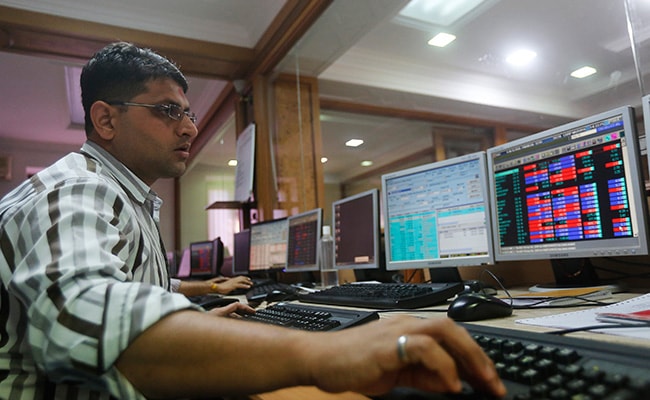
The domestic stock markets are likely to open on a cautious note, in line with cues from global markets as results from the U.S. Presidential election hinted at a close race for the top post. Trends on SGX Nifty indicate a flat opening for the index in India, with a 10-points loss. At 7:00 am, the Nifty futures were trading at 11,816, lower by 10 points, on the Singapore Stock Exchange.
Asian share markets turned cautious on Wednesday, paring sharp early gains. E-Mini futures for the S&P 500 retreated 0.2 per cent, having earlier been up 1 per cent. Japan's Nikkei was still up 1 per cent, but South Korea went flat. MSCI's broadest index of Asia-Pacific shares outside Japan eased 0.3 per cent.
The dollar slid and global equity markets rose on Tuesday on bets of increased stimulus if Joe Biden wins the U.S. presidential election against President Donald Trump, but gold prices edged higher on the potential for contested voting results.
The Dow Jones Industrial Average rose 2.06 per cent, the S&P 500 gained 1.78 per cent and Nasdaq Composite added 1.85 per cent.
U.S. oil prices jumped more than 2 per cent on Wednesday after industry data showed crude inventories in the United States dropped sharply and as investors awaited results from the tumultuous presidential election.
West Texas Intermediate was up $1.01, or 2.7 per cent, at $38.67 a barrel by 1138 GMT Tuesday, after gaining more than 2 per cent in the previous session. Brent crude was yet to trade, having gained 3 per cent on Tuesday.
On the earnings front, State Bank of India, Lupin, HPCL, Adani Enterprises, Apollo Tyres, Balrampur Chini Mills and Happiest Minds Technologies will declare their Q2 numbers during the day.
On Tuesday, the BSE Sensex had closed above the 40,000 mark, rising 503.55 points or 1.27 per cent to 40,261.13 and the Nifty had gained 144.30 points or 1.24 per cent to 11,813.50.

-
Unhedged Position: Can India See An Indonesia-Style Time Correction?

The Nifty is trading below levels it first clocked in 2024. Is there, then, as I have suggested in the headline, potential that the current time correction drags on painfully for the next three-five, even ten years?
-
Navigating Friction And Energy Realities: An Analysis Of Marco Rubio's October Visit To India
Occurring at a critical juncture marked by stalled trade negotiations and escalating geopolitical pressures over global energy supplies, the visit offers a profound window into modern US-India relations.
-
India Exports Capital. Why Not Export Trusteeship?
The big question, then, is whether India can build an institution that global borrowers, investors, banks, and lawyers can trust, even without an Indian connection.
-
France's Economy & Politics Are In Crisis | The Reason Why
Let's look at how the French economy and politics evolved under Nicolas Sarkozy, Franois Hollande and Emmanuel Macron.
-
You May Inherit The Business. You Must Earn Its Credibility.
Succession tests the founder's ability to share authority as much as it tests the next generation's readiness to assume it.
-
Signing Deals Is One Thing; Making Them Work Is Another | The Week In Whys
Sometimes, things don't turn out as planned. Indian companies have lost some bids to rivals, some projects won't produce until 2030.
-
FOMC Wall, PERM Suspension, Hospital Stocks | Talking Points This Week
A PERM suspension would directly affect green-card sponsorship rather than H-1B visas, so the near-term earnings impact could remain relatively limited. The key question is whether this marks a new phase in US scrutiny of Indian IT.
-
Everything, Everywhere, All At Once: Dalal Street's Week To Forget | Joining The Dots
Visa curbs, a Starlink spat and cancer drug caps: what connects this week's shocks for Indian markets
-
India Is Going Abroad For Critical Minerals. But It May Take Years To Pay Off | The Reason Why
Although India's steps are in the right direction, they remain modest compared with India's growing dependence.
-
When Everyone Has AI, What Gives You An Edge?
India's young workforce is entering an uncertain world of work where powerful AI tools are becoming widely accessible. The advantage will belong to those who combine deep expertise with digital fluency, and the distinctly human capabilities that technology cannot manufacture.









