Sensex Tanks 1,024 Points; Nifty Settles Below 17,250; Tata Consumer Products, HDFC Bank Top Drags
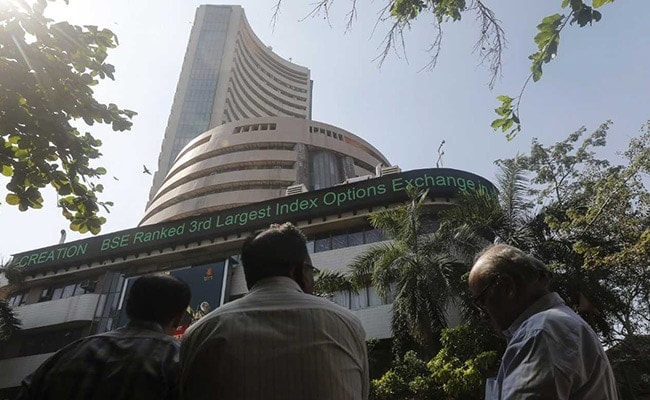
New Delhi: The Indian equity benchmarks on Monday plunged heavily, extending their fall to the third straight session amid selling across all sectors. State-run banks, however, surged while riding on the back of strong quarterly results. The benchmark BSE Sensex slumped 1,024 points or 1.75 per cent to close at 57,621, while the broader NSE Nifty dropped 303 points or 1.73 per cent to settle at 17,214.
Mid- and small-cap shares finished in the negative zone as Nifty Midcap 100 index fell 1.03 per cent and small-cap shares moved 1.34 per cent lower.
"At the current juncture, sentiments are weak and it may further drag Sensex. Investors should avoid taking any fresh positions for the time being till the market sentiments stabilize. Banking, auto, EV, Pharma and IT sectors look attractive and may show a good bounce from lower levels," said Ravi Singh, Head of Research and Vice President, Share India.
On the stock-specific front, Tata Consumer Products was the top Nifty laggard as the stock cracked 3.87 per cent to Rs 705.40. L&T, HDFC Bank, Britannia and HDFC Life were also among the laggards.
Except for Nifty PSU Bank, 14 out of 15 sub-indexes -- compiled by the NSE -- finished in the red.
PowerGrid, ONGC, Tata Steel, NTPC and SBI were among the gainers on the NSE index.
On BSE, the overall market breadth stood weak as 1,412 shares advanced while 2,098 declined.
On the 30-share platform, HDFC Bank, L&T, Bajaj Finance, Bajaj Finserv, Titan, Kotak Mahindra and HDFC attracted the most losses with their shares sliding as much as 3.65 per cent.
Meanwhile, the Reserve Bank of India (RBI) has rescheduled the meeting of the rate-setting Monetary Policy Committee (MPC) by a day in view of Maharashtra declaring a public holiday on February 7 to mourn the death of Bharat Ratna legendary singer Lata Mangeshkar.
The meeting will now begin on February 8 and the outcome would be announced on February 10.
Also, foreign portfolio investors (FPIs) pulled out as much as Rs 6,834 crore from Indian markets in the first four trading sessions of February.
On the global front, Asian markets traded lower after strong U.S. jobs data caused a spike in bond yields and added to the risk of an aggressive tightening by the Federal Reserve.

-
Talking Points This Week: Tech Nerves, FII Buying, And A Faraway Banking Shock

The global markets are not shining this Diwali. The exception in the large markets is, India.
-
Midterm Rally Lasted A Day. The Hard Reality Of A Divided US May Last Two Years | Opinion
Between a contested AI boom, a debt ceiling that arrives in 2027 and a president with every incentive to act alone, the next two years may prove more volatile than the first day's rally suggests.
-
Blue Wave Will Derail the AI Trade but Won't Dismantle the AI Era | Unhedged Position
The Democrats' sweep of the US Congress will see politics collide with economic forces both over the long and short term.
-
It's Time To Take The GST Council's Bet On Trust Global
Payment records can prove India's services exports, and clear, proportionate rules can bring foreign digital sellers into the tax net.
-
Opinion | India at 38: From Innovation Overperformer to Innovation Powerhouse
India now has 453 VC-backed deep science startups, 18 of them late-stage, after 117 percent growth since 2020. Laurus Labs, at USD 9.3 billion, is the most valuable deep science company in any middle-income economy outside China.
-
Navigating Energy Crossroads: S Jaishankar's Call For Diversified Supply Chains At G20 Ministerial Meeting
As geopolitical fault lines continue to test maritime trade routes and commodity flows, Jaishankar's message remains pertinent: true economic resilience requires open markets, protected transit lines, and a genuine commitment to multilateral cooperation rather than coercion.
-
Indians Are Travelling, But Not Every Journey Is A Holiday | The Week In Whys
Pilgrims, patients and working women are the real travellers, and the system hasn't quite caught up with them.
-
Getting To Work Costs Women More | The Reason Why
It is not just about women paying more than men. It is about women paying much more in cities than in villages.
-
AI Bias In Investing Cannot Be Eliminated, But It Can Be Governed
Framing is a particularly important example as identical financial information presented in terms of gains rather than losses can lead an LLM to reach a different assessment.









