Sensex Plunges 460 Points, Extending Deep Losses For Second Straight Session
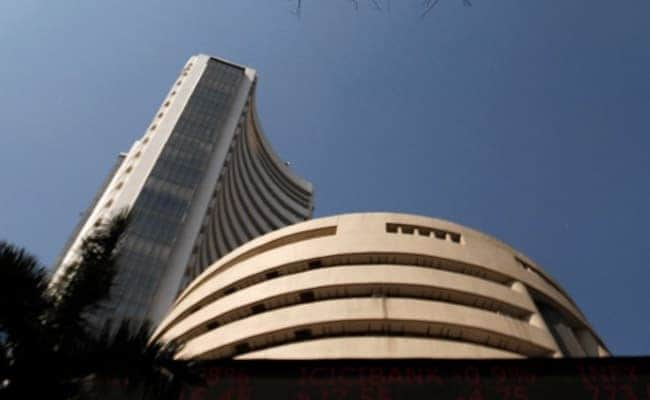
Indian equity benchmarks crashed for the second straight session on Friday as concerns about a potential global recession increased in response to hawkish remarks from major central banks this week.
After crashing over 870 points in the previous session, the 30-share BSE Sensex index fell a further 461.22 points, or 0.75 per cent, to close at 61,337.81 on Friday.
The Sensex pack's biggest laggards included Mahindra & Mahindra, Asian Paints, Dr. Reddy's, Tata Consultancy Services, State Bank of India, Wipro, PowerGrid, and Titan. Among the winners were Hindustan Unilever, HDFC Bank, and Nestle.
The broader NSE Nifty-50 index declined 145.90 points, or 0.79 per cent, to end at 18,269, compared to Thursday's close of 18,660.30.
"The commentary from global central banks this week has been the pain point for markets," Siddhartha Khemka, Head of Retail Research at Motilal Oswal Financial Services, told Reuters.
On Friday, Asian equities declined for the second day and were on track for their worst week in two months.
The largest Asia-Pacific share index outside of Japan, as measured by MSCI, dropped 0.8 per cent and for the week was down 2.3 per cent. This week, global stock prices are down 1.2 per cent.
"Forget about a year-end financial market rally; major central banks are sending a clear and unmistakable message: the fight to control inflation is far from done," said a stock trader at a Mumbai Bank.
On Wednesday and Thursday, central banks from the US, the euro zone, the UK, and Switzerland convened and eased the pace of aggressive rate hikes.
"The worrying aspect for markets is the rate hike finishing lines are still unknown, and we have the two most dominant central banks in the world climbing the mountain into very restrictive territory," noted Stephen Innes, Managing Partner at SPI Asset Management, according to Bloomberg.
"Hiking interest rates into a dimming macro environment will undoubtedly trigger a recession. The question is just how profound."
But the markets, which have recently surged strongly on the idea of peak inflation and interest rates, were not interested in their hawkish signals.
"Forget the Santa rally...the Fed looks more like the Grinch this Christmas," John Leiper, Chief Investment Officer of Titan Asset Management, told Reuters.
Treasuries fell, with yield curves steepening, suggesting an impending recession.
Ann-Katrin Petersen, a Senior Investment Strategist at BlackRock Investment Institute, said on Bloomberg Television that central banks were starting to acknowledge they will have to crush growth and likely engineer recessions to tame inflation.
The S&P 500 hit its lowest point in a month on Thursday. The index rose by as much as 2.76 per cent on Tuesday, reaching a three-month high as expectations that the Fed will soon stop raising interest rates were boosted by a surprisingly modest increase in consumer price inflation. The S&P has lost over 16 per cent so far this year.
"It does feel like the major central banks, including the Fed, are having to fight a market narrative of relief that we've hit peak rates," Hetal Mehta, Senior European Economist at Legal & General Investment Management, told Reuters.
"A market rally would be an easing of financial conditions that jars with the idea that they (policymakers) need to get interest rates into restrictive territory," added Mr Mehta.
Relief at the apparent resolution of a protracted accounting access issue with the United States was insufficient to spur a surge in China, where markets are teetering over an uncertain reopening.
In the energy market, oil fell on Friday, erasing its largest weekly gain since early October, due to indications that supply is tightening and the potential for stronger Chinese demand.

-
Navigating Friction And Energy Realities: An Analysis Of Marco Rubio's October Visit To India

Occurring at a critical juncture marked by stalled trade negotiations and escalating geopolitical pressures over global energy supplies, the visit offers a profound window into modern US-India relations.
-
India Exports Capital. Why Not Export Trusteeship?
The big question, then, is whether India can build an institution that global borrowers, investors, banks, and lawyers can trust, even without an Indian connection.
-
France's Economy & Politics Are In Crisis | The Reason Why
Let's look at how the French economy and politics evolved under Nicolas Sarkozy, Franois Hollande and Emmanuel Macron.
-
You May Inherit The Business. You Must Earn Its Credibility.
Succession tests the founder's ability to share authority as much as it tests the next generation's readiness to assume it.
-
Signing Deals Is One Thing; Making Them Work Is Another | The Week In Whys
Sometimes, things don't turn out as planned. Indian companies have lost some bids to rivals, some projects won't produce until 2030.
-
FOMC Wall, PERM Suspension, Hospital Stocks | Talking Points This Week
A PERM suspension would directly affect green-card sponsorship rather than H-1B visas, so the near-term earnings impact could remain relatively limited. The key question is whether this marks a new phase in US scrutiny of Indian IT.
-
Everything, Everywhere, All At Once: Dalal Street's Week To Forget | Joining The Dots
Visa curbs, a Starlink spat and cancer drug caps: what connects this week's shocks for Indian markets
-
India Is Going Abroad For Critical Minerals. But It May Take Years To Pay Off | The Reason Why
Although India's steps are in the right direction, they remain modest compared with India's growing dependence.
-
When Everyone Has AI, What Gives You An Edge?
India's young workforce is entering an uncertain world of work where powerful AI tools are becoming widely accessible. The advantage will belong to those who combine deep expertise with digital fluency, and the distinctly human capabilities that technology cannot manufacture.
-
Wrong Labels, High Pesticide Residues Holding Back Agri Exports | The Reason Why
India needs stronger domestic food-safety and labelling standards, with best practices becoming part of everyday business for farmers, traders and food companies.










