Sensex, Nifty Fall For Second Straight Session On Global Economic Gloom
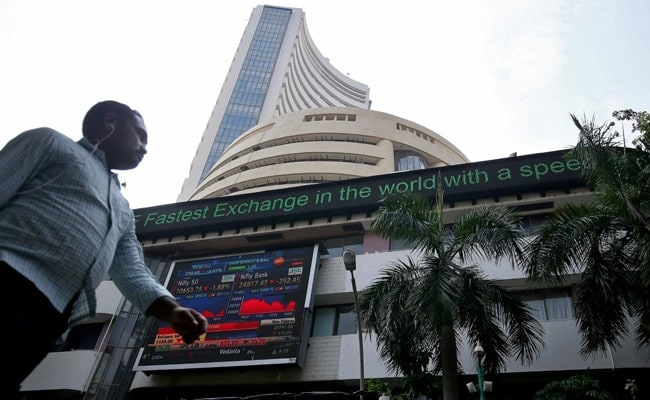
Equity benchmarks fell for the second straight session, driven by a sell-off in global stocks and commodities as the likelihood of aggressive Fed monetary tightening drove investors into safe-haven assets pushing the dollar index to yet another record high.
The 30-share BSE Sensex index closed 168.08 points lower to end at 59,028.91, and the broader NSE Nifty-50 index dipped 31.20 points to close at 17,624.40.
IndusInd Bank, Mahindra & Mahindra, Maruti, Bharti Airtel, State Bank of India, Tata Steel, ICICI Bank, and HDFC were the Sensex pack's biggest laggards.
Among the winners were UltraTech Cement, Tata Consultancy Services, Sun Pharma, Wipro, and Bajaj Finance.
The two-month long bull run Indian stocks has likely ended, as reflected in equity benchmarks poor performance so far this month, driven by widespread economic gloom.
“Markets languished in negative territory through the session tracking weak global cues, as uncertainty over a possible global recession due to likely rate hikes going ahead continued to weigh on sentiment," said Shrikant Chouhan, Head of Equity Research for Retail at Kotak Securities.
Markets suffered more losses during Asian trading as data showed China's export growth slowed in August, in addition to stronger-than-expected US services data overnight, which reinforced bets on aggressive Fed rate hikes.
Bloomberg reported that while global stocks are on pace for their worst run since the European debt crisis a decade ago, Goldman Sachs Group Inc. strategists are among those warning that more selling is possible.
The MSCI All Country World Index is in its longest losing stretch since 2011 and rapidly erasing a bounce from mid-June that a Goldman team led by Peter Oppenheimer described as a “bear market rally.”
The decline is not unusual relative to the experience of previous decades, the strategists wrote in a note. “We expect further weakness and bumpy markets before a decisive trough is established.”
The MSCI world equity index was down 0.3 per cent on the day. The largest index of Asia-Pacific stocks outside of Japan dropped to lows last seen in the aftermath of the 2020 pandemic.
The yield on the 30-year US Treasury was nearly at its highest level since 2014 during a bond sell-off that was made worse by betting on a further 75 basis point interest rate hike by the Fed to combat excessive inflation.
Additionally, traders were preparing for the Thursday rate decision of the European Central Bank, which could result in a move of a similar magnitude.
"Government bond yields across the board are rising, and that's putting pressure on stock markets," David Madden, market analyst at Equiti Capital, told Reuters.
"This also comes at a time when there's increasing fears of the global economy slowing down, and bond traders are predicting more rate hikes," he added.
The Stoxx 600 Index in Europe dropped 0.4 per cent, with mining and energy sectors leading the losses, while the S&P 500 and Nasdaq 100 futures contracts reversed losses to record slight gains.
Markets are coping with a crippling energy crisis in Europe and COVID-19 lockdowns in China, in addition to tighter monetary policies and an unstoppable dollar. Given the global economic headwinds, worries are mounting regarding the outlook for company earnings.
"Many investors are walking on eggshells," Kristina Hooper, chief global market strategist at Invesco, said on Bloomberg Television.
"The real issue is that it could be a one-two punch. We could see the Fed continuing to pummel the economy with a significant rate hike, let's say 75 basis points, and then, of course, we get downward revisions to earnings that are significant," she added.
In commodities, crude prices dropped to their lowest levels since January, and iron ore continued to fall.

-
Unhedged Position: Can India See An Indonesia-Style Time Correction?

The Nifty is trading below levels it first clocked in 2024. Is there, then, as I have suggested in the headline, potential that the current time correction drags on painfully for the next three-five, even ten years?
-
Navigating Friction And Energy Realities: An Analysis Of Marco Rubio's October Visit To India
Occurring at a critical juncture marked by stalled trade negotiations and escalating geopolitical pressures over global energy supplies, the visit offers a profound window into modern US-India relations.
-
India Exports Capital. Why Not Export Trusteeship?
The big question, then, is whether India can build an institution that global borrowers, investors, banks, and lawyers can trust, even without an Indian connection.
-
France's Economy & Politics Are In Crisis | The Reason Why
Let's look at how the French economy and politics evolved under Nicolas Sarkozy, Franois Hollande and Emmanuel Macron.
-
You May Inherit The Business. You Must Earn Its Credibility.
Succession tests the founder's ability to share authority as much as it tests the next generation's readiness to assume it.
-
Signing Deals Is One Thing; Making Them Work Is Another | The Week In Whys
Sometimes, things don't turn out as planned. Indian companies have lost some bids to rivals, some projects won't produce until 2030.
-
FOMC Wall, PERM Suspension, Hospital Stocks | Talking Points This Week
A PERM suspension would directly affect green-card sponsorship rather than H-1B visas, so the near-term earnings impact could remain relatively limited. The key question is whether this marks a new phase in US scrutiny of Indian IT.
-
Everything, Everywhere, All At Once: Dalal Street's Week To Forget | Joining The Dots
Visa curbs, a Starlink spat and cancer drug caps: what connects this week's shocks for Indian markets
-
India Is Going Abroad For Critical Minerals. But It May Take Years To Pay Off | The Reason Why
Although India's steps are in the right direction, they remain modest compared with India's growing dependence.
-
When Everyone Has AI, What Gives You An Edge?
India's young workforce is entering an uncertain world of work where powerful AI tools are becoming widely accessible. The advantage will belong to those who combine deep expertise with digital fluency, and the distinctly human capabilities that technology cannot manufacture.









