Sensex Falls Over 200 Points, Extending Losses For The Third Straight Day
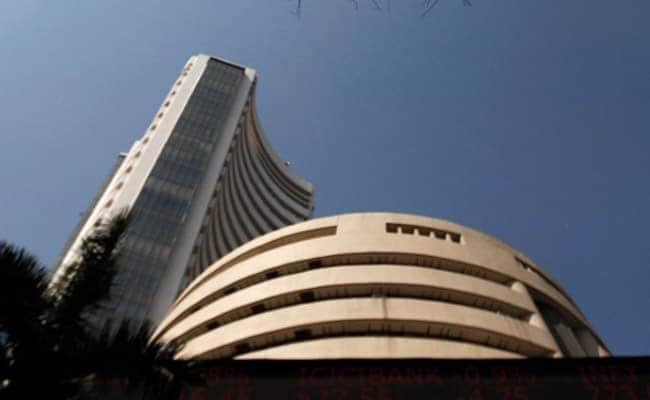
Indian equity benchmarks fell on Tuesday, extending losses for the third straight session after an eight-day bull run, including a record closing streak for six consecutive days.
Domestic shares mirrored a sharp fall in global risk assets, with Asian stocks posting their biggest declines in two weeks after strong US economic data suggested the Federal Reserve could stick with its aggressive interest rate increases for longer than previously anticipated.
The BSE Sensex index declined 208.24 points, or 0.33 per cent, to close at 62,626.36, and the broader NSE Nifty fell 58.30 points, or 0.31 per cent, to end at 18,642.75.
The Sensex had opened at 62,834.60, with the index hitting a low of 62,390.07 and a high of 62,677.84 on Tuesday.
MSCI's broadest index of Asia-Pacific shares outside Japan dropped by 1.4 per cent, the biggest fall since November 21, after climbing to a three-month high in the previous session.
Stock prices dropped 1.6 per cent in Taiwan, 1.1 per cent in Hong Kong, and 1 per cent in Korea. China's stock market continued to improve, with the overall index rising 0.6 per cent, while Japan's stock market rose 0.3 per cent.
"The black swan in the room is the risk of the Fed being too late again, but this time in cutting rates," said Havard Chi, Head of Research at Hedge Fund Quarz Capital Asia, told Reuters.
"Monetary policy works with a lag, and key spot indicators such as falling housing prices, rental rates, commodities, and freight pricing, as well as rising layoffs and inventories, are already signalling a weakening US economy," added the Research Head.
Following the S&P 500's third day of losses and a steep sell-off on Monday, contracts for the index rose on Tuesday. An indicator of European stocks fluctuated between gains and losses as a seven-week surge fizzled out.
Optimism about a reopening in China is being tempered by a strong US economy and persistent inflation, and money market futures and economists believe the Fed will need to raise rates more than initially anticipated.
"I think we are still not through the volatility we are going to see," Hannah Gooch Peters, Global Equity Investment Analyst at Sanlam UK, said in an interview with Bloomberg TV. "Inflation is not under control yet."
Meanwhile, in what is viewed as an expedited step toward withdrawing the Covid Zero policy, Beijing announced it would eliminate the Covid testing requirements for most public venues.
"Risk assets may enjoy some degree of positive momentum from Asia if developments continue to fuel optimism about a 2023 Chinese reopening," rates strategists at Mizuho International Plc wrote in a note to clients, reported Bloomberg.
Chinese equities have surged recently, but they are among the poorest performers in Asia so far this year.
"We are taking a 'buy the dips' approach in increasing our allocation as we believe that a full-reopening of the Chinese borders will only be from mid-Feb onwards, said the Head of Research at Hedge Fund Quarz Capital Asia, adding that the investment firm was generally bullish on Asian equities.
A separate Reuters report showed foreign net monthly inflows into Asian shares reached a two-year high in November. The sentiment was also boosted by expectations that China would eventually relax its zero-COVID policy and open up its economy.
Foreign investors purchased stocks worth a net $15.18 billion in November, the most since November 2020, according to data from stock markets in Taiwan, India, the Philippines, Vietnam, Thailand, Indonesia, and South Korea.
In the oil market, after a G7 price ceiling on Russian seaborne oil went into effect on Monday in addition to an EU embargo on the import of Russian petroleum by sea, crude prices have risen sharply after plunging by more than 3 per cent in the previous session.

-
Where You Live Shapes How You Get To Work | The Reason Why

Two-wheelers are the most popular way to get to work in India, accounting for nearly 43% of workplace commutes.
-
High US Salaries, No Green Card Certainty: The Financial Calculation Facing Indian H-1B Families
The suspension of PERM processing at eight technology employers does not cancel existing H-1B visas. What it does is force a question many Indian families have been avoiding: is the US salary worth tying your career and family plans to one employer?
-
Unhedged Position: Can India See An Indonesia-Style Time Correction?
The Nifty is trading below levels it first clocked in 2024. Is there, then, as I have suggested in the headline, potential that the current time correction drags on painfully for the next three-five, even ten years?
-
Navigating Friction And Energy Realities: An Analysis Of Marco Rubio's October Visit To India
Occurring at a critical juncture marked by stalled trade negotiations and escalating geopolitical pressures over global energy supplies, the visit offers a profound window into modern US-India relations.
-
India Exports Capital. Why Not Export Trusteeship?
The big question, then, is whether India can build an institution that global borrowers, investors, banks, and lawyers can trust, even without an Indian connection.
-
France's Economy & Politics Are In Crisis | The Reason Why
Let's look at how the French economy and politics evolved under Nicolas Sarkozy, Franois Hollande and Emmanuel Macron.
-
You May Inherit The Business. You Must Earn Its Credibility.
Succession tests the founder's ability to share authority as much as it tests the next generation's readiness to assume it.
-
Signing Deals Is One Thing; Making Them Work Is Another | The Week In Whys
Sometimes, things don't turn out as planned. Indian companies have lost some bids to rivals, some projects won't produce until 2030.
-
FOMC Wall, PERM Suspension, Hospital Stocks | Talking Points This Week
A PERM suspension would directly affect green-card sponsorship rather than H-1B visas, so the near-term earnings impact could remain relatively limited. The key question is whether this marks a new phase in US scrutiny of Indian IT.
-
Everything, Everywhere, All At Once: Dalal Street's Week To Forget | Joining The Dots
Visa curbs, a Starlink spat and cancer drug caps: what connects this week's shocks for Indian markets









