Sensex Crashes Over 870 Points As Risk Sentiment Sours Significantly
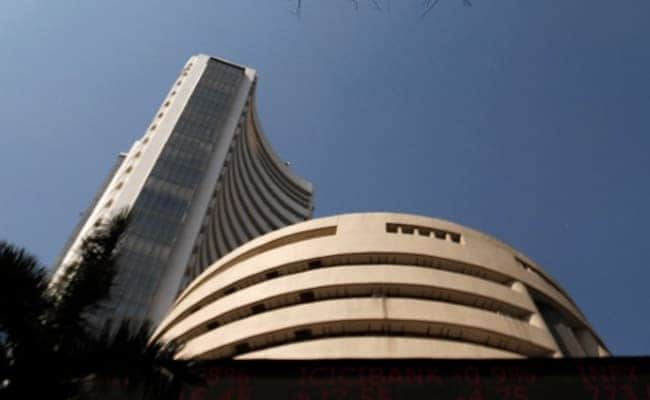
Indian equity benchmarks crashed on Thursday, stalling a two-day winning streak as the global stocks rally ended overnight after the US Federal Reserve said more rate hikes to come even as inflation has cooled significantly and recession risks are rising.
The BSE Sensex plunged 878.88 points to close at 61,799.03, and the broader NSE Nifty index fell 1.32 per cent to end at 18,414.90.
On Wednesday, the BSE benchmark had climbed 144.61 points, or 0.23 per cent, to settle at 62,677.91, and the Nifty had advanced 52.30 points, or 0.28 per cent, to end at 18,660.30.
The Sensex pack's biggest laggards included Tech Mahindra, Titan, Infosys, HDFC, ITC, Tata Steel, HDFC Bank, Tata Consultancy Services, and State Bank of India.
The sole winners were NTPC and Sun Pharma.
"The US Fed effect led to a massive sell-off in the markets as banking, IT, metal & realty stocks received severe pounding at the hands of investors. Markets were disappointed after the Fed indicated that the rate hike regime would continue next year, which further accentuated the already fragile market sentiment prompting investors to trim their equity exposure," said Shrikant Chouhan, Head of Equity Research for Retail at Kotak Securities.
The Fed projected 'higher for longer' interest rates even as expectations widely show US inflation has likely peaked and concerns from warning signs of a recession, pushing the rupee to plunge on Thursday.
"The likely bearishness can be attributed to US Fed's hawkish comments that indicated it will keep rates higher through next year and hold off on cuts until 2024," said Prashanth Tapse, Senior Vice President for Research at Mehta Equities.
After Fed Chair Jerome Powell said on Wednesday that the central bank will continue to hike interest rates in 2019, Wall Street shares dropped overnight, sparking the collapse in global markets.
"This is a very hawkish signal from the Fed: a substantially higher terminal rate than back in September that also has a real upside risk attached to it. The Fed essentially acknowledged at this meeting that inflation is likely to remain stickier than initially expected, necessitating a more restrictive policy stance, which will end up pushing the US economy in a recession in 2023," noted analysts at TD Securities.
"The weakening in risk assets and the flattening of the curve suggest that recession fears may be the dominant driver of market price action," they added.
Despite the fact that the economy is teetering on the verge of a potential recession, Mr. Powell suggested that if the US central bank does not tighten its control over inflation, a greater price will be paid.
As speculators continued to worry that tighter policy may lead to a recession, US Treasury rates remained low and the curve was deeply inverted.
Investors will now shift their focus to the policy meetings in Europe.
"Even though the Fed downshifted the rate hike to 50 basis points as expected, the tone of the commentary was unexpectedly hawkish. Globally, equity markets would be watching out for the ECB (European Central Bank) and BoE (Bank of England) decisions today, which are also likely to be 50 basis points hikes," V K Vijayakumar, Chief Investment Strategist at Geojit Financial Services, told PTI.
"The Indian market, though not completely decoupled from the mother market US, has been charting a slightly different path exhibiting surprising resilience even in the face of global weakness. This is due to India's superior growth and earnings prospects, going forward," he added.

-
Unhedged Position: Can India See An Indonesia-Style Time Correction?

The Nifty is trading below levels it first clocked in 2024. Is there, then, as I have suggested in the headline, potential that the current time correction drags on painfully for the next three-five, even ten years?
-
Navigating Friction And Energy Realities: An Analysis Of Marco Rubio's October Visit To India
Occurring at a critical juncture marked by stalled trade negotiations and escalating geopolitical pressures over global energy supplies, the visit offers a profound window into modern US-India relations.
-
India Exports Capital. Why Not Export Trusteeship?
The big question, then, is whether India can build an institution that global borrowers, investors, banks, and lawyers can trust, even without an Indian connection.
-
France's Economy & Politics Are In Crisis | The Reason Why
Let's look at how the French economy and politics evolved under Nicolas Sarkozy, Franois Hollande and Emmanuel Macron.
-
You May Inherit The Business. You Must Earn Its Credibility.
Succession tests the founder's ability to share authority as much as it tests the next generation's readiness to assume it.
-
Signing Deals Is One Thing; Making Them Work Is Another | The Week In Whys
Sometimes, things don't turn out as planned. Indian companies have lost some bids to rivals, some projects won't produce until 2030.
-
FOMC Wall, PERM Suspension, Hospital Stocks | Talking Points This Week
A PERM suspension would directly affect green-card sponsorship rather than H-1B visas, so the near-term earnings impact could remain relatively limited. The key question is whether this marks a new phase in US scrutiny of Indian IT.
-
Everything, Everywhere, All At Once: Dalal Street's Week To Forget | Joining The Dots
Visa curbs, a Starlink spat and cancer drug caps: what connects this week's shocks for Indian markets
-
India Is Going Abroad For Critical Minerals. But It May Take Years To Pay Off | The Reason Why
Although India's steps are in the right direction, they remain modest compared with India's growing dependence.
-
When Everyone Has AI, What Gives You An Edge?
India's young workforce is entering an uncertain world of work where powerful AI tools are becoming widely accessible. The advantage will belong to those who combine deep expertise with digital fluency, and the distinctly human capabilities that technology cannot manufacture.









