After Friday's Bloodbath, Equity Benchmarks Swing Between Gains And Losses
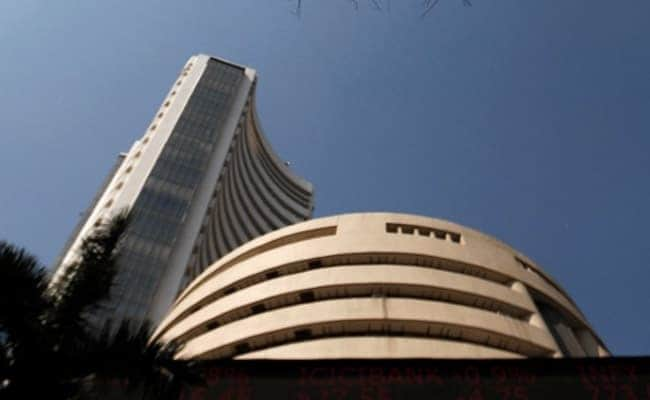
Equity benchmarks were highly volatile, swinging between gains and losses early on Monday, after the bloodbath on Friday when the Sensex crashed 1,100 points and the Nifty tanked over 2 per cent, driven by a looming recession from the broadest and most aggressive policy tightening in decades.
The 30-share BSE Sensex index opened in the green, then fell about 50 points but recovered to be over 100 points higher last at 58,948.64.
Similarly, the broader NSE Nifty-50 index opened in the green, gave up a few points immediately after and was last up about 40 point at 17,668.50.
Shares of Oil & Natural Gas Corp rose 1.4 per cent after India slashed windfall taxes on domestic crude oil production on Friday.
The main laggards in early trade from the Sensex pack included UltraTech Cement, Asian Paints, Titan, Dr. Reddy's, Tata Steel, HCL Technologies, Maruti, and ICICI Bank.
Trading was positive for Mahindra & Mahindra, IndusInd Bank, Infosys, Bajaj Finserv, and State Bank of India.
"The near-term texture of the market has turned weak and the buy on dips strategy is unlikely to work in the present risk-off global environment. FIIs turning sellers is a short-term negative. The market is likely to take a decisive trend only after the Fed policy announcement on 21st September," V K Vijayakumar, Chief Investment Strategist at Geojit Financial Services, told PTI.
Global stocks were subdued early on Monday after world equities notched their worst week since hitting this year's low in June.
Extreme volatility is in the cards as investors prepare for a week filled with 13 central bank meetings that will undoubtedly result in higher borrowing costs everywhere, with a chance of an especially large increase in the United States.
The prospect of a minimum 75 basis points Federal Reserve interest rate hike pushed the US two-year Treasury yields to surge by 30 basis points last week to reach the highest since 2007 of 3.92 per cent.
That made stocks more expensive in comparison and dragged the S&P 500 down almost 5 per cent for the week.
"How high will the funds' rate ultimately need to go? Our answer is high enough to generate a tightening in financial conditions that imposes a drag on activity sufficient to maintain a solidly below-potential growth trajectory," Jan Hatzius, Chief Economist at Goldman Sachs, told Reuters.
The "dot plot" forecasts of rates made by Fed members, likely to be hawkish, will be significant, and investors will keep a close eye to understand the rate hike path.
"We need to wait until the Fed hike, and then need to understand the dot plot," Wendy Liu, chief Asia and China equity strategist at JPMorgan Chase, said on Bloomberg TV.
Due to holidays in Japan and the UK observing a day of mourning for Queen Elizabeth II, Monday's trading session got off to a slow start with S&P 500 futures up 0.1 per cent and Nasdaq futures unchanged.
"It is clear that the Fed will project hawkish messaging, once again re-iterating that it will bring down inflation unconditionally," Vasileios Gkionakis, head of European currency strategy at Citigroup, wrote in a note to clients. While Fed hawkishness is already priced in, much will depend on "pre-positioning in a few days before."
After falling over 3 per cent last week, MSCI's broadest index of Asia-Pacific shares outside of Japan fell 0.3 per cent.
Chinese blue-chip stocks rose 0.3 per cent after China's central bank defied a global tightening trend and slashed its repo rate by 10 basis points to boost its struggling economy.
But most of the other central banks meeting this week, from Switzerland to South Africa, is likely to raise rates.

-
Unhedged Position: Can India See An Indonesia-Style Time Correction?

The Nifty is trading below levels it first clocked in 2024. Is there, then, as I have suggested in the headline, potential that the current time correction drags on painfully for the next three-five, even ten years?
-
Navigating Friction And Energy Realities: An Analysis Of Marco Rubio's October Visit To India
Occurring at a critical juncture marked by stalled trade negotiations and escalating geopolitical pressures over global energy supplies, the visit offers a profound window into modern US-India relations.
-
India Exports Capital. Why Not Export Trusteeship?
The big question, then, is whether India can build an institution that global borrowers, investors, banks, and lawyers can trust, even without an Indian connection.
-
France's Economy & Politics Are In Crisis | The Reason Why
Let's look at how the French economy and politics evolved under Nicolas Sarkozy, Franois Hollande and Emmanuel Macron.
-
You May Inherit The Business. You Must Earn Its Credibility.
Succession tests the founder's ability to share authority as much as it tests the next generation's readiness to assume it.
-
Signing Deals Is One Thing; Making Them Work Is Another | The Week In Whys
Sometimes, things don't turn out as planned. Indian companies have lost some bids to rivals, some projects won't produce until 2030.
-
FOMC Wall, PERM Suspension, Hospital Stocks | Talking Points This Week
A PERM suspension would directly affect green-card sponsorship rather than H-1B visas, so the near-term earnings impact could remain relatively limited. The key question is whether this marks a new phase in US scrutiny of Indian IT.
-
Everything, Everywhere, All At Once: Dalal Street's Week To Forget | Joining The Dots
Visa curbs, a Starlink spat and cancer drug caps: what connects this week's shocks for Indian markets
-
India Is Going Abroad For Critical Minerals. But It May Take Years To Pay Off | The Reason Why
Although India's steps are in the right direction, they remain modest compared with India's growing dependence.
-
When Everyone Has AI, What Gives You An Edge?
India's young workforce is entering an uncertain world of work where powerful AI tools are becoming widely accessible. The advantage will belong to those who combine deep expertise with digital fluency, and the distinctly human capabilities that technology cannot manufacture.









