Sensex, Nifty Gain, Snapping Two-Day Losing Streak On Oil Below $100
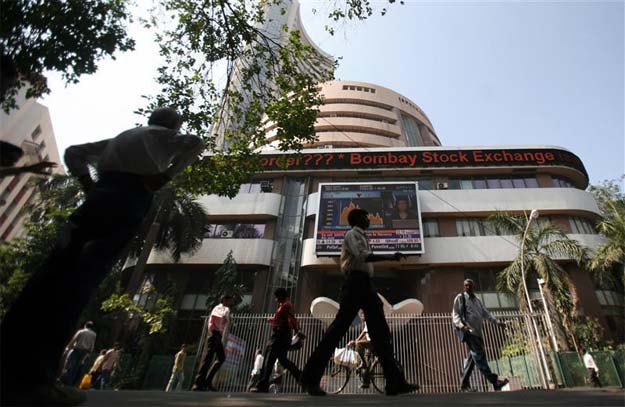
Indian benchmark stock indexes gained early on Wednesday, snapping a two-session losing streak tracking a crash in oil prices to below $100 a barrel, attracting investors hunting for returns ahead of a widely anticipated US inflation print later in the day.
The 30-share BSE Sensex gained over 200 points to trade around 54,000, while the broader NSE Nifty moved 60 points higher to about 16,120.
Among the Sensex constituents, Hindustan Unilever, Asian Paints, Bajaj Finserv, Power Grid, Larsen & Toubro and Bajaj Finance were the major gainers.
HCL Technologies, Reliance Industries and HDFC Bank were the laggards.
Asian stocks also recovered, snapping two straight days of losses, with the MSCI's broadest index of Asia-Pacific shares outside Japan gaining 0.65 per cent after slumping to its lowest in two years in the previous session.
Oil prices fell below $100 per barrel on rising fears of a global economic slowdown.
"The major positive development from India's economic and market perspective is the crash in Brent crude to below $100. The bulls are likely to latch on to this good news. But FIIs again turning sellers will be a dampener," V K Vijayakumar, Chief Investment Strategist at Geojit Financial Services, told PTI.
India is the world's third largest importer of oil and that fall fall in crude prices benefits the country as it brings down imported inflation in the country.
That crash in crude prices also boosted consumer stocks, as a plunge in oil prices provided some relief to the country that saw unrelenting inflation in June.
Indeed, retail inflation remained painfully above the 7 per cent mark, and beyond the central bank's tolerance band for a sixth month in a row, raising prospects of more rate hikes by central bank next month.
The Nifty fast moving consumer index rose 0.8 per cent, while the public sector bank index gained 1.1 per cent, a Reuters report showed.
Market participants will also closely monitor the latest inflation data in the US to be released later today, Geojit Financial Services Vijayakumar said.
"An important short-term trend playing out in the market is the weakness in IT and strength in banking. IT is weak on margin pressure in the industry and fears of a possible US recession fallout. Banking is strong due to the strong fundamentals of the banking segment and the impressive credit growth underway in the economy," he added.
But risks to global equity markets remain, and any moves seem inconsequential ahead of the highly anticipated June US inflation report, which likely accelerated to a 40-year peak of 8.8 per cent from a year ago, according to a Reuters poll of economists.
"Sharp weakness in oil prices in July suggests that June's (inflation) may mark a peak, however. If so, the most dynamic phase of Fed tightening could conclude with a 75bps rate rise on 27 July," said analysts at ANZ.
"However, we expect that underlying strength in core inflation and still deeply negative real policy rates mean 50bps rate rises will still be appropriate after the summer."
The US Federal Reserve would likely interpret a high inflation reading as a signal that it must keep up its aggressive interest rate increases to combat rising prices, even if doing so might cause the economy to enter a recession.
Stock market drops this year have been greatly influenced by concerns that increasing rates will limit global economic development, while in currency markets, the safe-haven dollar has benefited most.
On Wednesday morning, the euro was trading at $1.00265, with investors still waiting to see if it would dip to or below 1 US dollar for the first time since 2002.
Reuters said the single currency dropped as low as $1.00005 on Tuesday but managed to hold slightly above parity with the dollar.

-
High US Salaries, No Green Card Certainty: The Financial Calculation Facing Indian H-1B Families

The suspension of PERM processing at eight technology employers does not cancel existing H-1B visas. What it does is force a question many Indian families have been avoiding: is the US salary worth tying your career and family plans to one employer?
-
Swiggy vs Eternal: Food Delivery's Two Rivals Are No Longer In The Same Race
Eternal is building a private AI assistant, dark.ai. Swiggy is still working out how to make Instamart pay, with an operating loss of Rs 895 crore in the July-September quarter while Blinkit stayed profitable.
-
Where You Live Shapes How You Get To Work | The Reason Why
Two-wheelers are the most popular way to get to work in India, accounting for nearly 43% of workplace commutes.
-
Unhedged Position: Can India See An Indonesia-Style Time Correction?
The Nifty is trading below levels it first clocked in 2024. Is there, then, as I have suggested in the headline, potential that the current time correction drags on painfully for the next three-five, even ten years?
-
Navigating Friction And Energy Realities: An Analysis Of Marco Rubio's October Visit To India
Occurring at a critical juncture marked by stalled trade negotiations and escalating geopolitical pressures over global energy supplies, the visit offers a profound window into modern US-India relations.
-
India Exports Capital. Why Not Export Trusteeship?
The big question, then, is whether India can build an institution that global borrowers, investors, banks, and lawyers can trust, even without an Indian connection.
-
France's Economy & Politics Are In Crisis | The Reason Why
Let's look at how the French economy and politics evolved under Nicolas Sarkozy, Franois Hollande and Emmanuel Macron.
-
You May Inherit The Business. You Must Earn Its Credibility.
Succession tests the founder's ability to share authority as much as it tests the next generation's readiness to assume it.
-
Signing Deals Is One Thing; Making Them Work Is Another | The Week In Whys
Sometimes, things don't turn out as planned. Indian companies have lost some bids to rivals, some projects won't produce until 2030.
-
FOMC Wall, PERM Suspension, Hospital Stocks | Talking Points This Week
A PERM suspension would directly affect green-card sponsorship rather than H-1B visas, so the near-term earnings impact could remain relatively limited. The key question is whether this marks a new phase in US scrutiny of Indian IT.









