Sensex And Nifty Plunge To Start On A Weak Note; Inflation And Fed In Focus
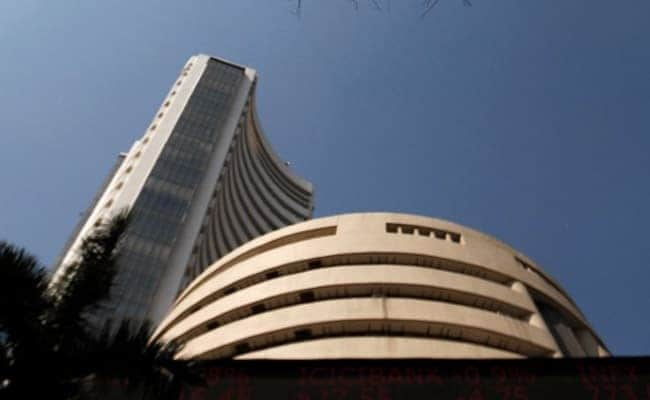
Indian equity benchmarks plunged and started Monday on a weak note after plunging last week as red-hot US inflation reignited worries about even more aggressive Federal Reserve policy tightening, and Beijing's renewed COVID-19-led lockdowns added to concerns about global growth.
In early trade moves, the 30-share BSE Sensex plunged over 1000 points to trade at about 52,990 today, while the broader NSE Nifty was more than 2 per cent lower to around 15,830, as investors awaited inflation data later in the day.
"Tracking dismal cues from the global markets amid a surge in the US headline inflation, the Nifty has fallen back near the 15670-15750 support zone. This is a critical support area for the index, as it has held firmly for the past three months," said Abhishek Chinchalkar, CMT Charterholder and Head of Education at FYERS.
"A break and sustainability below this zone would open the door for an extension of the decline towards 15000 levels. On the upside, 16000 now becomes the immediate resistance for the Nifty," he said.
Weakness in index majors Reliance Industries and ICICI Bank also weighed on domestic equity markets.
"This week is event-packed, with inflation data from India and Federal Reserve meeting scheduled to take place. Given the importance of these events, volatility is likely to remain elevated across the board. Hence, it would be prudent for one to remain light on positions and avoid any aggressive bets," added FYRES' Mr Chinchalkar.
All the 30-share Sensex pack of firms were trading lower in early trade, with Bajaj Finserv, Bajaj Finance, ICICI Bank, State Bank of India, Reliance Industries, Kotak Mahindra Bank, Tech Mahindra and IndusInd Bank emerging as the major laggards.
The Nifty IT index was down 2.6 per cent, while the NSE bank index fell nearly 3 per cent.
"The uptick in (US) inflation reading would further bolster expectations that the Fed will continue to aggressively hike rates in the second half of this year, even with signs of economic slowdown," said Prashanth Tapse, Vice President for Research at Mehta Equities.
The Indian rupee touched a lifetime low of 78.28 to the dollar while the benchmark 10-year bond yield hit 7.60%, its highest since Feb. 28, 2019.
After benchmark indexes crashed on Friday, marking their first weekly drop in four, the intense selling pressure continued early on Monday as investors across the globe remain concerned about the impact of aggressive monetary policy tightening on economic activity.
That deep plunge in India's equity benchmarks led to a valuation loss of Rs 3.11 lakh crore in Friday's session, with the market capitalisation of all BSE-listed companies falling to Rs 2,51,84,358.86 crore. The fall in Indian stocks also eroded the market capitalisation of the top-10 most valued companies by nearly Rs 2.3 lakh crore last week.
Asian stocks sank on Monday, and bond yields ticked higher, with Chinese blue chips dropping 0.84 per cent and Hong Kong's Hang Seng suffering a 2.9 per cent slide.
Japan's Nikkei and South Korea's Kospi slumped about 2.8 per cent. New Zealand's stock benchmark was off 2 per cent, while Australian markets were closed for a holiday.
US stock futures pointed to further losses, with the S&P 500 indicating over a 1.5 lower opening after Friday's near 3 per cent retreat.
Data on Friday showed the US consumer price index climbed to the largest year-on-year increase since December 1981.
That dashed hopes that inflation had peaked and put markets on alert that the Fed may tighten policy for too long and cause a sharp economic slowdown. The next Fed policy decision comes on Wednesday.
"The inflation data are game-changers that force the Fed to switch to a higher gear, front-loading policy tightening," Jefferies strategist Aneta Markowska wrote in a research note, lifting a call for this week's decision to a 75 basis point hike.
"Inflation isn't peaking; it isn't even plateauing. It is still accelerating, and it will likely do so in June," the note also said.
Fed funds futures markets currently price 80 per cent odds of a half-point increase and a 20 per cent chance for 75 basis points hike.
That US policy path has pushed capital outflows from emerging markets, with foreign investors pulling out Rs 14,000 crore from Indian equities this month so far.
Central banks' efforts to raise interest rates to curtail inflation will remain in focus this week.
The dollar climbed over 0.4 per cent on Monday and hit a 20-year peak of 135 yen, edging closer to the 2002 high of 135.20 yen.
Expectations of a more hawkish Fed are pushing up the dollar against more than just the yen. The dollar index, which tracks the greenback's performance against six peers was 0.3 per cent higher at 104.52, its highest in four weeks.

-
Why Amazon And Flipkart Are Struggling To Beat Meesho In India's Smaller Cities

With 274 million users and lowest-cost logistics, Meesho is defending its value commerce crown against giants like Amazon and Flipkart.
-
High US Salaries, No Green Card Certainty: The Financial Calculation Facing Indian H-1B Families
The suspension of PERM processing at eight technology employers does not cancel existing H-1B visas. What it does is force a question many Indian families have been avoiding: is the US salary worth tying your career and family plans to one employer?
-
Swiggy vs Eternal: Food Delivery's Two Rivals Are No Longer In The Same Race
Eternal is building a private AI assistant, dark.ai. Swiggy is still working out how to make Instamart pay, with an operating loss of Rs 895 crore in the July-September quarter while Blinkit stayed profitable.
-
Where You Live Shapes How You Get To Work | The Reason Why
Two-wheelers are the most popular way to get to work in India, accounting for nearly 43% of workplace commutes.
-
Unhedged Position: Can India See An Indonesia-Style Time Correction?
The Nifty is trading below levels it first clocked in 2024. Is there, then, as I have suggested in the headline, potential that the current time correction drags on painfully for the next three-five, even ten years?
-
Navigating Friction And Energy Realities: An Analysis Of Marco Rubio's October Visit To India
Occurring at a critical juncture marked by stalled trade negotiations and escalating geopolitical pressures over global energy supplies, the visit offers a profound window into modern US-India relations.
-
India Exports Capital. Why Not Export Trusteeship?
The big question, then, is whether India can build an institution that global borrowers, investors, banks, and lawyers can trust, even without an Indian connection.
-
France's Economy & Politics Are In Crisis | The Reason Why
Let's look at how the French economy and politics evolved under Nicolas Sarkozy, Franois Hollande and Emmanuel Macron.
-
You May Inherit The Business. You Must Earn Its Credibility.
Succession tests the founder's ability to share authority as much as it tests the next generation's readiness to assume it.
-
Signing Deals Is One Thing; Making Them Work Is Another | The Week In Whys
Sometimes, things don't turn out as planned. Indian companies have lost some bids to rivals, some projects won't produce until 2030.










