Stent Price Cap Turns Away The Rich Patient On Whom Healthcare Survives: Devi Shetty

High-end cardiac stents won't be available in India for much longer, and new stents won't be introduced here, worries leading cardiac surgeon Devi Prasad Shetty, the chairman of Narayana Health. He sees this as a fallout of the price ceiling on cardiac stents imposed by the government's National Pharmaceutical Pricing Authority (NPPA), adding that this will turn away rich patients who wish to get premium service. “Unless rich people walk into the hospital, no private establishment will be viable,” says Shetty in an interview to BloombergQuint, asking for patients to be given the option of what they want to have.
The new price control regime on cardiac stents has been in place for more than a fortnight now. What's been your assessment of the decision and the implementation?
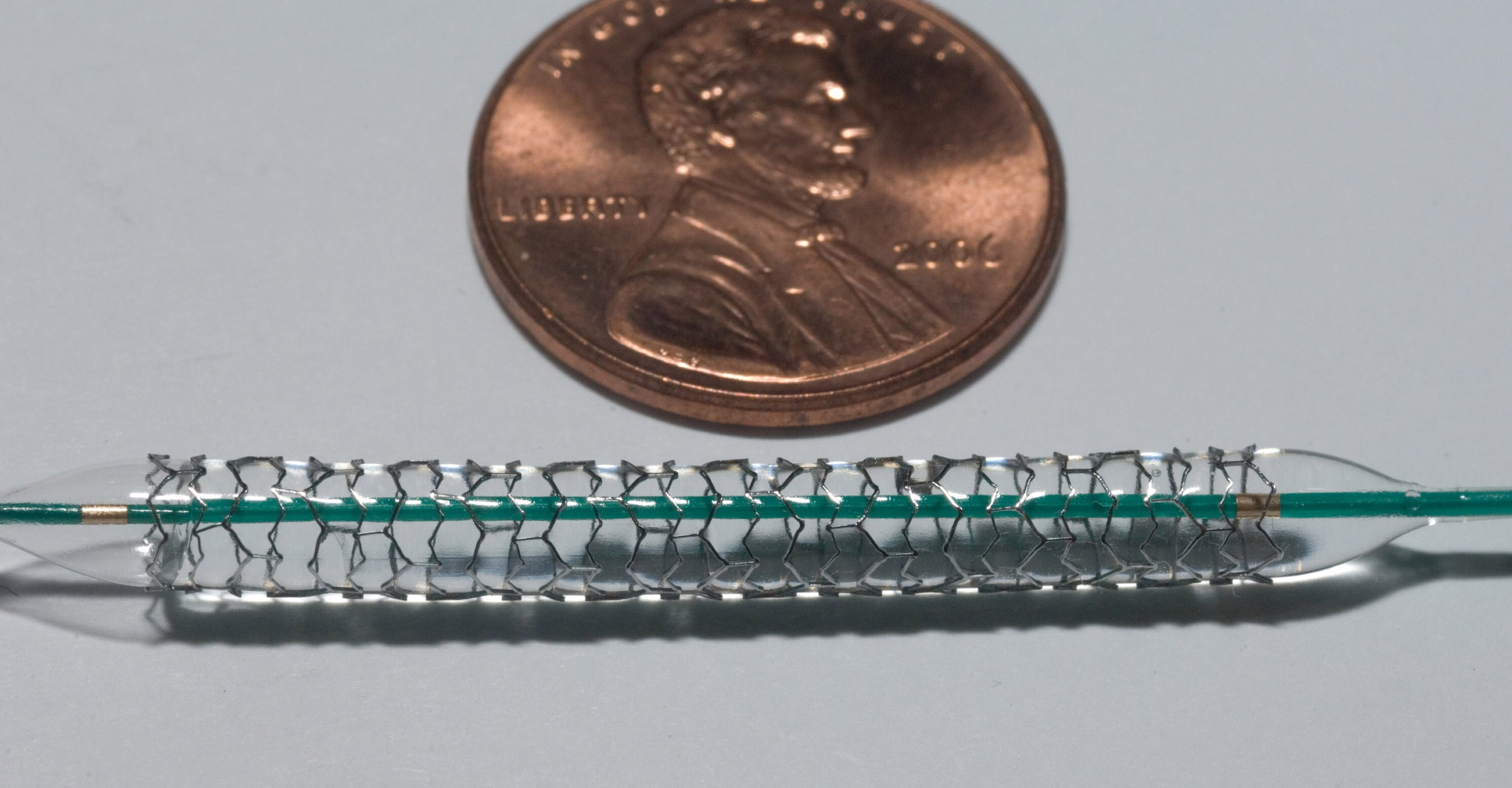
The cost of stents has obviously come down in the country. That's a great thing. You now get a United States Food and Drug Administration-approved stent for Rs 30,000, which is great. Of course, we are worried that the high-end stents – third generation and fourth generation stents – may not be available in the country for a long time. This is our apprehension. Certainly, we don't expect any new stents to be introduced in the country unless there is an opportunity for the companies to charge more.
Has this distorted some parts of the market, while meaning to ensure some price parity for the patient?
There is a provision in the law that the government has created, that under exceptional situations – where some new product that comes out with better results – they will re-look at the pricing. This is not a closed chapter. They have kept a window open to look at a different category of pricing for the fourth generation and high-end stents.
Manufacturers chose to re-label right after the price ceiling was introduced. That led to an immediate shortage. And as you mentioned, some of them chose to hold back high-end stents. How much of a problem is that?
The patients who have coronary artery disease are getting a mechanical product being put into the most vital part of their body. These companies have created a brand. Whether they are superior or inferior medically, patients trust U.S. FDA-approved products, especially the knowledgeable, educated people. There is a price attached to it. Today, if that product is not available, they feel that sub-standard treatment has been given. Treatment outcome is not entirely dependent on opening the artery and retaining the vacancy. Psychologically they will be thinking that they got sub-standard treatment, and that may not be the best thing for a patient. We should give the patient the option of what they want to have. Right now, there is some constraint, but I am convinced it will be addressed shortly.
Do you see any part of this chain raising a legal challenge to the price cap – be that a rich patient, a hospital, or a manufacturer who wants to address just the premium section of the market?
There will definitely be quite a bit of unhappiness among the educated class. Whether they go to court or not, I'm not sure.
Also Read: Price Control Won't Make Stents More Accessible
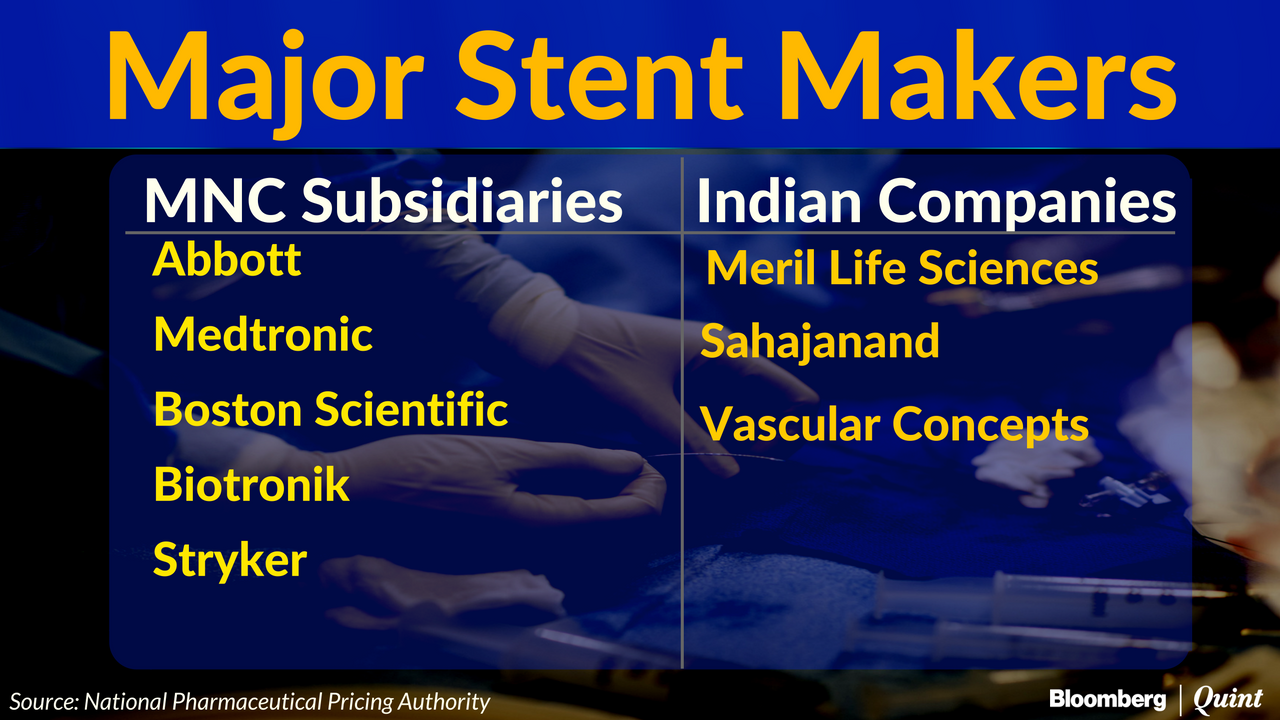
The stent manufacturing space has been dominated by foreign companies, and there are only 3-4 large Indian players. The long-term way to ensure fair pricing is an adequate supply. How can the government push that further?
If a foreign company doesn't want to sell, you can't force it to. The current regulation says that for six months, they can't withdraw the existing stents. If the multinational companies are losing money, they will obviously not sell it for a long time. There will naturally be a disruption in the supply side.
The price ceiling's enforcement is being done through a redressal mechanism where the user gets in touch with the NPPA. We have seen a few show-cause notices go out to hospitals. No regime can be administered on a case-to-case basis, so what is a better way to do this?
This is something new, so everybody is learning. We have to give time to the industry, the government and the consumer to understand each other in this new ecosystem. One thing which is a reality is that the government wants to ensure that essential services are available at a price that people can afford. Earlier the government was only talking about it, but this government has started asserting itself, saying that it has to be done. Fair enough. But in this new ecosystem, it can't be a zero-sum game, it has to be a win-win for everybody. I am optimistic that these things will get settled in a very short period of time.
Can you elaborate on the ‘win-win' architecture you have in mind?
I'll tell you exactly how the industry runs. The first patient I operated on in Kolkata paid Rs 1.5 lakh for a bypass grafting – the prevailing market rate – 26 years ago. Today, the same surgery is done with better results, for Rs 1 lakh. Did that happen because of government intervention? It happened because of market forces. Today, no patient in the country is sent away from the hospital because he couldn't afford a stent. Hospitals did put a stent and he did get a procedure. For the price that the government is asking for, there are stents available and the procedures are done. But there is a group of people who are willing to pay a premium to get the kind of brand that they want. Today, that is not available. Now, for the survival of the healthcare industry, you need those clients. They are the ones who compensate for us to do a heart operation for Rs 80,000 or Rs 1 lakh. You cannot run a hospital on heart surgeries at Rs 1 lakh. But 30-40 percent of the patients will pay Rs 1 lakh, the rest will pay the premium and with that, we offset the cost. It is exactly like any other market. Unless the rich people walk into the hospital, no private establishment will be viable. I get all the glory I do doing heart surgeries at Rs 80,000… Who is paying for it? I am not paying for it. It is the rich people occupying my deluxe room, they pay me enough money to compensate for the losses I am incurring in operating for Rs 80,000 or Rs 1 lakh.
The government shouldn't be taking products and the market away from the rich, paying consumer, who is sustaining private healthcare…
Yes, the entire industry. We have to realise that 80 percent of tertiary health care – a heart operation, advanced cancer treatment, or a brain operation – is done by the private sector. If that has to grow and sustain, you need rich people who are willing to pay a premium for whatever service they want.
Will hospital company margins suffer if premium patients do not find a product or service to their liking?
There will be a dip in realisation per procedure, as long as they follow the country's law. If they don't follow the law they can manage it, but most hospitals do follow the law, and will definitely see a dip in revenue. I guess that, over a period of time, the hospitals will have to rebalance themselves.

-
Navigating Energy Crossroads: S Jaishankar's Call For Diversified Supply Chains At G20 Ministerial Meeting

As geopolitical fault lines continue to test maritime trade routes and commodity flows, Jaishankar's message remains pertinent: true economic resilience requires open markets, protected transit lines, and a genuine commitment to multilateral cooperation rather than coercion.
-
Indians Are Travelling, But Not Every Journey Is A Holiday | The Week In Whys
Pilgrims, patients and working women are the real travellers, and the system hasn't quite caught up with them.
-
Getting To Work Costs Women More | The Reason Why
It is not just about women paying more than men. It is about women paying much more in cities than in villages.
-
AI Bias In Investing Cannot Be Eliminated, But It Can Be Governed
Framing is a particularly important example as identical financial information presented in terms of gains rather than losses can lead an LLM to reach a different assessment.
-
Joining The Dots | Dark Skies, Steady Diya: Why Hope Holds This Diwali
With war, a weak rupee and foreign outflows weighing on sentiment, policymakers at the NDTV World Summit and market veterans at NDTV Profit Ignite: Diwali Edition offered the same advice: stay invested and filter out the noise.
-
The Curious Case of Equitas Small Finance Bank And A CEO Who Quit For Stock
PN Vasudevan believes persistent investor concerns over a perceived conflict of interest had become a governance overhang on Equitas Small Finance Bank's stock, even as the lender improved profitability and asset quality.
-
Talking Points This Week: AI Cash Burn, A Tiger Comeback And An India That Still Finds Its Own Path
India is not immune to higher oil or tighter global liquidity, yet its earnings base is broader, its domestic policy levers are still available.
-
Foreign Investors Own Half Of HDFC Bank and ICICI Bank. An LTCG Cut Could Matter Most Here
Foreign portfolio investors have US$115 billion parked in HDFC Bank, ICICI Bank. If the government cuts long-term capital gains tax, Jefferies says returning foreign money could land here first.
-
'Never Seen This Level Of Negativity': Sandeep Tandon Says The Next Rally May Be Closer Than You Think
Veteran investor Sandeep Tandon says foreign selling is easing, large-caps are due a comeback and mid-caps are crowded, while he turns positive on gold, power and pharma this Diwali.










