States Loosen Their Purse Strings As Centre Mellows Down Its Capital Spending
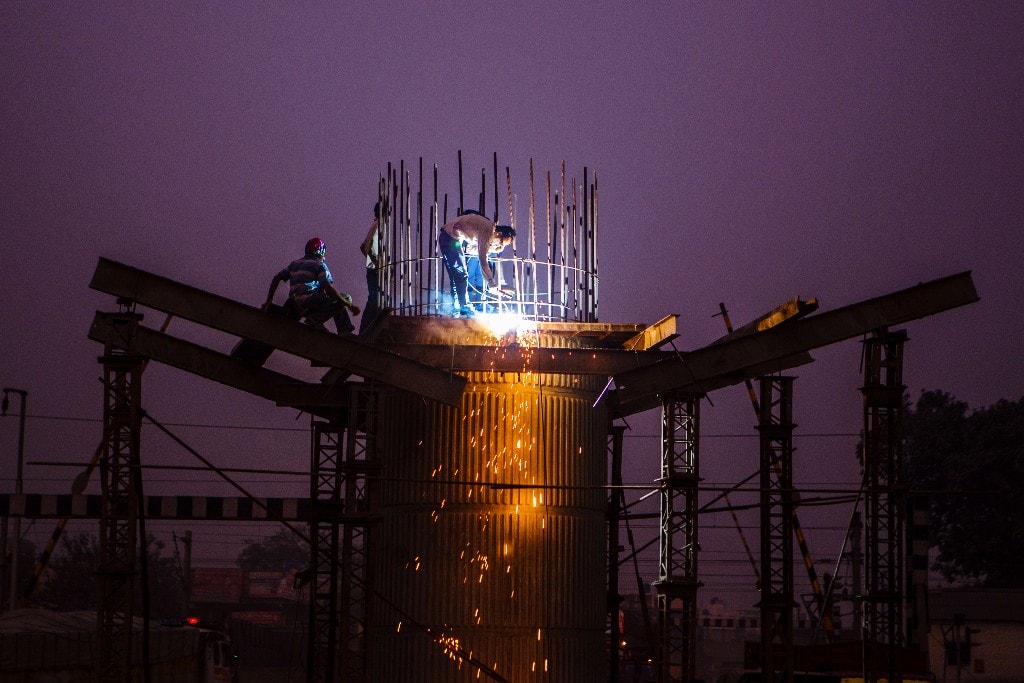
The central government which had been pumping up capital expenditure (capex) over the last two years, may now have passed on the baton to some state governments, which have not only increased but also front-loaded their capex in financial year 2016-17.
The central government's total capital expenditure in the first quarter of this fiscal year dipped 16.4 percent, on a yearly basis, compared to a growth of 18.6 percent in the same quarter last year, according to a Yes Bank report.
The Centre did ramp up its capital spending in the second quarter, spending 5.3 percent more in the first half of this financial year, but that was a far cry from the 29.3 percent growth clocked in the first half of the previous fiscal. The report claims that the financial burden of rolling out the seventh pay commission has also limited the Centre's capital spending, forcing it to increase the total allocation by just 3.9 percent for the full financial year.
The Centre's diminishing hunger for capital spending could hamper an overall revival in the capex cycle, but an increase in project execution and higher spending across sectors by states have compensated this fall, according to the report.
Monthly spending trend of 15 leading states show that capital spending in the first quarter increased 38 percent year-on-year. This is significantly higher than the 25 percent additional spent by the same states in the first quarter of the previous financial year.
The report argues that a part of this additional spent by states can be attributed to a higher share of tax revenue after the 24th Finance Commission was implemented from the last fiscal. Data also shows that states had spent 81 percent of the total budgeted funds in the last financial year, compared to 69 percent in financial year 2015.
States such as Maharashtra, Andhra Pradesh, Haryana, Punjab, Madhya Pradesh, Jharkhand, Orissa and Telangana have shown superior utilisation rate by spending higher than 16.4% at an aggregate level.Yes Bank Report
States Announce More New Projects
States have also announced a larger number of new projects and increased activity in project execution.
The total number of new projects announced by all the states has grown by 13.5 percent, over the same period last year, while the centre's trend shows a slip of more than 12 percent, when compared to the whole of last year.
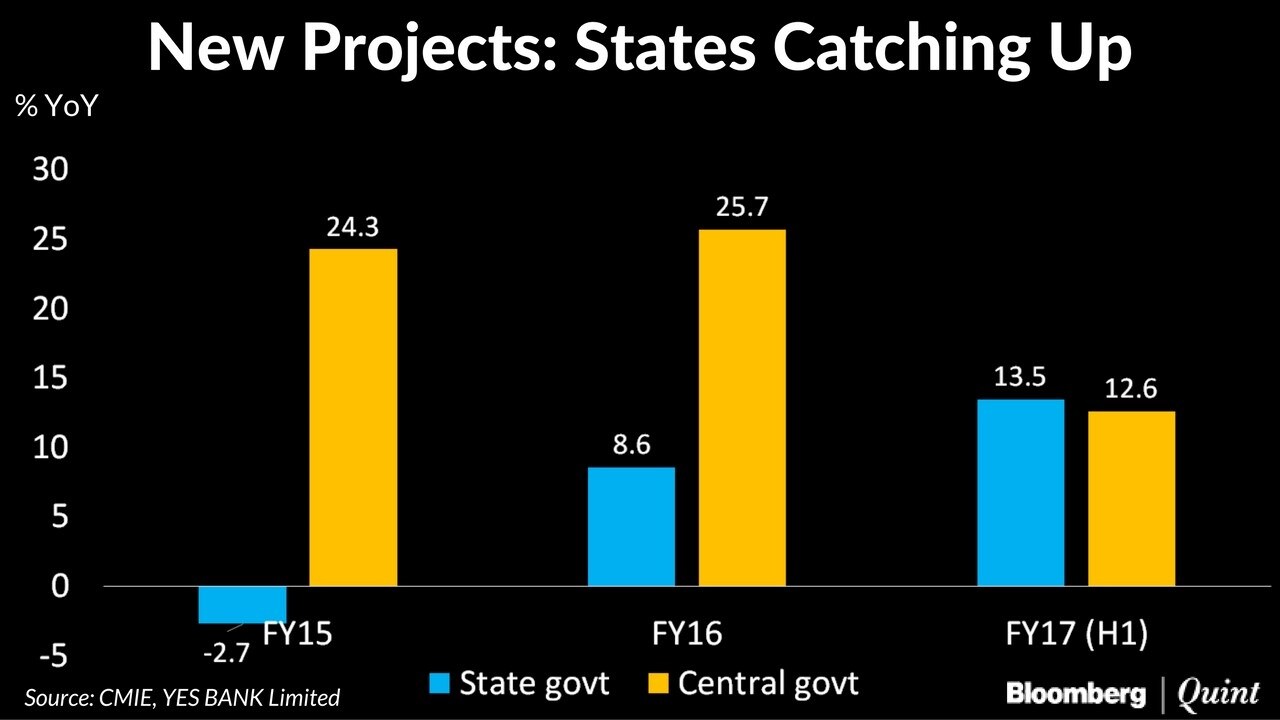
Among states, Jharkhand, Karnataka, Kerala, Maharashtra, Tamil Nadu and Telangana have registered improvement in project announcements in FY17. The improvement has been largely in chemicals, mining, hotels, construction & real estate segment.Yes Bank Report
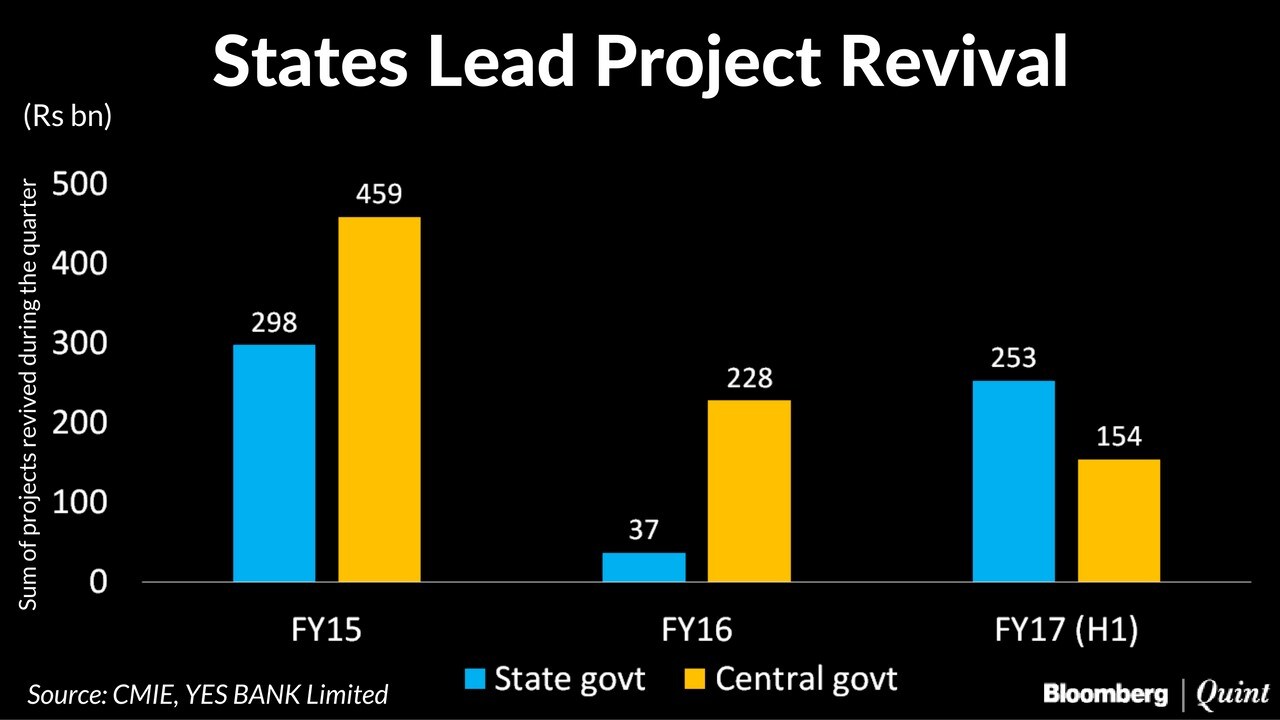
The value of projects revived by states in the first half was higher than that of the central government. States revived projects worth Rs 25,300 crore compared to central government projects worth Rs 15,400 crore which were revived in the same period.
States' Spending Matters More
According to the report, state capex holds more significance than centre's allocation due to its quantum, impact and efficiency.
The report says that 19 large Indian states have a combined budgeted capital of Rs 4.14 lakh crore for fiscal 2017 which is 1.67 times that of the Centre's budgeted capital spending for the same period.
States also have a higher size of expenditure multiplier as per the Reserve Bank of India's study at 2.13 compared to the Centre's 0.39 hence the impact of improved spending by states is likely to be greater on growth, the report states.
Capital expenditure by state governments, the report said, is likely to be more effective and focused as it is to be directed towards programs managed by the state themselves. That may not be the case with the Centre's capital spending which is likely to be thinly spread across various schemes.
The report suggests that as states enjoy more legislative powers than the Centre in project approvals, they will have to assume a dominant role in de-stalling projects for the revival of investment demands.

-
Navigating Friction And Energy Realities: An Analysis Of Marco Rubio's October Visit To India

Occurring at a critical juncture marked by stalled trade negotiations and escalating geopolitical pressures over global energy supplies, the visit offers a profound window into modern US-India relations.
-
India Exports Capital. Why Not Export Trusteeship?
The big question, then, is whether India can build an institution that global borrowers, investors, banks, and lawyers can trust, even without an Indian connection.
-
France's Economy & Politics Are In Crisis | The Reason Why
Let's look at how the French economy and politics evolved under Nicolas Sarkozy, Franois Hollande and Emmanuel Macron.
-
You May Inherit The Business. You Must Earn Its Credibility.
Succession tests the founder's ability to share authority as much as it tests the next generation's readiness to assume it.
-
Signing Deals Is One Thing; Making Them Work Is Another | The Week In Whys
Sometimes, things don't turn out as planned. Indian companies have lost some bids to rivals, some projects won't produce until 2030.
-
FOMC Wall, PERM Suspension, Hospital Stocks | Talking Points This Week
A PERM suspension would directly affect green-card sponsorship rather than H-1B visas, so the near-term earnings impact could remain relatively limited. The key question is whether this marks a new phase in US scrutiny of Indian IT.
-
Everything, Everywhere, All At Once: Dalal Street's Week To Forget | Joining The Dots
Visa curbs, a Starlink spat and cancer drug caps: what connects this week's shocks for Indian markets
-
India Is Going Abroad For Critical Minerals. But It May Take Years To Pay Off | The Reason Why
Although India's steps are in the right direction, they remain modest compared with India's growing dependence.
-
When Everyone Has AI, What Gives You An Edge?
India's young workforce is entering an uncertain world of work where powerful AI tools are becoming widely accessible. The advantage will belong to those who combine deep expertise with digital fluency, and the distinctly human capabilities that technology cannot manufacture.
-
Wrong Labels, High Pesticide Residues Holding Back Agri Exports | The Reason Why
India needs stronger domestic food-safety and labelling standards, with best practices becoming part of everyday business for farmers, traders and food companies.










