State-Owned Banks To Raise Rs 58,000 Crore From Capital Market In FY18
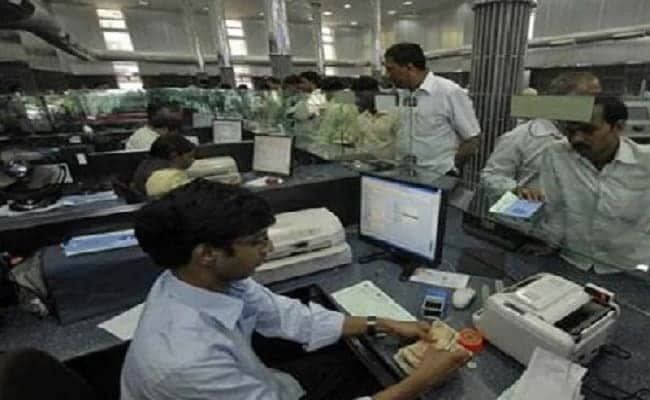
New Delhi: Public sector banks, including State Bank of India SBI, Bank of Baroda and IDBI Bank, plan to raise Rs 58,000 crore through equity dilution during the current fiscal year (2017-18) to meet Basel III capital adequacy norms and clean up their balance sheets. Leading the pack, the country's largest lender SBI plans to raise Rs 15,000 crore through sale of shares and expects this to complete by the end of the year, probably through a qualified institutional placement (QIP).
"This is something for which we have everything in place but we will go when we find the market is conducive," SBI chairperson Arundhati Bhattacharya has said.
Besides, Bank of Baroda and Central Bank of India plan to raise Rs 6,000 crore and Rs 6,500 crore from capital markets, respectively.
Oriental Bank of Commerce and IDBI Bank have taken board's approval for raising Rs 5,000 crore each through equity dilution, while Mumbai-based Union Bank of India plans to Rs 4,950 crore during the current fiscal.
Raising funds from the market will ease the pressure on the exchequer of pumping in capital. As per the Indradhanush plan public sector banks need to raise Rs 1.10 lakh crore from markets, including follow-on public offer, to meet Basel-III requirements, which will kick in from March 2019.
This will be over and above Rs 70,000 crore banks will get as capital support from the government. Of this, the government has already infused Rs 50,000 crore in the past two fiscals and the remaining will be pumped in by the end of 2018-19.
In the Budget speech on February 1, Finance Minister Arun Jaitley announced capital infusion of Rs 10,000 crore for the current fiscal.
"In line with the Indradhanush road map, I have provided Rs 10,000 crore for recapitalisation of banks in 2017-18. Additional allocation will be provided, as may be required," Mr Jaitley had said.
PSU banks requires capital for meeting Basel-III norms and cleaning of balance sheet as non-performing assets (NPAs) have reached unacceptably high levels. These banks are saddled with non-performing assets or bad loans to the tune of a staggering Rs 6 lakh crore.
Bad loans rose by over Rs 1 lakh crore in the first nine months of last fiscal to Rs 6.07 lakh crore by 31 December 2016. Gross NPA of public sector banks stood at Rs 5.02 lakh crore at the end of March 2016, up from Rs 2.67 lakh crore at the end of March 2015.
Corporation Bank and Syndicate Bank have lined up fund raising plan of Rs 3,500 crore each, while Bank of Maharashtra has taken board's approval for raising Rs 2,000 crore.
SBI, in 2014, had raised Rs 8,032 crore by selling shares through qualified institutional placement (QIP), largely aided by state-owned life insurer LIC.
The bank sold 5.13 crore shares at an average price of Rs 1,565, which was the lower side of the price band it had set.
Besides, Canara Bank had also raised about Rs 1,250 crore from rights issue to its shareholders last fiscal.

-
Midterm Rally Lasted A Day. The Hard Reality Of A Divided US May Last Two Years | Opinion

Between a contested AI boom, a debt ceiling that arrives in 2027 and a president with every incentive to act alone, the next two years may prove more volatile than the first day's rally suggests.
-
Blue Wave Will Derail the AI Trade but Won't Dismantle the AI Era | Unhedged Position
The Democrats' sweep of the US Congress will see politics collide with economic forces both over the long and short term.
-
It's Time To Take The GST Council's Bet On Trust Global
Payment records can prove India's services exports, and clear, proportionate rules can bring foreign digital sellers into the tax net.
-
Opinion | India at 38: From Innovation Overperformer to Innovation Powerhouse
India now has 453 VC-backed deep science startups, 18 of them late-stage, after 117 percent growth since 2020. Laurus Labs, at USD 9.3 billion, is the most valuable deep science company in any middle-income economy outside China.
-
Navigating Energy Crossroads: S Jaishankar's Call For Diversified Supply Chains At G20 Ministerial Meeting
As geopolitical fault lines continue to test maritime trade routes and commodity flows, Jaishankar's message remains pertinent: true economic resilience requires open markets, protected transit lines, and a genuine commitment to multilateral cooperation rather than coercion.
-
Indians Are Travelling, But Not Every Journey Is A Holiday | The Week In Whys
Pilgrims, patients and working women are the real travellers, and the system hasn't quite caught up with them.
-
Getting To Work Costs Women More | The Reason Why
It is not just about women paying more than men. It is about women paying much more in cities than in villages.
-
AI Bias In Investing Cannot Be Eliminated, But It Can Be Governed
Framing is a particularly important example as identical financial information presented in terms of gains rather than losses can lead an LLM to reach a different assessment.
-
Joining The Dots | Dark Skies, Steady Diya: Why Hope Holds This Diwali
With war, a weak rupee and foreign outflows weighing on sentiment, policymakers at the NDTV World Summit and market veterans at NDTV Profit Ignite: Diwali Edition offered the same advice: stay invested and filter out the noise.









