State Bank Of India Reports Record Loss Of $1.1 Billion In March Quarter, Shares Surge
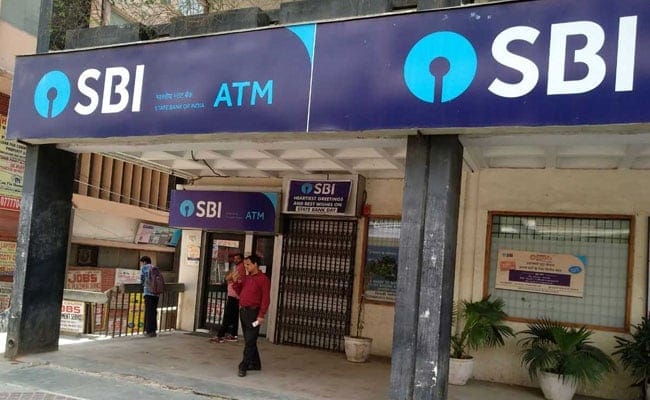
State Bank of India (SBI) reported a loss of Rs 7,718 crore ($1.1 billion) - its biggest ever - in the January-March quarter, as the country's biggest lender set aside more provisions for bad loans after a change in banking regulation.. The loss for the three months to March 31 was deeper than what the market had expected. Analysts on average had expected SBI to report a loss of Rs 1,285 crore, according to Thomson Reuters data. In the December quarter, SBI had posted a loss of Rs 2,416 crore.
SBI management projected a recovery over the next two years, sending its shares nearly 4 per cent higher on Tuesday. SBI shares also extended gains today, rising over 3 per cent. "Last year was a year of despair. This year is a year of hope, and next year will be a year of happiness," said Chairman Rajnish Kumar after the results. SBI, which accounts for more than a fifth of India's banking assets, said it aims to grow loans at an annual average of 12 per cent through March 2020, nearly halve its gross non-performing loan ratio, bring down provisioning costs and improve margins.
In the March quarter, SBI's gross bad loans as a percentage of total loans rose to 10.91 per cent from 10.35 per cent three months earlier and 6.90 per cent a year prior, the lender said in a statement. SBI's net interest income rose to Rs 19,974 crore, from Rs 18,688 crore in December quarter.
Tighter Reserve Bank of India (RBI) rules announced in February, which did away with half a dozen loan restructuring schemes, have led to banks reporting a surge in bad loans in the March quarter, and several of them reporting losses. This led to SBI's provision for bad loans jumping to Rs 24,080 crore, from Rs 17,760 crore in December quarter.
However, SBI, which accounts for more than a fifth of India's banking assets, said it aims to grow loans at an annual average of 12 per cent through March 2020, nearly halve its gross non-performing loan ratio, bring down provisioning costs and improve margins. "Last year was a year of despair. This year is a year of hope, and next year will be a year of happiness," said Chairman Rajnish Kumar.
Management had indicated that the quarter's results would be "very bad", so this was largely expected, said A K Prabhakar, head of research at IDBI Capital. "The worst is over for SBI."
Earlier this month, another state-run lender Punjab National Bank (PNB) had reported a net loss of Rs 13,417 crore in the fourth quarter, the biggest ever by an Indian bank as PNB booked provisions to cover a massive fraud.
In what has been dubbed the largest fraud in Indian banking history, PNB - the second-biggest state-run lender and fourth-biggest overall - disclosed in February that two jewellery groups had defrauded it of more than $2 billion, raising credit overseas from mostly other Indian banks with fake guarantees issued by rogue PNB staff. (With Agency Inputs)

-
Talking Points This Week: Tech Nerves, FII Buying, And A Faraway Banking Shock

The global markets are not shining this Diwali. The exception in the large markets is, India.
-
Midterm Rally Lasted A Day. The Hard Reality Of A Divided US May Last Two Years | Opinion
Between a contested AI boom, a debt ceiling that arrives in 2027 and a president with every incentive to act alone, the next two years may prove more volatile than the first day's rally suggests.
-
Blue Wave Will Derail the AI Trade but Won't Dismantle the AI Era | Unhedged Position
The Democrats' sweep of the US Congress will see politics collide with economic forces both over the long and short term.
-
It's Time To Take The GST Council's Bet On Trust Global
Payment records can prove India's services exports, and clear, proportionate rules can bring foreign digital sellers into the tax net.
-
Opinion | India at 38: From Innovation Overperformer to Innovation Powerhouse
India now has 453 VC-backed deep science startups, 18 of them late-stage, after 117 percent growth since 2020. Laurus Labs, at USD 9.3 billion, is the most valuable deep science company in any middle-income economy outside China.
-
Navigating Energy Crossroads: S Jaishankar's Call For Diversified Supply Chains At G20 Ministerial Meeting
As geopolitical fault lines continue to test maritime trade routes and commodity flows, Jaishankar's message remains pertinent: true economic resilience requires open markets, protected transit lines, and a genuine commitment to multilateral cooperation rather than coercion.
-
Indians Are Travelling, But Not Every Journey Is A Holiday | The Week In Whys
Pilgrims, patients and working women are the real travellers, and the system hasn't quite caught up with them.
-
Getting To Work Costs Women More | The Reason Why
It is not just about women paying more than men. It is about women paying much more in cities than in villages.
-
AI Bias In Investing Cannot Be Eliminated, But It Can Be Governed
Framing is a particularly important example as identical financial information presented in terms of gains rather than losses can lead an LLM to reach a different assessment.









