Startup Street: Oyo Rooms Finds A Home Away From Home

One Indian startup flies beyond borders while a foreign startup comes to India. Here's what was buzzing this week on Startup Street.
Oyo Sets Up Shop In The Land Of Everest
Oyo Rooms has launched services in Nepal's capital Kathmandu, marking its second trip to a foreign territory.
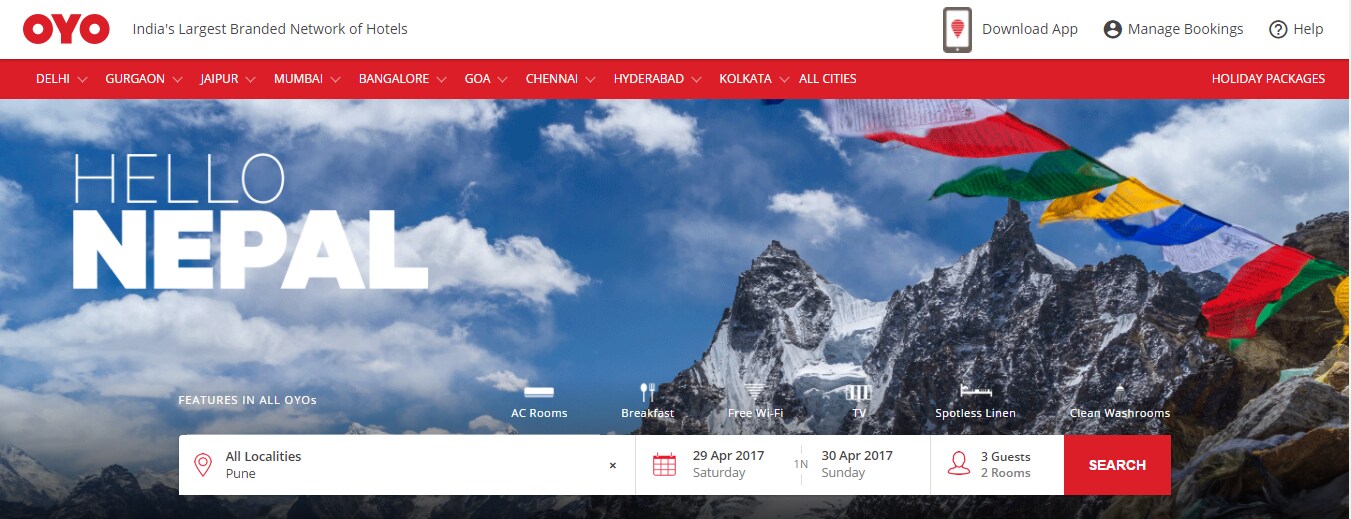
This comes a year after Oyo decided to go global by starting its first offshore operation in Malaysia. The budget hotel network has now grown to around 200 hotels in the Southeast Asian country.
To start with Oyo will have just one property in Kathmandu. Nepal has emerged as a popular destination for Indians. The highest number of tourists visiting Nepal last year were Indians, according to data released by the Nepal government's Department of Immigration.
The start-up hasn't said how it intends to fund its expansion plans. However, recently, a report in the Times of India said that Oyo Rooms is closing in a $250 million funding round from its existing investor SoftBank.
India's Co-Working Office Startups Now Have A Foreign Rival
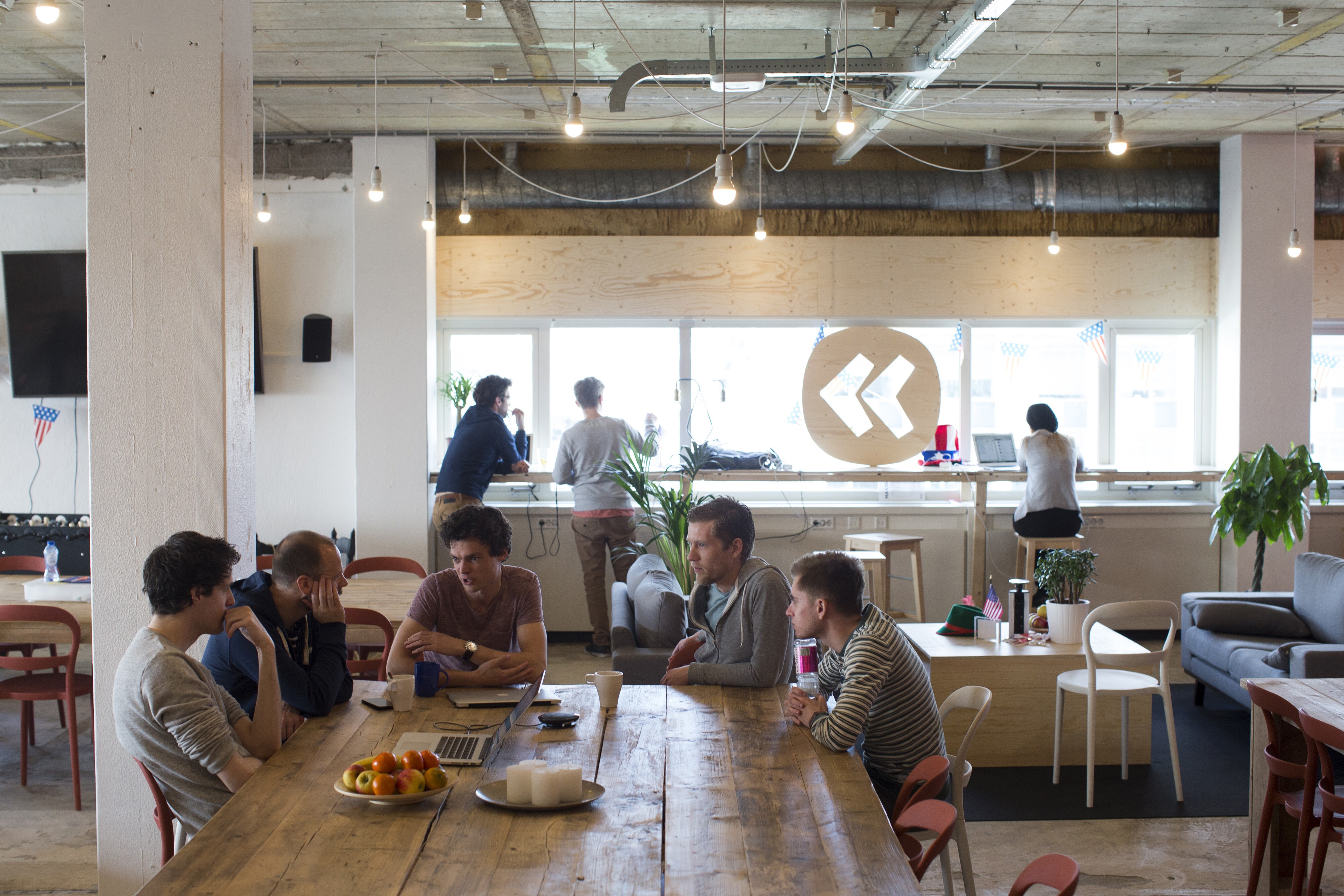
Amsterdam based co-working office space provider ‘Spaces' has entered India with its first facility in Cyber City, Gurugram.
Spaces, like others in this segment, provides shared offices for people usually not employed in the same organisations. The co-working space concept has been gaining popularity with the rising number of technology startups and small and medium enterprises.
The Gurugram workspace will be the 25th facility for Spaces globally. It aims to set up its next workspace in Chennai, and is likely to expand to 50 more locations in the next few months, an emailed media statement said.
Spaces' entry comes at a time when Awfis Space Solutions Pvt. Ltd., a domestic shared workspace provider, has raised $20 million from the Indian arm of Sequoia Capital. Awfis plans to expand to over 100 centres in the next 24 months, according to their media statement.
Also Read: Awfis Vs WeWork: Real Estate's Ola Vs Uber Battle In The Making?
The Government Push For Startups

The government has extended the Startups Intellectual Property Protection Scheme for three more years till 2020. The scheme, which was introduced on a trial basis, expired at the end of March.
As per the scheme, the government would bear the entire cost of facilitation for filing patents by startups, a Department of Industrial Policy and Promotion (DIPP) statement said. This was among a slew of initiatives, including tax benefits, that the government had announced last year under its Startup India action plan.
Not just that, the government is also eyeing putting in place a fast-track resolution system for startups and small companies under the Insolvency and Bankruptcy Code, according to a report by wire agency PTI. This will provide a faster exit mechanism for certain startups who are unable to repay the money they owe.
There's more.
The DIPP has also promised the launch of a dedicated LinkedIn styled portal for startups. "The soft launch of the portal has already been made to get views from all the stakeholders. The hard launch will be done shortly," Aastha Grover, advisor (start-up), DIPP said at a seminar for startups organised by StartFed and the Board of Control for Cricket in India.
In Case You Missed It...
- Did you know you can now buy gold through Paytm? Find out more here.
- Google Local Guides has teamed up with Swiggy and put out a list of restaurant recommendations. Hungry or not, you can scroll through it on Swiggy's blog.
- China's Uber equivalent Didi Chuxing raised over $5.5 billion from investors, making it the largest round of funding ever for a technology company.
- Meanwhile, Uber discussed the possibility of flying taxis. Check it out!
- Also, a Swedish startup is using artificial intelligence to communicate with and understand dolphins. Cool, right? Read the full article here.

-
Why Amazon And Flipkart Are Struggling To Beat Meesho In India's Smaller Cities

With 274 million users and lowest-cost logistics, Meesho is defending its value commerce crown against giants like Amazon and Flipkart.
-
High US Salaries, No Green Card Certainty: The Financial Calculation Facing Indian H-1B Families
The suspension of PERM processing at eight technology employers does not cancel existing H-1B visas. What it does is force a question many Indian families have been avoiding: is the US salary worth tying your career and family plans to one employer?
-
Swiggy vs Eternal: Food Delivery's Two Rivals Are No Longer In The Same Race
Eternal is building a private AI assistant, dark.ai. Swiggy is still working out how to make Instamart pay, with an operating loss of Rs 895 crore in the July-September quarter while Blinkit stayed profitable.
-
Where You Live Shapes How You Get To Work | The Reason Why
Two-wheelers are the most popular way to get to work in India, accounting for nearly 43% of workplace commutes.
-
Unhedged Position: Can India See An Indonesia-Style Time Correction?
The Nifty is trading below levels it first clocked in 2024. Is there, then, as I have suggested in the headline, potential that the current time correction drags on painfully for the next three-five, even ten years?
-
Navigating Friction And Energy Realities: An Analysis Of Marco Rubio's October Visit To India
Occurring at a critical juncture marked by stalled trade negotiations and escalating geopolitical pressures over global energy supplies, the visit offers a profound window into modern US-India relations.
-
India Exports Capital. Why Not Export Trusteeship?
The big question, then, is whether India can build an institution that global borrowers, investors, banks, and lawyers can trust, even without an Indian connection.
-
France's Economy & Politics Are In Crisis | The Reason Why
Let's look at how the French economy and politics evolved under Nicolas Sarkozy, Franois Hollande and Emmanuel Macron.
-
You May Inherit The Business. You Must Earn Its Credibility.
Succession tests the founder's ability to share authority as much as it tests the next generation's readiness to assume it.
-
Signing Deals Is One Thing; Making Them Work Is Another | The Week In Whys
Sometimes, things don't turn out as planned. Indian companies have lost some bids to rivals, some projects won't produce until 2030.










