Spotlight Swings To Electric Buses In India Green Transport Push
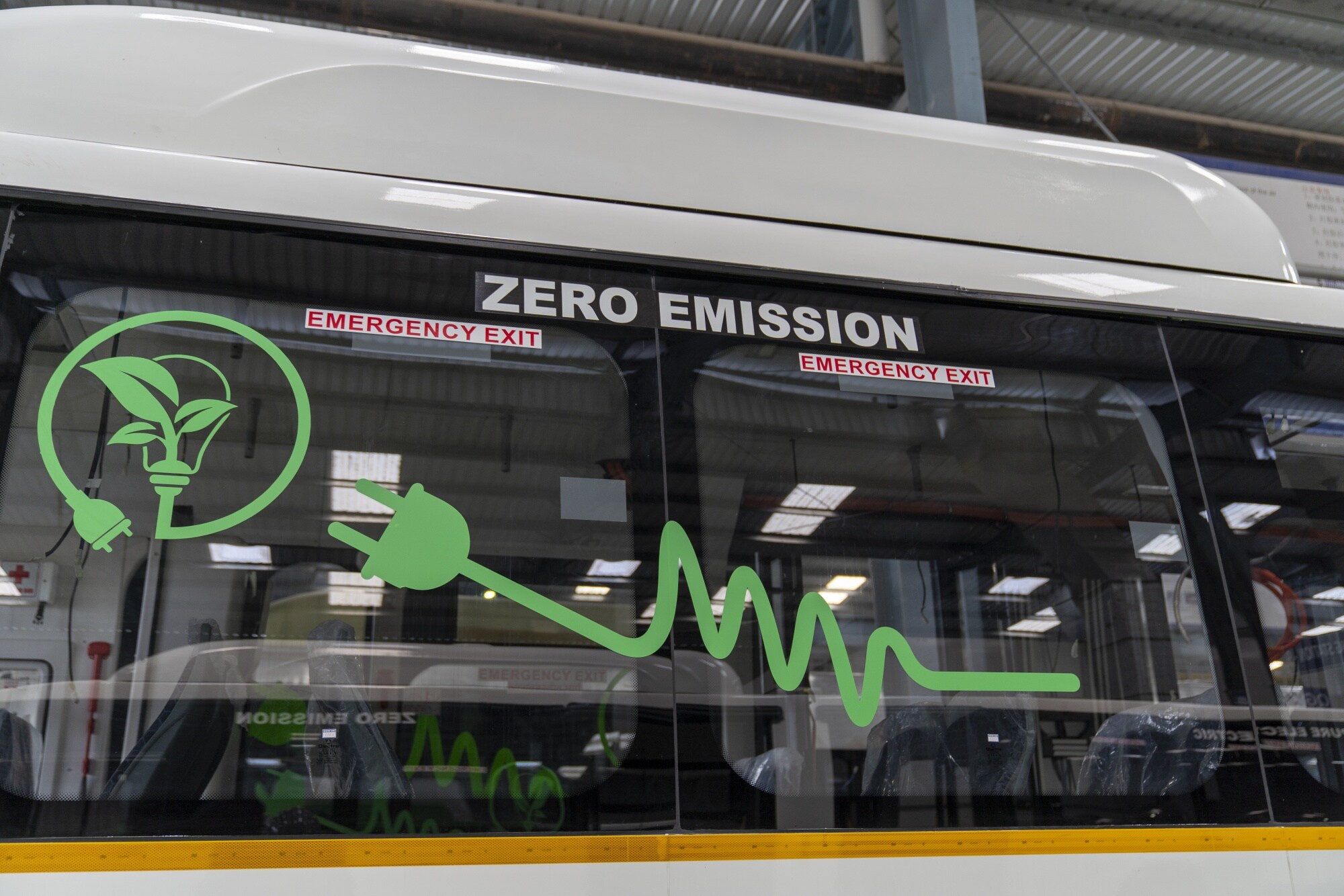
(Bloomberg) -- After scooters, electric buses are India's next big focus when it comes to accelerating the country's slow shift to cleaner transport.
Auto manufacturers are getting on board. Ashok Leyland Ltd., the flagship company of conglomerate Hinduja Group, broke ground last month on a manufacturing plant for electric commercial vehicles in the northern state of Uttar Pradesh. The Chennai-based firm says the facility will have an initial capacity of 2,500 vehicles with production climbing to 5,000 annually over the next decade. It should be ready to start operations by the end of 2025.
“The primary focus will be on the production of electric buses, while also having the capability to produce other vehicles powered by existing and other emerging alternate fuels,” Ashok Leyland Chief Executive Officer Shenu Agarwal said. “We will make products for both Ashok Leyland and Switch Mobility from this plant,” he added, with reference to Ashok Leyland's EV arm.
Tata Motors Ltd. unit TML Smart City Mobility Solutions, meanwhile, expects to deploy 3,300 e-buses on roads by fiscal 2025, and Olectra Greentech Ltd., which has a partnership with China's BYD Co., is constructing a new e-bus plant that's forecast to start production in July, according to local media. It intends to deliver at least 2,500 e-buses by fiscal 2025.
India has set a target of adding 50,000 e-buses to its roads by 2027 as it seeks to reach net zero carbon emissions by 2070. It's a tall order considering the majority of the country's fleet of 1.5 million buses run on diesel.
Arguably the biggest roadblock in increasing the uptake of e-buses is the lack of financing. India currently follows a model whereby state agencies tender for buses from automakers but the operation of the vehicles, and any setting up of charging infrastructure, remains the responsibility of the auto manufacturers. Cash-strapped state entities have missed payments to automakers in the past, deterring them from bidding for bus tenders.
“The real challenge is the financial model given state transport units aren't financially strong,” said Kavan Mukhtyar, partner and leader, automotive, at PwC India. “All the risk falls on private companies.”
Read more on clean transport in India: India's EV Charging Push in Fast Lane as Funding Pays Off: BNEF
To tackle this, India has enlisted the help of the US in establishing a payment-security fund to cover the procurement of as many as 38,000 e-buses. India will contribute $240 million and the US government $150 million and the fund will serve as a guarantee against any delayed payments from state entities.
In India's push to go green, it's crucial authorities get this right.
Public transport is key in curbing vehicle emissions in India — home to cities that have some of the most polluted air in the world. It will also help with traffic congestion and travel times, especially in big centers. Jams have become worse over the years with millions of people relying heavily on two-wheelers to get about due to a lack of efficient public transport.
Currently, however, it's scooters leading electrification in India's price-sensitive market due to their cheaper upfront cost than cars. Only 5,670 electric commercial vehicles were sold last year, although that was up 114% from 2022.

“There's naturally a bigger focus around electrifying public transportation,” said Rahul Mishra, a partner at management consultancy firm Kearney. “Given that most of the commercial vehicles run a larger number of kilometers, the savings on tailpipe emissions is higher and the cost economics tends to be much better.”
PwC's Mukhtyar added that constraints around charging infrastructure are relatively solvable when it comes to e-buses because they operate on a fixed route and so charging infrastructure can just be placed at a depot. But private companies need to be supported through regulatory means like tax breaks, incentives and soft loans, considering electrification of buses is capital intensive, he said.
“The main agenda should be to switch to e-buses in the top 20 Indian cities where pollution is such a big issue,” Mukhtyar said. “It's a program that needs to be prioritized.”
More stories like this are available on bloomberg.com
©2024 Bloomberg L.P.

-
Love, Sex Aur Dhokha: The Audacious Plot To Spy On Jensen Huang

A Taipei dinner, a Singapore chip buyer and a suspected Chinese asset: inside the alleged spy operation that got close to NVIDIA's Jensen Huang.
-
Ten Things I Learnt This Samvat
Patience can be a trap. Cheap stocks can stay cheap. Leverage can wipe you out. What did Samvat 2082 teach us? Niraj Shah writes on 10 lessons from the year gone by.
-
Talking Points This Week: Tech Nerves, FII Buying, And A Faraway Banking Shock
The global markets are not shining this Diwali. The exception in the large markets is, India.
-
Midterm Rally Lasted A Day. The Hard Reality Of A Divided US May Last Two Years | Opinion
Between a contested AI boom, a debt ceiling that arrives in 2027 and a president with every incentive to act alone, the next two years may prove more volatile than the first day's rally suggests.
-
Blue Wave Will Derail the AI Trade but Won't Dismantle the AI Era | Unhedged Position
The Democrats' sweep of the US Congress will see politics collide with economic forces both over the long and short term.
-
It's Time To Take The GST Council's Bet On Trust Global
Payment records can prove India's services exports, and clear, proportionate rules can bring foreign digital sellers into the tax net.
-
Opinion | India at 38: From Innovation Overperformer to Innovation Powerhouse
India now has 453 VC-backed deep science startups, 18 of them late-stage, after 117 percent growth since 2020. Laurus Labs, at USD 9.3 billion, is the most valuable deep science company in any middle-income economy outside China.
-
Navigating Energy Crossroads: S Jaishankar's Call For Diversified Supply Chains At G20 Ministerial Meeting
As geopolitical fault lines continue to test maritime trade routes and commodity flows, Jaishankar's message remains pertinent: true economic resilience requires open markets, protected transit lines, and a genuine commitment to multilateral cooperation rather than coercion.
-
Indians Are Travelling, But Not Every Journey Is A Holiday | The Week In Whys
Pilgrims, patients and working women are the real travellers, and the system hasn't quite caught up with them.









