SpiceJet to 'Adjust Processes' to Handle Delay Scenarios Properly
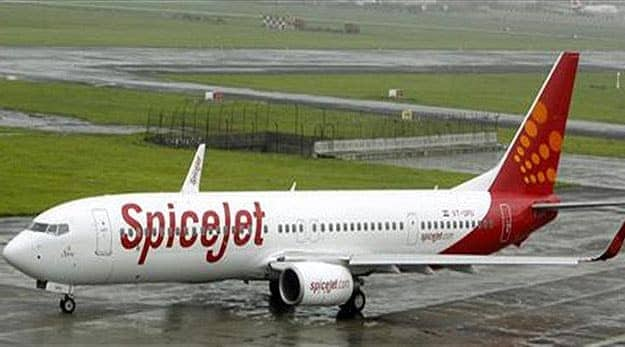
New Delhi: With the Directorate General of Civil Aviation (DGCA) directing SpiceJet to refund fares and food charges for all its passengers on a Mumbai-Delhi flight, the no-frills carrier on Tuesday acknowledged its failure and promised to "adjust processes" to meet such situations in the future.
However, it also said that budget airlines were "unable at short notice to provide food for everyone on board for logistical reasons as the aircraft are not stocked that way (and) only carry limited quantities of food on board".
SpiceJet became the first airline in the country to be directed by aviation regulator DGCA to refund fares of all passengers after its flight SG-419 was delayed by about five hours on June 16.
The airline was also asked to refund the money it charged from passengers for food and beverages as, according to the laid-down rules, it was supposed to have offered these items for free.
The Boeing 737-800 aircraft (VT-SGO), carrying 172 passengers, including two infants, suffered engineering problems, forcing the pilots to abort take-off.
Another plane was pressed into service to operate the flight after a delay of over four-and-a-half hours.
In a detailed statement today, a SpiceJet spokesperson said, "We typically serve refreshments on the ground in the airport terminal during delays. This was an unusual case as the snag and ensuing delay occurred after passengers had boarded.
"The aircraft had to be eventually swapped and refreshments were offered to all passengers once the swapped aircraft took off as we had the new aircraft catered accordingly in view of the delay," he maintained.
"We acknowledge that this occurred after the two-hour limit specified by the regulations, and we will adjust our processes for handling such situations accordingly and in cooperation with the DGCA," the spokesperson said.
As to reports that the airline was yet to pay the income tax department the tax collected from its employees, he said, "These matters are privileged and cannot be discussed in the media. We are well aware of our obligations under the applicable law but we are answerable only to the appropriate statutory authorities."

-
Where You Live Shapes How You Get To Work | The Reason Why

Two-wheelers are the most popular way to get to work in India, accounting for nearly 43% of workplace commutes.
-
High US Salaries, No Green Card Certainty: The Financial Calculation Facing Indian H-1B Families
The suspension of PERM processing at eight technology employers does not cancel existing H-1B visas. What it does is force a question many Indian families have been avoiding: is the US salary worth tying your career and family plans to one employer?
-
Unhedged Position: Can India See An Indonesia-Style Time Correction?
The Nifty is trading below levels it first clocked in 2024. Is there, then, as I have suggested in the headline, potential that the current time correction drags on painfully for the next three-five, even ten years?
-
Navigating Friction And Energy Realities: An Analysis Of Marco Rubio's October Visit To India
Occurring at a critical juncture marked by stalled trade negotiations and escalating geopolitical pressures over global energy supplies, the visit offers a profound window into modern US-India relations.
-
India Exports Capital. Why Not Export Trusteeship?
The big question, then, is whether India can build an institution that global borrowers, investors, banks, and lawyers can trust, even without an Indian connection.
-
France's Economy & Politics Are In Crisis | The Reason Why
Let's look at how the French economy and politics evolved under Nicolas Sarkozy, Franois Hollande and Emmanuel Macron.
-
You May Inherit The Business. You Must Earn Its Credibility.
Succession tests the founder's ability to share authority as much as it tests the next generation's readiness to assume it.
-
Signing Deals Is One Thing; Making Them Work Is Another | The Week In Whys
Sometimes, things don't turn out as planned. Indian companies have lost some bids to rivals, some projects won't produce until 2030.
-
FOMC Wall, PERM Suspension, Hospital Stocks | Talking Points This Week
A PERM suspension would directly affect green-card sponsorship rather than H-1B visas, so the near-term earnings impact could remain relatively limited. The key question is whether this marks a new phase in US scrutiny of Indian IT.
-
Everything, Everywhere, All At Once: Dalal Street's Week To Forget | Joining The Dots
Visa curbs, a Starlink spat and cancer drug caps: what connects this week's shocks for Indian markets









