Chinese Imports, Divided Industry Cast Shadow On Solar Power
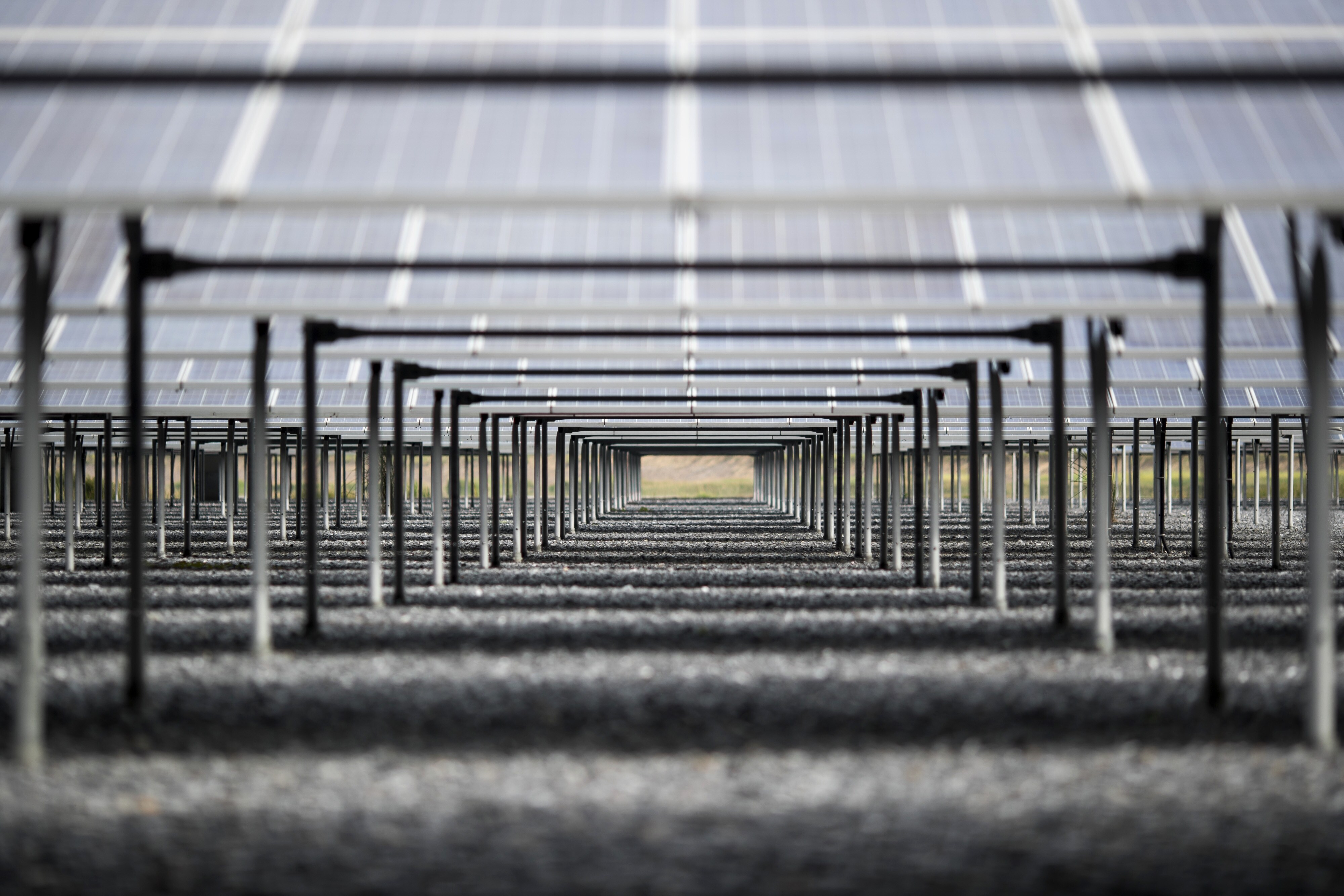
India's solar power industry is divided over the issue of anti-dumping duties on solar cells and modules as a crucial hearing nears.
The Directorate General of Anti-dumping and Allied Duties (DGAD) will hear the case on December 12. The petition filed by manufacturers' body Indian Solar Manufacturers Association (ISMA) argues that the import of solar cells from China, Taiwan and Malaysia is hurting the domestic industry.
“The purpose of anti dumping duty is that manufacturing should prosper in India and not in these countries. Import of solar equipment is causing losses to Indian manufacturers,” said Dhruv Sharma, chief executive officer of Jupiter Solar Power Ltd. Sharma is also the coordinator of ISMA.
We don't mind Chinese manufacturers setting up manufacturing units in India but they should not be allowed to import solar modules at cheap prices and hurt the domestic manufacturers. Indian manufacturers have capacities which are not utilised and operating at 30-40 percent capacity level.Dhruv Sharma, CEO, Jupiter Solar Power Ltd.
Duty Opposition
However, solar power producers are against the imposition of an anti-dumping duty.
“If anti dumping duty is imposed on solar equipments, it will increase power tariff. Irrespective of whichever country it (equipment) is coming from, the benefit is being passed on to the consumer,” said Sanjeev Aggarwal, managing director and chief executive officer of Amplus Energy Solutions Pvt. Ltd, a solar rooftop project developer.
Aggarwal further said that government's decision to auction 20 GW of solar power generation capacity with mandatory domestic manufacturing clause is a better way to support local manufacturers.
Solar modules account for more than half of a project's total costs, according to Bloomberg New Energy Finance. Major Chinese solar module makers include Trina Solar, Jinko Solar, Canadian Solar, JA Solar.
Gagan Vermani, managing director and chief executive officer of MYSUN, a solar rooftop solutions provider, is also of the view that additional duties will push up power prices and harm the customers.
Anything which will impact the demand supply cycle and have negative impact on the consumer cycle is not good. Any restrictive activity on market dynamics will have a negative impact not just on quality but also the prices as they will increase.Gagan Vermani, MD and CEO, MYSUN
Also Read: Rising Chinese Solar Panel Prices May Put Indian Projects At Risk
The Price Gap
According to data available with Bloomberg New Energy Finance, Chinese solar modules were priced at 32-36 cents per watt compared to domestic solar modules at 37-43 cents per watt, in October.
“Indian solar IPPs have always been able to negotiate aggressive prices from Chinese module manufacturers. On the other hand, Indian module makers sold products that were costlier by 5–10 cents per watt,” said Allen Tom Abraham, analyst at Bloomberg New Energy Finance.
“The higher than anticipated demand in China and U.S. in the second half of 2017 has stopped the declining trend of Chinese module prices.
Subsequently, the price gap between domestic and imported modules has narrowed but there still exists a price differential of 3–8 cents per watt between the two as of October.Allen Tom Abraham, Analyst, Bloomberg New Energy Finance
Timing Is Critical
Kameswara Rao, partner, (energy, utilities and mining) at consulting firm PwC India expressed concern on the timing of a potential levy.
“Procurement lead times have grown longer this year due to heavy demand, and an abrupt levy can render some of the upcoming projects unviable. Developers should be given a short window of time to make changes so that project deadlines are not affected,” he said.
Rao added that the real issue is creating the right conditions for growth of domestic manufacturing, including right policies, incentives and infrastructure.
Germany and China, among others, did this to develop the manufacturing ecosystem. In its absence, a mere levy will only increase costs and reduce attractiveness of solar power to utilities.Kameswara Rao, Partner, (energy, utilities and mining), PwC India
The Government View
The Ministry of New and Renewable Energy has cautioned DGAD on imposition of high duties on solar equipments as that could increase power tariffs and render projects unviable.
“It should not affect existing projects. DGAD should not impose high anti-dumping duty on the solar equipments. We have tried to cover interests of both sides and provide cheap power to public. If they impose anti-dumping duty, it should be operational in a year to give time to manufacturers for future projects,” said an official from the ministry, on the condition of anonymity.

-
Navigating Friction And Energy Realities: An Analysis Of Marco Rubio's October Visit To India

Occurring at a critical juncture marked by stalled trade negotiations and escalating geopolitical pressures over global energy supplies, the visit offers a profound window into modern US-India relations.
-
India Exports Capital. Why Not Export Trusteeship?
The big question, then, is whether India can build an institution that global borrowers, investors, banks, and lawyers can trust, even without an Indian connection.
-
France's Economy & Politics Are In Crisis | The Reason Why
Let's look at how the French economy and politics evolved under Nicolas Sarkozy, Franois Hollande and Emmanuel Macron.
-
You May Inherit The Business. You Must Earn Its Credibility.
Succession tests the founder's ability to share authority as much as it tests the next generation's readiness to assume it.
-
Signing Deals Is One Thing; Making Them Work Is Another | The Week In Whys
Sometimes, things don't turn out as planned. Indian companies have lost some bids to rivals, some projects won't produce until 2030.
-
FOMC Wall, PERM Suspension, Hospital Stocks | Talking Points This Week
A PERM suspension would directly affect green-card sponsorship rather than H-1B visas, so the near-term earnings impact could remain relatively limited. The key question is whether this marks a new phase in US scrutiny of Indian IT.
-
Everything, Everywhere, All At Once: Dalal Street's Week To Forget | Joining The Dots
Visa curbs, a Starlink spat and cancer drug caps: what connects this week's shocks for Indian markets
-
India Is Going Abroad For Critical Minerals. But It May Take Years To Pay Off | The Reason Why
Although India's steps are in the right direction, they remain modest compared with India's growing dependence.
-
When Everyone Has AI, What Gives You An Edge?
India's young workforce is entering an uncertain world of work where powerful AI tools are becoming widely accessible. The advantage will belong to those who combine deep expertise with digital fluency, and the distinctly human capabilities that technology cannot manufacture.
-
Wrong Labels, High Pesticide Residues Holding Back Agri Exports | The Reason Why
India needs stronger domestic food-safety and labelling standards, with best practices becoming part of everyday business for farmers, traders and food companies.










