SoftBank’s Rajeev Misra To Step Back To Launch New Fund
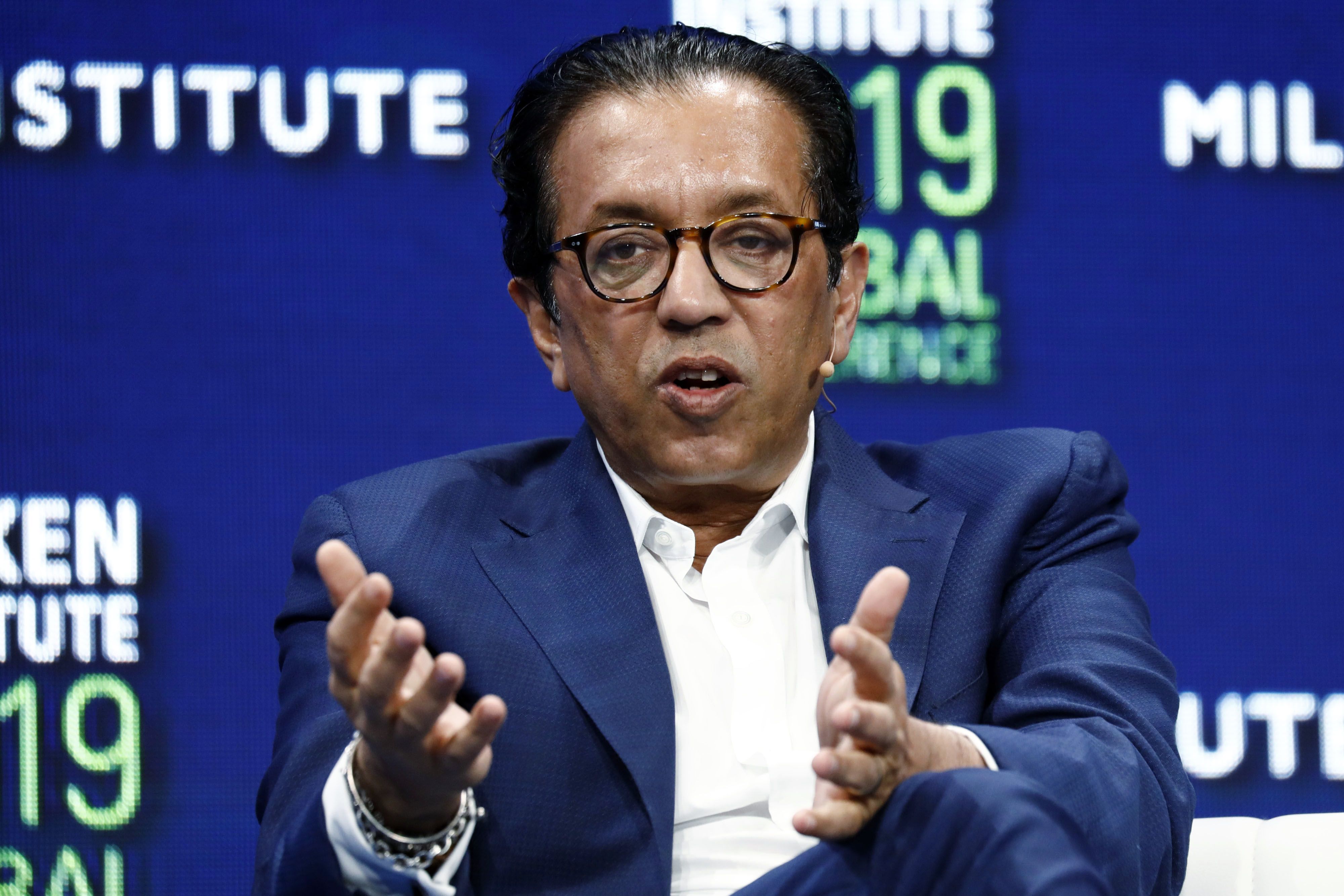
(Bloomberg) -- Rajeev Misra is stepping back from his main roles at SoftBank Group Corp., marking the exit of one of the key architects of the Japanese conglomerate's sometimes chaotic evolution into the world's largest technology investor.
A key lieutenant of SoftBank's founder Masayoshi Son, Misra will retain a senior position with the group's first $100 billion Vision Fund, but relinquish other roles, people familiar with the matter said.
Misra recently held talks with Son in Tokyo, during which he told his boss of his plans to leave to pursue his own venture, according to the people, who asked not to be identified discussing confidential information.
He's already secured more than $6 billion in backing, including from Middle East investors, for a new fund that'll target a mix of strategies, the people said. Akshay Naheta, a former colleague of Misra, alongside SoftBank managing partners Yanni Pipilis and Munish Varma, have held discussions to join Misra's venture, some of the people said.
Deliberations are ongoing and no final decisions on the fund's size or the timing of its launch have been made, according to the people. Plans could also still falter, they said. A representative for SoftBank confirmed Misra's decision to step back.
Misra will continue as CEO of the initial Vision Fund, and become vice chairman of SoftBank's wider investment arm, with Son taking over Misra's positions, according to an internal memo seen by Bloomberg.
Misra's decision to step back at SoftBank will complete a hollowing out of the conglomerate's most senior investing ranks, which had been bolstered over the years by a raft of hires from bulge-bracket banks.
The 60-year-old former Deutsche Bank AG executive made the Vision Fund one of the biggest champions of high-flying Silicon Valley startups before public stumbles and internal strife dimmed its star. The fund's attempts to regain its footing have been hampered by a drop in tech valuations, which resulted in a record loss for SoftBank in the quarter ended in March.
After joining Deutsche Bank in 1997, Misra rose through the ranks to become a key deputy to then CEO Anshu Jain. After short spells at UBS Group AG and Fortress Investment Group, Misra landed at SoftBank in 2014. He'd already built a relationship with Son by helping him to finance difficult deals.
The original Vision Fund would gather almost $100 billion, including $45 billion from Saudi Arabia's Public Investment Fund, as well as capital from Apple Inc., the government of Abu Dhabi and others. Under the aegis of Misra and other former Deutsche Bank executives, Vision Fund helped start the trend of investing massive amounts in startups -- which caused valuations to soar.
In its first year of investing, Vision Fund committed $65 billion to acquire big stakes in the likes of Uber Technologies Inc., WeWork, and Slack Technologies Inc.
But bets began to sour. SoftBank's investment in WeWork collapsed, eventually leading the investor to bail out the remote working startup. A complex side-deal with Wirecard AG, which netted SoftBank executives a significant profit, led to criticism after the German payments firm also failed.
While deploying a wave of capital at startups, Misra also clashed with senior rivals including former chief operating officer Marcelo Claure and president Nikesh Arora, ultimately outlasting them both.
(Updated with additional context in paragraphs four, six.)
More stories like this are available on bloomberg.com
©2022 Bloomberg L.P.

-
A New Samvat Wishlist: Inclusive Prosperity And Human Development

India has strengthened its economic foundations through infrastructure, digital access and enterprise. Its next growth chapter must deepen productivity, create better livelihoods and widen participation in prosperity.
-
Love, Sex Aur Dhokha: The Audacious Plot To Spy On Jensen Huang
A Taipei dinner, a Singapore chip buyer and a suspected Chinese asset: inside the alleged spy operation that got close to NVIDIA's Jensen Huang.
-
Ten Things I Learnt This Samvat
Patience can be a trap. Cheap stocks can stay cheap. Leverage can wipe you out. What did Samvat 2082 teach us? Niraj Shah writes on 10 lessons from the year gone by.
-
Talking Points This Week: Tech Nerves, FII Buying, And A Faraway Banking Shock
The global markets are not shining this Diwali. The exception in the large markets is, India.
-
Midterm Rally Lasted A Day. The Hard Reality Of A Divided US May Last Two Years | Opinion
Between a contested AI boom, a debt ceiling that arrives in 2027 and a president with every incentive to act alone, the next two years may prove more volatile than the first day's rally suggests.
-
Blue Wave Will Derail the AI Trade but Won't Dismantle the AI Era | Unhedged Position
The Democrats' sweep of the US Congress will see politics collide with economic forces both over the long and short term.
-
It's Time To Take The GST Council's Bet On Trust Global
Payment records can prove India's services exports, and clear, proportionate rules can bring foreign digital sellers into the tax net.
-
Opinion | India at 38: From Innovation Overperformer to Innovation Powerhouse
India now has 453 VC-backed deep science startups, 18 of them late-stage, after 117 percent growth since 2020. Laurus Labs, at USD 9.3 billion, is the most valuable deep science company in any middle-income economy outside China.
-
Navigating Energy Crossroads: S Jaishankar's Call For Diversified Supply Chains At G20 Ministerial Meeting
As geopolitical fault lines continue to test maritime trade routes and commodity flows, Jaishankar's message remains pertinent: true economic resilience requires open markets, protected transit lines, and a genuine commitment to multilateral cooperation rather than coercion.









