SoftBank Defends Lenskart Valuation, Says Next IPO Must Get Social Media 'In Sync' — Exclusive
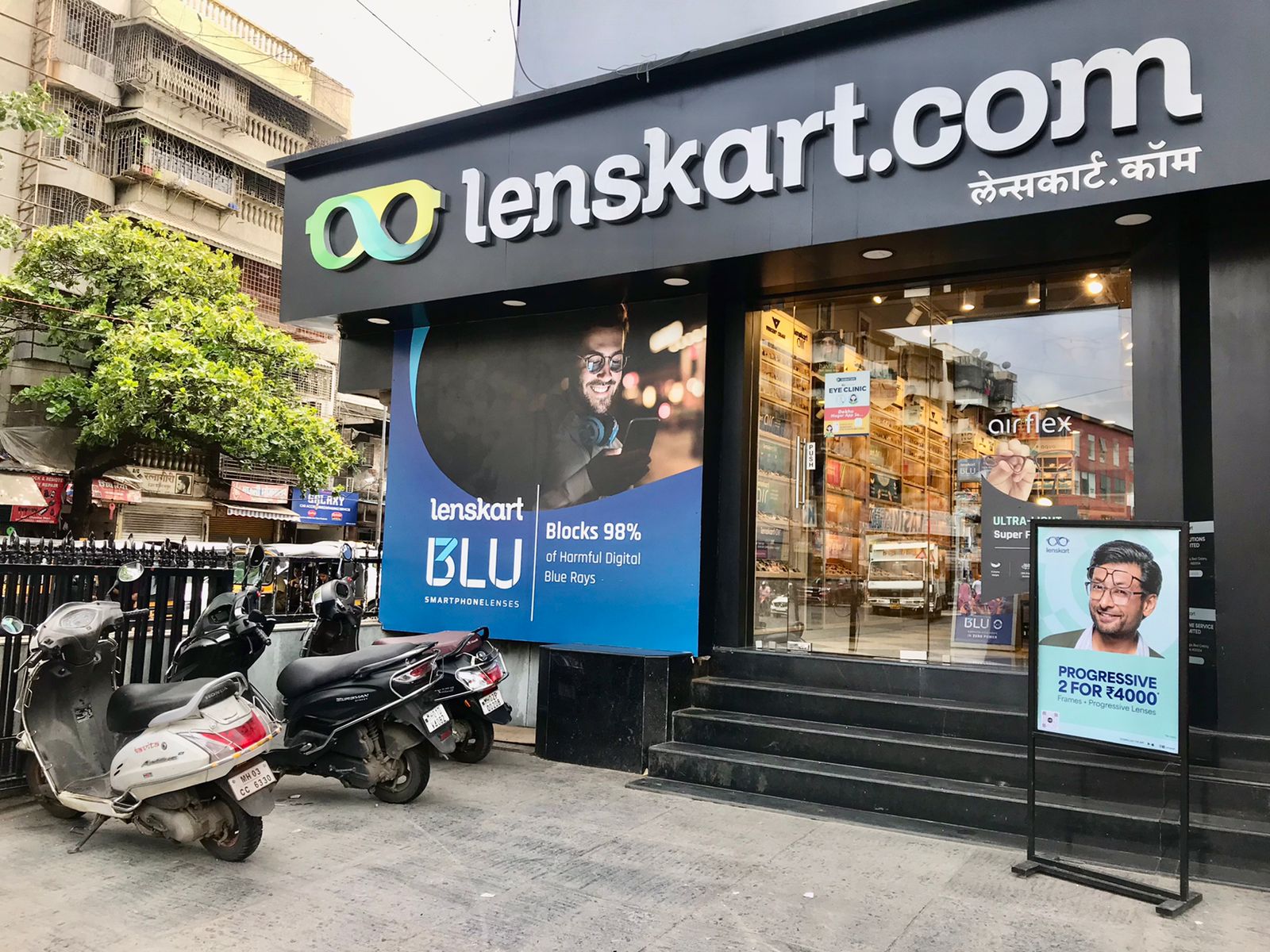
Softbank, one of the top investors in Lenskart, has defended the eyewear retailer's valuation post its tepid listing on Monday. The company's Dalal Street debut comes amid uncertainty in the global and domestic equity markets, said Sumer Juneja, Managing Partner and Head of EMEA & India at SoftBank Investment Advisers, while exclusively speaking to NDTV Profit.
Notably, Softbank has sold approximately 2.55 crore shares in Lenskart via the IPO, which has resulted in gains to the tune of Rs 1,005 crore, going by the issue price of Rs 402 per share.
The stake was offloaded via SVF II Lightbulb fund, the Softbank arm which held around 15% stake in Lenskart before the initial share sale. With its sale of 2.55 crore shares, the Japanese investor has trimmed its stake in the company by around 1.5%, as per the estimates.
Lenskart, despite pegging its valuation at Rs 70,000 crore or close to $8 billion, listed at a discount of 3% on the BSE. Intraday, it slipped around 11%, before recovering to settle with a modest 0.32% gains.
"On the first day of listing, given where the markets are soft, given where the Nifty has been for the last couple of months, given that there is uncertainty in the market both globally and here, I think it's a good listing," Juneja said.
Juneja, however, pointed towards the company's robust business to highlight the potential for investors despite the weak listing day gains.
“Thesis of why we have sold such a small stake in IPO and are long term investors... many have tried to compete with Lenskart but have not been successful. So, I would encourage them to double check on why Lenskart has been successful, and why others have not," he said.
The Lenskart IPO, however, faced flak even before the tepid listing, with several critics on social media questioning the company's high valuation.
Commenting on the same, Juneja said, "It is not Lenskart or Peyush who sets the valuation it is not us or the board which sets the valuation. We do our fundamental analysis of what the company could generate 2-3 years down the line."
When asked on whether there is a case for rethinking on the valuation, given the social media outrage, Juneja replied, "Why was there such a disconnect between such a high quality anchor book, QIB, retail and HNI, which was oversubscribed, versus social media. I don't know."
The senior Softbank executive said this episode leaves a learning for them. "We should for our next IPO definitely make sure that the quality of the book and the social media should be in sync," he quipped.
Softbank has backed a number of new age companies — some of whom have seen a lack of sustainability in their valuations at the time of IPO. "If the performance is not been there post the IPO, (then its because the) expectations have not been met," he said.
Some companies, as of now, have not gone above the IPO price and not met the expectations on profitability or intensity of competition increase. However, it "doesn't mean that they will remain there forever", Juneja added.

-
High US Salaries, No Green Card Certainty: The Financial Calculation Facing Indian H-1B Families

The suspension of PERM processing at eight technology employers does not cancel existing H-1B visas. What it does is force a question many Indian families have been avoiding: is the US salary worth tying your career and family plans to one employer?
-
Unhedged Position: Can India See An Indonesia-Style Time Correction?
The Nifty is trading below levels it first clocked in 2024. Is there, then, as I have suggested in the headline, potential that the current time correction drags on painfully for the next three-five, even ten years?
-
Navigating Friction And Energy Realities: An Analysis Of Marco Rubio's October Visit To India
Occurring at a critical juncture marked by stalled trade negotiations and escalating geopolitical pressures over global energy supplies, the visit offers a profound window into modern US-India relations.
-
India Exports Capital. Why Not Export Trusteeship?
The big question, then, is whether India can build an institution that global borrowers, investors, banks, and lawyers can trust, even without an Indian connection.
-
France's Economy & Politics Are In Crisis | The Reason Why
Let's look at how the French economy and politics evolved under Nicolas Sarkozy, Franois Hollande and Emmanuel Macron.
-
You May Inherit The Business. You Must Earn Its Credibility.
Succession tests the founder's ability to share authority as much as it tests the next generation's readiness to assume it.
-
Signing Deals Is One Thing; Making Them Work Is Another | The Week In Whys
Sometimes, things don't turn out as planned. Indian companies have lost some bids to rivals, some projects won't produce until 2030.
-
FOMC Wall, PERM Suspension, Hospital Stocks | Talking Points This Week
A PERM suspension would directly affect green-card sponsorship rather than H-1B visas, so the near-term earnings impact could remain relatively limited. The key question is whether this marks a new phase in US scrutiny of Indian IT.
-
Everything, Everywhere, All At Once: Dalal Street's Week To Forget | Joining The Dots
Visa curbs, a Starlink spat and cancer drug caps: what connects this week's shocks for Indian markets
-
India Is Going Abroad For Critical Minerals. But It May Take Years To Pay Off | The Reason Why
Although India's steps are in the right direction, they remain modest compared with India's growing dependence.









