Singapore Might Restrict Retail Access To Cryptocurrencies: Central Bank
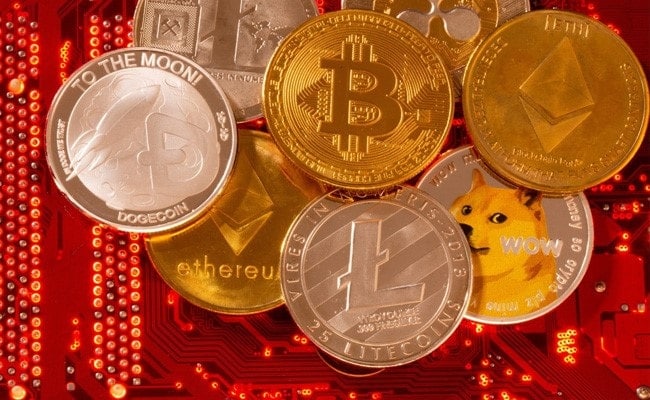
Singapore's central bank Monetary Authority of Singapore is contemplating adding frictions on retail access to cryptocurrencies through various measures including customer suitability tests and restricting the use of leverage and credit facilities for such trading.
These measures are meant to reduce consumer risk while trading in such volatile assets.
The main concern regarding cryptocurrencies is that prices of such assets are highly volatile, driven largely by speculation rather than any underlying economic fundamentals, Ravi Menon, Managing Director at the Monetary Authority of Singapore said in his opening remarks at the Green Shoots Seminar on Monday.
It is very risky for the public to put their money in such cryptocurrencies, as the perceived valuation of these cryptocurrencies could plummet rapidly when sentiments shift, Menon said.
However, the Monetary Authority of Singapore feels a complete ban on retail access to cryptocurrencies is not likely to work.
"The cryptocurrency world is borderless. With just a mobile phone, Singaporeans have access to any number of crypto exchanges in the world and can buy or sell any number of cryptocurrencies," Menon said.
The extreme price volatility of cryptocurrencies rules them out as a viable form of money or investment asset, Menon added.
He said safeguarding consumers from harm requires a multi-pronged approach and not just regulation by the Singapore central bank.
"First, global cooperation is vital to minimise regulatory arbitrage. Cryptocurrency transactions can be conducted from anywhere around the world. MAS is actively involved in international regulatory reviews to enhance market integrity and customer protection in the digital asset space."
The Singaporean central bank has been sharing its concerns with the industry and inviting views on possible measures to minimise harm to consumers and it will publicly consult on the proposals by October this year.
Further, Menon believes consumers must take responsibility and exercise judgement and caution as no amount of central bank regulation, global cooperation, or industry safeguards will protect consumers from losses if their cryptocurrency holdings lose value.
Since January this year, it has restricted digital asset players from promoting cryptocurrency services in public spaces.
"But despite these warnings and measures, surveys show that consumers are increasingly trading in cryptocurrencies. This appears to be a global phenomenon, not just in Singapore. Many consumers are still enticed by the prospect of sharp price increases in cryptocurrencies," Menon added in his remarks.
(Except for the headline, this story has not been edited by NDTV staff and is published from a syndicated feed.)

-
High US Salaries, No Green Card Certainty: The Financial Calculation Facing Indian H-1B Families

The suspension of PERM processing at eight technology employers does not cancel existing H-1B visas. What it does is force a question many Indian families have been avoiding: is the US salary worth tying your career and family plans to one employer?
-
Unhedged Position: Can India See An Indonesia-Style Time Correction?
The Nifty is trading below levels it first clocked in 2024. Is there, then, as I have suggested in the headline, potential that the current time correction drags on painfully for the next three-five, even ten years?
-
Navigating Friction And Energy Realities: An Analysis Of Marco Rubio's October Visit To India
Occurring at a critical juncture marked by stalled trade negotiations and escalating geopolitical pressures over global energy supplies, the visit offers a profound window into modern US-India relations.
-
India Exports Capital. Why Not Export Trusteeship?
The big question, then, is whether India can build an institution that global borrowers, investors, banks, and lawyers can trust, even without an Indian connection.
-
France's Economy & Politics Are In Crisis | The Reason Why
Let's look at how the French economy and politics evolved under Nicolas Sarkozy, Franois Hollande and Emmanuel Macron.
-
You May Inherit The Business. You Must Earn Its Credibility.
Succession tests the founder's ability to share authority as much as it tests the next generation's readiness to assume it.
-
Signing Deals Is One Thing; Making Them Work Is Another | The Week In Whys
Sometimes, things don't turn out as planned. Indian companies have lost some bids to rivals, some projects won't produce until 2030.
-
FOMC Wall, PERM Suspension, Hospital Stocks | Talking Points This Week
A PERM suspension would directly affect green-card sponsorship rather than H-1B visas, so the near-term earnings impact could remain relatively limited. The key question is whether this marks a new phase in US scrutiny of Indian IT.
-
Everything, Everywhere, All At Once: Dalal Street's Week To Forget | Joining The Dots
Visa curbs, a Starlink spat and cancer drug caps: what connects this week's shocks for Indian markets
-
India Is Going Abroad For Critical Minerals. But It May Take Years To Pay Off | The Reason Why
Although India's steps are in the right direction, they remain modest compared with India's growing dependence.









