Shunting Out CBI Director Blatantly Illegal, ‘Fixed Tenure’ Means Functional Tenure
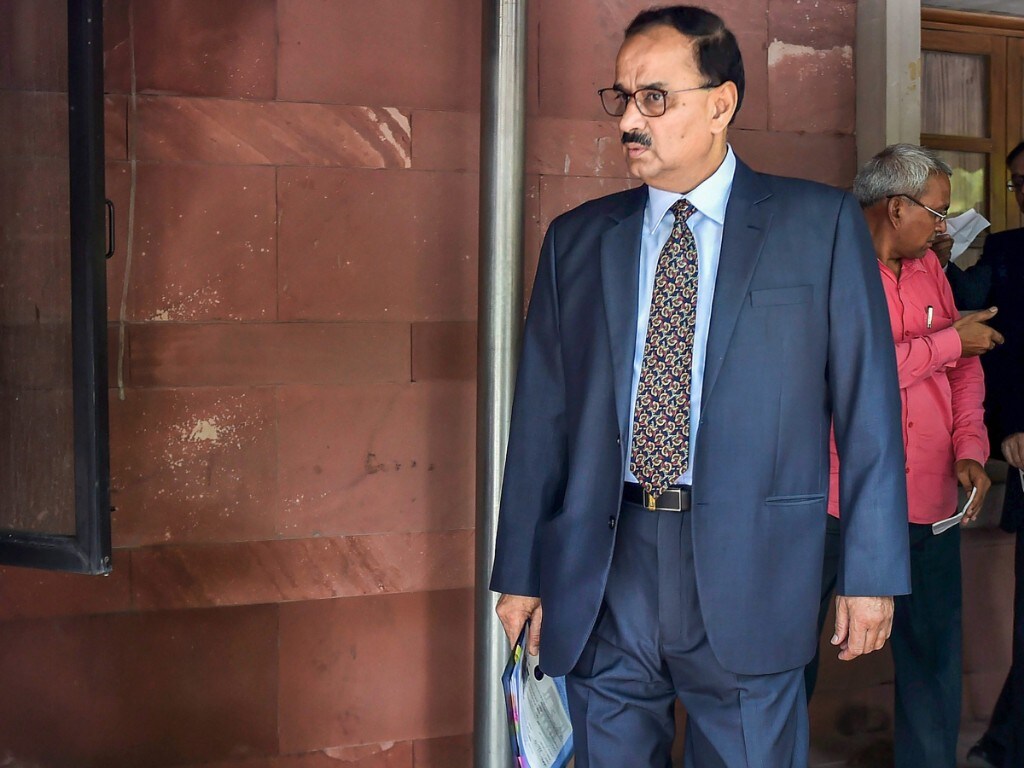
The central government, in an unprecedented midnight coup, issued an order divesting Alok Verma of charge as director of Central Bureau of Investigation. In his place, CBI joint director M Nageshwar Rao, has been appointed as CBI interim director with immediate effect.
Government divests Alok Verma of charge as CBI Director. Appoints Joint Director M Nageshwar Rao as the interim director of the CBI. pic.twitter.com/sGG1W3grpd
October 24, 2018How The CBI Director Is Appointed
The appointment process of a CBI director has been provided in Section 4A (as amended upon the enactment of The Lokpal and Lokayuktas Act, 2013) of the Delhi Special Police Establishment Act, 1946. According to the said section, a CBI director shall be appointed by the central government on the recommendation of a committee consisting of:
- The Prime Minister as its chairperson;
- The Leader of Opposition in Lok Sabha/leader of the single largest opposition party in Lok Sabha; and
- The Chief Justice of India or a judge of the Supreme Court nominated by the CJI — the latter two as committee members.
Further, the committee is required to recommend a panel of officers on the basis of seniority, integrity and experience in the investigation of anti-corruption cases, chosen from amongst officers belonging to the Indian Police Service constituted under the All-India Services Act, for being considered for appointment as CBI Director.
Alok Verma, a 1979 batch Indian Police Service officer of the Arunachal Pradesh-Goa-Mizoram and Union Territory cadre, was appointed as CBI director on January 17, 2017 by a committee — consisting of Prime Minister Narendra Modi, leader of the single largest opposition party in Lok Sabha, Mallikarjun Kharge and then Chief Justice of India JS Khehar as its members.
It's important to mention that at that time, Kharge had given a dissenting note Verma's appointment.Tenure Of A CBI Director
Section 4B of the DSPE Act, 1946 fixes a tenure of not less than two years for a CBI's director. It says: “The Director shall, notwithstanding anything to the contrary contained in the rules relating to his conditions of service, continue to hold office for a period of not less than two years from the date on which he assumes office.”
Further, Section 4B(2) puts a bar on the transfer of a CBI director without the previous consent of the committee that initially recommends the names for the appointment.Much before the statutory backing to protect the independence of the CBI by providing fixed tenure to its chief, the Supreme Court in 1998 in Vineet Narain and others versus Union of India has held that the Director, CBI shall have a minimum tenure of two years, regardless of the date of his superannuation. This would ensure that an officer suitable in all respects is not ignored merely because he has less than two years to superannuate from the date of his appointment. Further, the transfer of an incumbent CBI director in an extraordinary situation, including the need for him to take up a more important assignment, should have the approval of the Selection Committee, as per the Supreme Court 1998 Vineet Narain verdict.
Colourable Exercise Of Power In Removal Of Alok Verma
From a closer reading of the provisions contained in the Delhi Special Police Establishment Act, 1946, along with the law laid down by the Supreme Court in Vineet Narain case, it is crystal clear that the CBI Director, once appointed, cannot be removed and transferred before expiry of two years commencing from the date of appointment, much less without the previous consent of the committee that recommends names for the appointment of a CBI director in the first place. That committee, as mentioned above, includes the Prime Minister, the Leader of Opposition, and the Chief Justice of India, or a CJI-nominated judge of the Supreme Court.
The argument that Alok Verma has been sent on leave, and not transferred—and therefore, law has not been violated—does not hold water.It is a settled proposition of law that what cannot be done directly, is not permissible to be done indirectly. In the present case, shunting out of Alok Verma on forced leave for an indefinite period of time has in effect amounted to his removal from the post before the expiry of fixed tenure of two years. Fixed tenure signifies functional tenure, and if the argument of distinguishing “forced leave” and “transfer” is accepted in the present case, then every government will find it easy to send the CBI director on leave instead of transferring the office bearer and the very purpose of having fixed tenure of two years will become redundant.
Government's Fallacious Justification
Union Finance Minister Arun Jaitley has justified the ouster of Alok Verma from the office of the CBI Director citing that the decision was taken on the advice of the Central Vigilance Commission for a fair probe as the allegations are against both the CBI director Verma and special director Rakesh Asthana. It must be noted that an FIR has been filed against Asthana by the CBI under Verma for allegedly running an “extortion racket” in lieu of compromised investigation.
The question that now arises is whether the advice of the CVC could be given effect in breach of the statutory provisions that mandate fixed tenure of two years for the office of the CBI Director?True, there is no absolute bar that a CBI director cannot be removed or transferred; but there is a mandatory caveat in the law that any decision to such effect needs to be taken with the consent of the committee as per Section 4A(1) of the DSPE Act, 1946.
Why was there a tearing hurry in sending Alok Verma on leave without placing the CVC recommendation for consideration by the selection committee? The law does not envisage even the transfer of a CBI director without the consent of the committee, let alone sending him on leave unilaterally at the behest of just the executive.
Pertinently, under Section 4(1) of the DSPE Act, 1946, CVC exercises superintendence power over CBI only insofar as investigation of offences under the Prevention of Corruption Act, 1988 is concerned. As a matter of fact, there is no FIR against Alok Verma under the PCA Act, 1988.
Time For Supreme Court To Rise To The Occasion
It is time for the Supreme Court to rise to the occasion and protect the institutions from the onslaught of the executive. Verma has challenged the order of the central government, stripping him of duties and functions as the CBI director, in the Supreme Court. Chief Justice of India Ranjan Gogoi has agreed to hear the matter on Oct. 26, 2018. The arbitrary action of the executive in removing Alok Verma not only shows the utter contempt for the law made by Parliament, but also scant regard for the Court's order.
If the Supreme Court fails in ensuring compliance of its own order in letter and spirit, perhaps in future, no honest officer would risk his job by discharging his duty fearlessly and honestly.
Read Alok Verma's petition here.
Also Read: Supreme Court Directs CVC To Complete Inquiry In Two Weeks
This article was originally published on The Leaflet.
Paras Nath Singh assists Senior Advocate Indira Jaising in the Supreme Court of India.
The views expressed here are those of the author and do not necessarily represent the views of BloombergQuint or its editorial team.



-
Opinion | India at 38: From Innovation Overperformer to Innovation Powerhouse

India now has 453 VC-backed deep science startups, 18 of them late-stage, after 117 percent growth since 2020. Laurus Labs, at USD 9.3 billion, is the most valuable deep science company in any middle-income economy outside China.
-
Navigating Energy Crossroads: S Jaishankar's Call For Diversified Supply Chains At G20 Ministerial Meeting
As geopolitical fault lines continue to test maritime trade routes and commodity flows, Jaishankar's message remains pertinent: true economic resilience requires open markets, protected transit lines, and a genuine commitment to multilateral cooperation rather than coercion.
-
Indians Are Travelling, But Not Every Journey Is A Holiday | The Week In Whys
Pilgrims, patients and working women are the real travellers, and the system hasn't quite caught up with them.
-
Getting To Work Costs Women More | The Reason Why
It is not just about women paying more than men. It is about women paying much more in cities than in villages.
-
AI Bias In Investing Cannot Be Eliminated, But It Can Be Governed
Framing is a particularly important example as identical financial information presented in terms of gains rather than losses can lead an LLM to reach a different assessment.
-
Joining The Dots | Dark Skies, Steady Diya: Why Hope Holds This Diwali
With war, a weak rupee and foreign outflows weighing on sentiment, policymakers at the NDTV World Summit and market veterans at NDTV Profit Ignite: Diwali Edition offered the same advice: stay invested and filter out the noise.
-
The Curious Case of Equitas Small Finance Bank And A CEO Who Quit For Stock
PN Vasudevan believes persistent investor concerns over a perceived conflict of interest had become a governance overhang on Equitas Small Finance Bank's stock, even as the lender improved profitability and asset quality.
-
Talking Points This Week: AI Cash Burn, A Tiger Comeback And An India That Still Finds Its Own Path
India is not immune to higher oil or tighter global liquidity, yet its earnings base is broader, its domestic policy levers are still available.
-
Foreign Investors Own Half Of HDFC Bank and ICICI Bank. An LTCG Cut Could Matter Most Here
Foreign portfolio investors have US$115 billion parked in HDFC Bank, ICICI Bank. If the government cuts long-term capital gains tax, Jefferies says returning foreign money could land here first.










