Shriram City Union Finance Cautious On Gold Loan Business
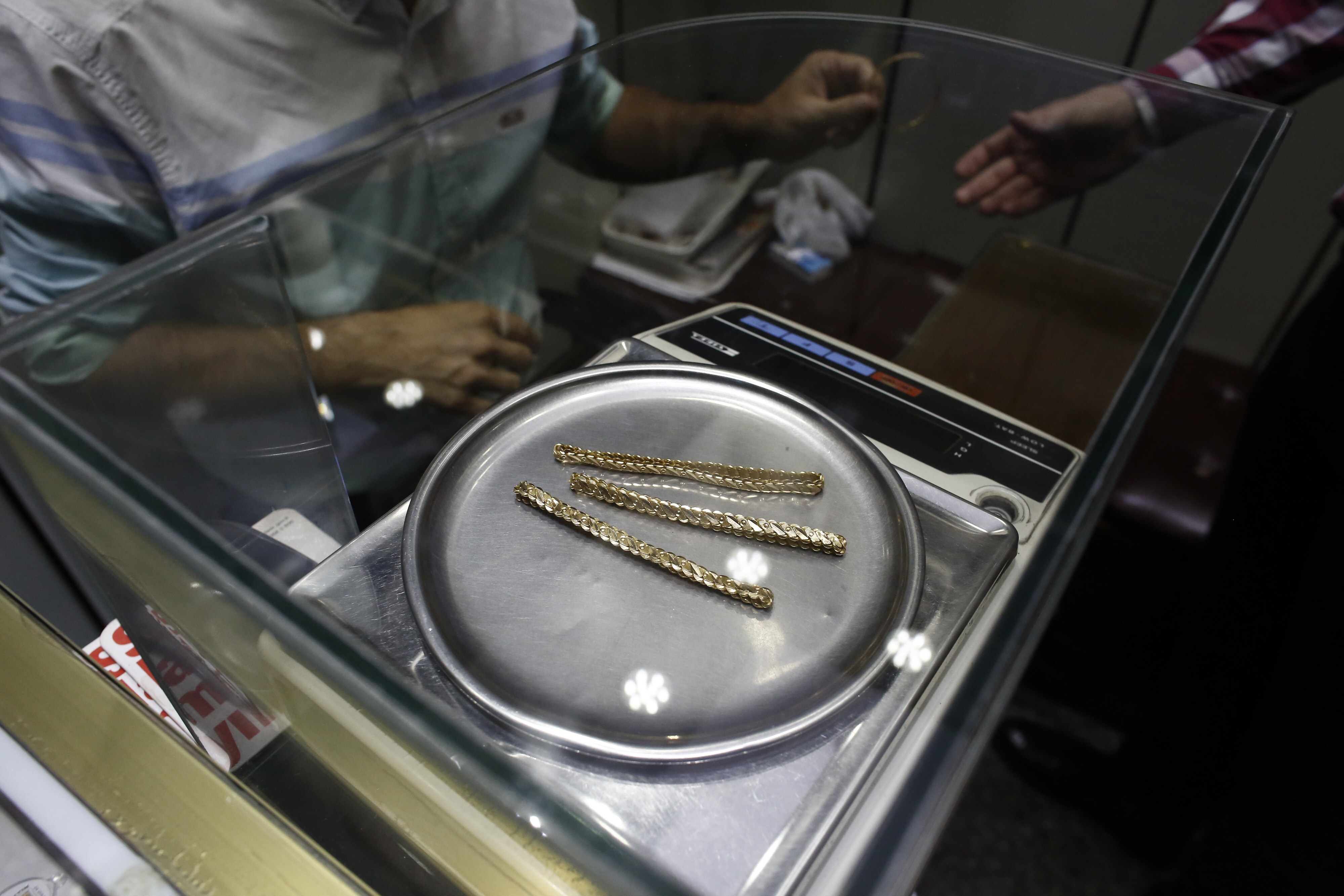
South-based lender Shriram City Union Finance Ltd. said multiple factors including the effects of demonetisation and setting aside a higher percentage of funds for bad loans than the Reserve Bank of India's requirement led to a surge in provisions and writeoffs in the quarter ended March.
The lender's provisions and writeoffs jumped 83 percent in the quarter over the previous three months to Rs 412 crore. Its net profit fell more than 78 percent to Rs 12 crore over the year-ago period, according to a statement by the company.
Bringing down the number of days to recognise a bad loan to 120 from 150 days after the repayment deadline also pushed up provisions, the non-banking financial company said. The October-December quarter had benefited from the RBI's 90-relief to recognise bad loans of up to Rs 1 crore, a relief granted after demonetisation, it said.
.jpg)
The company will bring down the number of days beyond repayment deadline to recognise bad loans to 90 in the ongoing financial year, in line with the RBI's norms, which will bring down its provision coverage ratio to 60 percent, said R Chandrasekar, chief financial officer of Shriram City Union Finance. The ratio, or percentage of cash to be set aside for bad loans, stood at 73 percent, three percentage points higher than the RBI's requirement, in January-March. The company would maintain its provisions at the current levels in 2017-18, he said.
The gross non-performing assets for the fourth quarter stood at 6.73 percent, down from 7.5 percent in October-December (based on 120 days to recognise bad loans).
Gold Loans A Worry
Total disbursements in January-March rose 21.3 percent year-on-year to Rs 6,245 crore. Loans to small enterprises, which contribute the maximum 40 percent to its advances, grew 5.1 percent. But it rose 24.4 percent since the previous quarter that saw the impact of demonetisation.
Loans for two-wheelers fell 6.9 percent from the year-ago period and 23.8 percent over the previous quarter. The management attributed that to the implementation of new Bharat Stage-IV emission standards for vehicles.
We have done well despite all the problems. Two-wheeler segment slowed down due to demonetisation and (older) BS-III emission norms impact. In some regions, we have stopped funding BS-III vehicles, which impacted disbursement. We don't see a concern in SME (small businesses) and two-wheelers. We expect to see a growth of in excess of 20 percent in these segments.YS Chakravarti, CEO, Shriram City Union Finance
Chakravarti sees the share of SME and two-wheeler loans moving up from the current 55 percent to 60-65 percent of its portfolio over the next two years. The management, however, sounded cautious on the company's gold loan business.
We have not seen impact of Reserve Bank of India capping cash payments at Rs 2 lakh yet. We have confined our gold loan business to five states. I am a little worried on gold loan business going forward and on how to retain customers and prevent banks from poaching my customers.YS Chakravarti, CEO, Shriram City Union Finance
FY18 Guidance
The management expects the non-gold assets under management (AUM) to grow 20-25 percent in 2017-18, with margins falling by half a percentage point due to its foray into lower-yielding urban area customer loans. The management's caution on the gold loan business also reflected in the AUM growth outlook.
On the gold loan AUM target, we are not looking at any growth at all; I will be happy if there is no negative growth.YS Chakravarti, CEO, Shriram City Union Finance
The housing finance business is expected to grow at 50-60 percent this financial year despite the high base of 39 percent growth in FY17. Operational expenses will also be maintained at the current levels of 40 percent.
Shares of Shriram City fell as much as 5.6 percent, the most in three months, before paring some losses on Wednesday compared to a flat Mumbai market.

-
Medicine Pricing: Where Must Profit Stop?

India must confront excessive margins, hidden incentives and regulatory gaps that threaten the integrity of medicine.
-
Why Amazon And Flipkart Are Struggling To Beat Meesho In India's Smaller Cities
With 274 million users and lowest-cost logistics, Meesho is defending its value commerce crown against giants like Amazon and Flipkart.
-
High US Salaries, No Green Card Certainty: The Financial Calculation Facing Indian H-1B Families
The suspension of PERM processing at eight technology employers does not cancel existing H-1B visas. What it does is force a question many Indian families have been avoiding: is the US salary worth tying your career and family plans to one employer?
-
Swiggy vs Eternal: Food Delivery's Two Rivals Are No Longer In The Same Race
Eternal is building a private AI assistant, dark.ai. Swiggy is still working out how to make Instamart pay, with an operating loss of Rs 895 crore in the July-September quarter while Blinkit stayed profitable.
-
Where You Live Shapes How You Get To Work | The Reason Why
Two-wheelers are the most popular way to get to work in India, accounting for nearly 43% of workplace commutes.
-
Unhedged Position: Can India See An Indonesia-Style Time Correction?
The Nifty is trading below levels it first clocked in 2024. Is there, then, as I have suggested in the headline, potential that the current time correction drags on painfully for the next three-five, even ten years?
-
Navigating Friction And Energy Realities: An Analysis Of Marco Rubio's October Visit To India
Occurring at a critical juncture marked by stalled trade negotiations and escalating geopolitical pressures over global energy supplies, the visit offers a profound window into modern US-India relations.
-
India Exports Capital. Why Not Export Trusteeship?
The big question, then, is whether India can build an institution that global borrowers, investors, banks, and lawyers can trust, even without an Indian connection.
-
France's Economy & Politics Are In Crisis | The Reason Why
Let's look at how the French economy and politics evolved under Nicolas Sarkozy, Franois Hollande and Emmanuel Macron.
-
You May Inherit The Business. You Must Earn Its Credibility.
Succession tests the founder's ability to share authority as much as it tests the next generation's readiness to assume it.










